
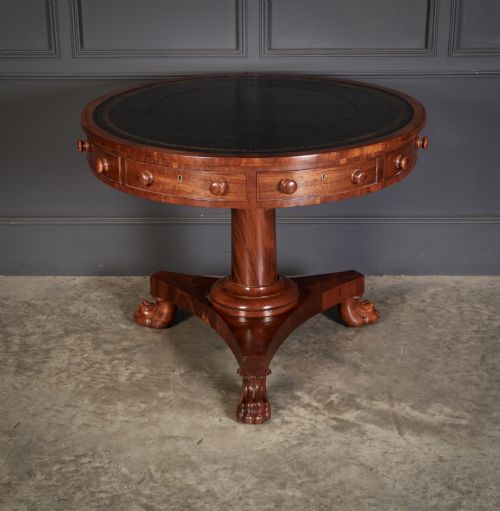


Regency Revolving Table
A regency revolving table brings ingenious mechanical motion and stately circular design into a room, offering both library utility and a striking centrepiece.
Regency Revolving Table
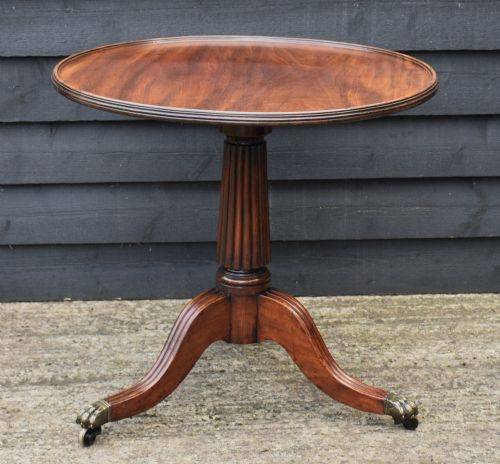
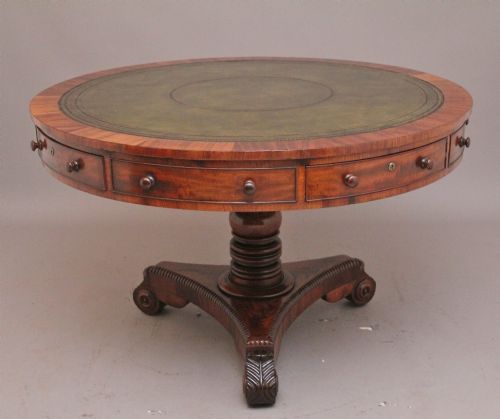
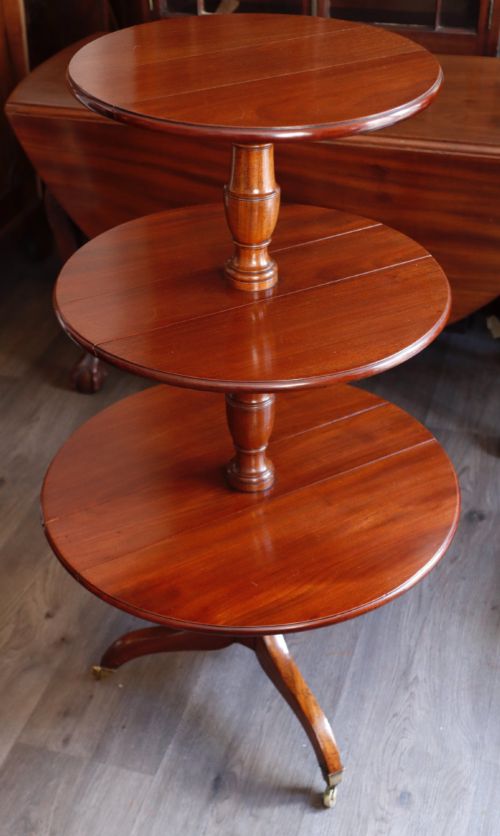
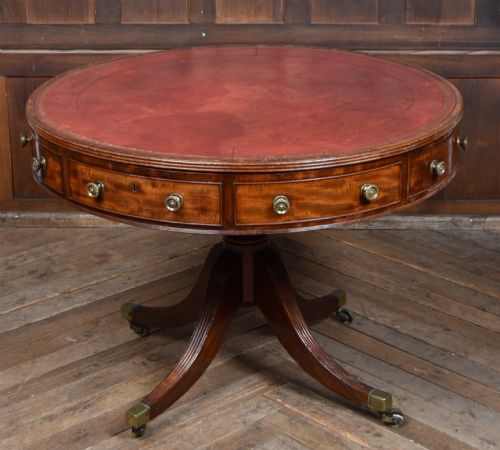
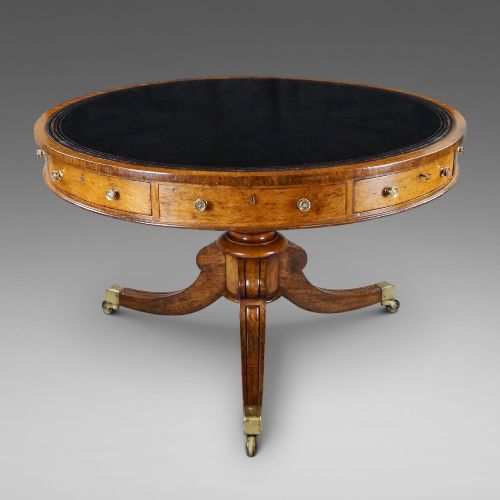
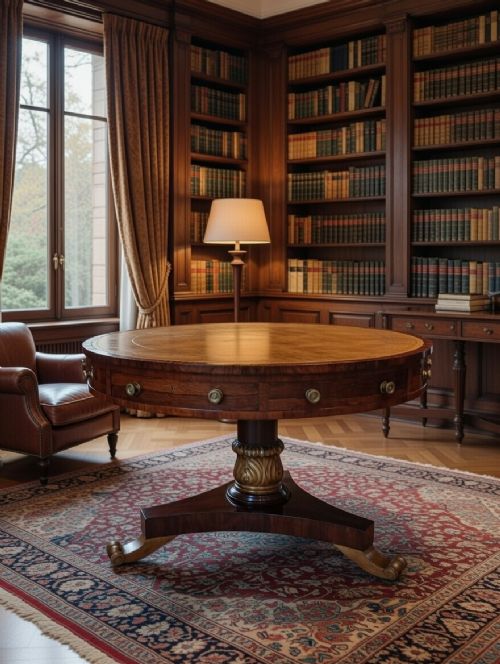
A regency revolving table primarily takes the form of a circular drum table, library table, or tiered dumb waiter designed to turn smoothly on a central axis. Buyers searching for a regency revolving table will frequently encounter mahogany and rosewood pieces from the nineteenth century alongside later revival styles.
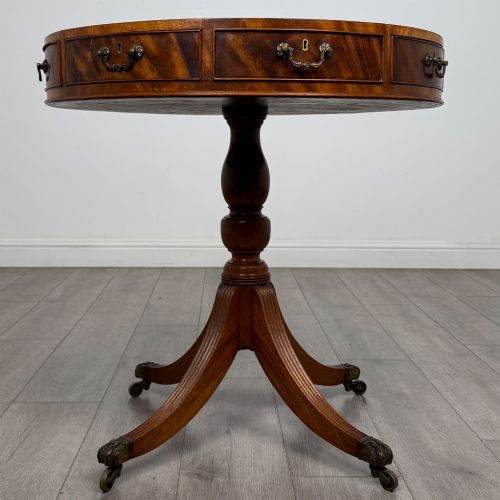
The selection ranges from tripod tea tables and coffee tables to heavy library drums fitted with multiple frieze drawers. These pieces served practical domestic and study roles in period homes, functioning as writing desks, serving stands, or book repositories.
Most examples date from the Regency and Georgian eras, though Edwardian and later twentieth-century interpretations also appear. The circular top is the defining feature, allowing users to access books, papers, or dishes without walking around the furniture.
Materials and construction
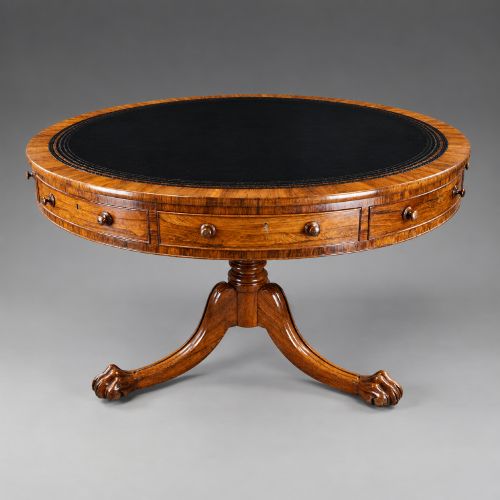
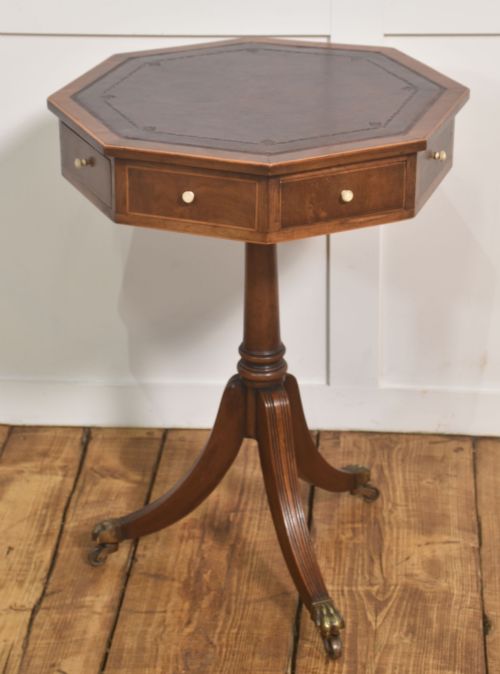
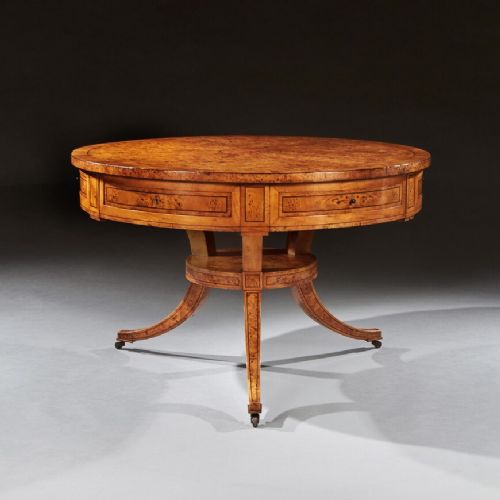
Cabinetmakers utilised dense timbers such as mahogany, flame mahogany, and rosewood, often enhancing the circular top with crossbanding, brass inlay, or inset leather writing surfaces. Burr root maple and oak also feature among the surviving pieces, demonstrating skilled veneer work on curved surfaces.
Support structures rely on robust turned columns rising from tripod reeded sabre legs or pedestals, frequently finished with brass-capped castors for mobility. The internal revolving mechanism demands precise joinery to ensure the heavy top rotates evenly without wobbling.
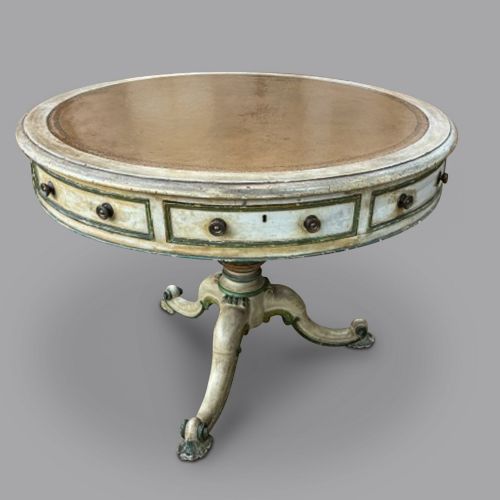
Listings feature mahogany, rosewood, oak, burr maple, and painted wood across periods spanning the Georgian era to the twentieth century.
Assessing craftsmanship and execution
Quality rests in the selection of timber figures, such as rich flame mahogany or figured rosewood, and the crispness of brass inlay or crossbanded borders. Superior examples exhibit seamless rotation paired with well-fitted frieze drawers and stable pillar supports.
Finer pieces balance heavy proportions with refined details like carved tripod bases and original brass castors. Poorer execution shows in sluggish or uneven revolving mechanisms and heavy-handed secondary timbers.
The Regency Revolving Table Glossary
- Drum table
- A circular library table with a deep top resembling a drum, usually fitted with alternating real and dummy drawers around the circumference.
- Dumb waiter
- A tiered serving stand with revolving circular trays mounted on a central column, used for holding dishes or tea service.
- Crossbanding
- A border veneer applied around the edge of a tabletop so the grain runs perpendicular to the main panel, common in Regency cabinetwork.
- Sabre leg
- A curved, concave leg tapering towards the floor, typical of Regency furniture design and often finished with brass castors.
- Flame mahogany
- A decorative veneer cut from wood where the branch meets the trunk, producing a flickering flame-like pattern.
Regency Revolving Table: Frequently Asked Questions
What is a regency revolving table?
A regency revolving table is a circular piece of furniture, often a drum table or dumb waiter, designed with a top that turns on a central pivot.
These pieces were built during the nineteenth century and earlier periods to provide easy access to books, documents, or dining items from a seated position.
How were drum tables used?
Drum tables functioned as library desks, centre tables, or writing surfaces where documents and stationery could be stored in the surrounding drawers.
Their rotating tops allowed a reader or writer to reach different items without moving the entire chair.
Are all these tables from the Regency period?
The inventory includes authentic Regency and Georgian pieces alongside later Edwardian and twentieth-century revival interpretations.
Cabinetmakers across different eras reproduced these circular designs using traditional timber and turning techniques.
How do I maintain the revolving mechanism?
The central pivot requires minimal interference, though keeping the internal bearing clean ensures smooth and silent rotation.
Avoid placing excessive weight on one edge of the tabletop to prevent strain on the central column and base.
What woods were commonly used?
Mahogany and rosewood dominate the selection, often highlighted with flame veneer, oak interiors, and brass mounts.
Rarer examples utilise burr root maple or painted wood finishes depending on the specific style and date of manufacture.