



Regency Period Wine Chest
These regency period wine chest examples are sturdy timber vessels made to cool bottles at table, offering serious presence for a grand dining room.
Regency Period Wine Chest
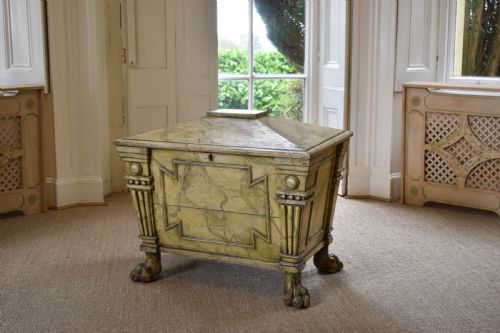
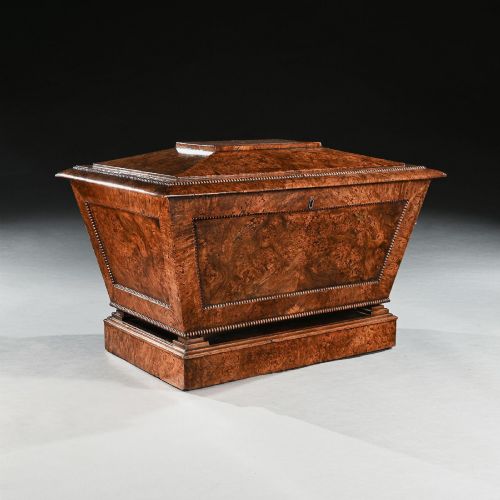
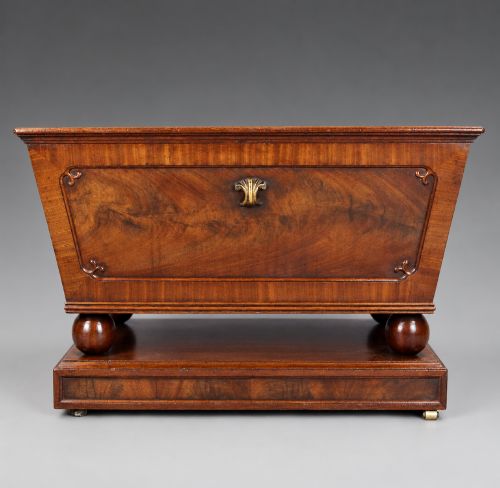
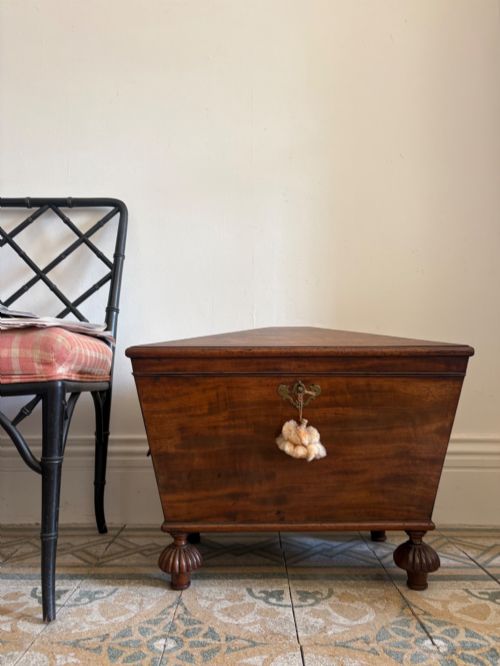
A regency period wine chest typically takes the form of a sarcophagus shaped box designed to hold bottles and ice during grand meals. Most examples seen here date to the Regency period and the nineteenth century, often attributed broadly to eighteen hundred or around eighteen thirty.
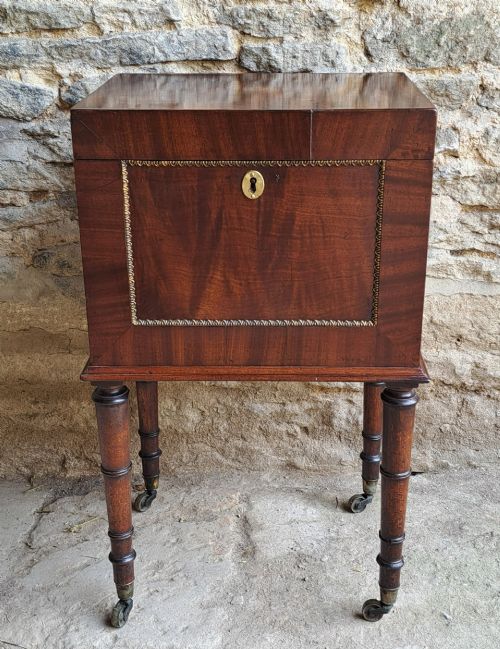
The primary object types recorded are cellarettes and wine coolers, frequently styled after the classical sarcophagus model. These pieces often rest upon paw feet or sit directly on the floor, providing a heavy architectural anchor in a dining space.
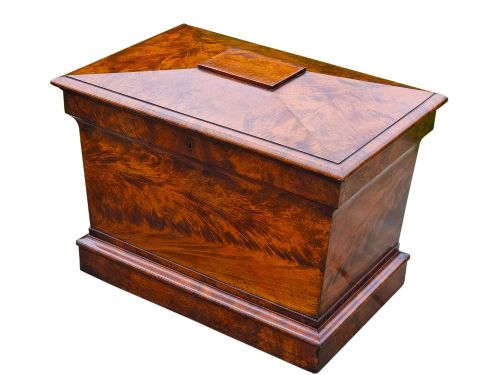
Buyers will encounter variants in mahogany, flame mahogany veneer, and pollard oak, alongside rarer figures like burr elm. Each variation reflects the shifting tastes of English makers working within the Regency aesthetic.
How they were made
Cabinet makers utilised dense timber stocks, applying figured flame mahogany veneer or solid pollard oak over structural carcases to create rich surface movement. Brass mounts and handles provide functional contrast against the dark timber.
Internal provisions required practical engineering to hold melting ice and liquid, leading makers to fit lead liners inside the chest cavity. This metal lining protected the wooden joinery from moisture during extended use at the dining table.
Regency Period Wine Chest Retail Price Guide 2026
Typical asking prices for regency period wine chest among the pieces listed under this phrase on Sellingantiques today, from the lower quarter to the upper quarter. They describe what is for sale here now, not the wider market.
Some chests still whisper of old ice and grand dinners through the quiet resilience of their heavy lead linings.
What varies in quality
The visual strength of a piece relies heavily on the choice of timber figure, where well-matched flame mahogany or burr elm creates a striking facade. Finer versions exhibit exceptional natural patina and carefully cast brass hardware.
Proportion and carved details, such as robust paw feet or classical mouldings in the manner of Thomas Hope, distinguish the more ambitious pieces from standard workshop output.
Thomas Hope
The Regency Period Wine Chest Glossary
- Cellarette
- A lockable container used for storing wine bottles near the dining table. They frequently double as wine coolers in Regency interiors.
- Sarcophagus
- A coffin-shaped box form adopted by Regency designers for large wine coolers. This classical silhouette draws inspiration from ancient Roman stone monuments.
- Flame mahogany
- A tropical hardwood cut to reveal a swirling, torch-like grain pattern. Makers prized this veneer for high-status cabinet work.
- Pollard oak
- Timber harvested from trees that were pollarded, resulting in a dense and speckled grain. It yields a distinctive mottled surface texture.
- Lead liner
- A fitted metal insert placed within the chest to hold ice and bottles safely. It prevents water damage to the surrounding wooden structure.
Regency Period Wine Chest: Frequently Asked Questions
What is a regency period wine chest used for?
These vessels held wine bottles and ice close to the dining table during formal meals. The internal lead lining kept bottles chilled until guests required them.
They also served as decorative furniture pieces that demonstrated the host's wealth and taste through fine timber and classical styling.
What woods were used for cellarettes?
Makers relied primarily on mahogany, including highly figured flame mahogany veneer. Other recorded materials include pollard oak and burr elm.
Brass handles and mounts frequently complement these dark timbers.
Are these coolers lined with metal?
Many authentic examples retain an original lead liner inside the wooden box. This prevented melting ice water from rotting the surrounding timber.
The presence of this lining is a key detail for period pieces.
How do I place one in a modern home?
A wine chest works well as a freestanding statement piece in a dining room or hallway. Their heavy proportions provide a strong visual anchor.
They also function effectively for storage while retaining their traditional character.