

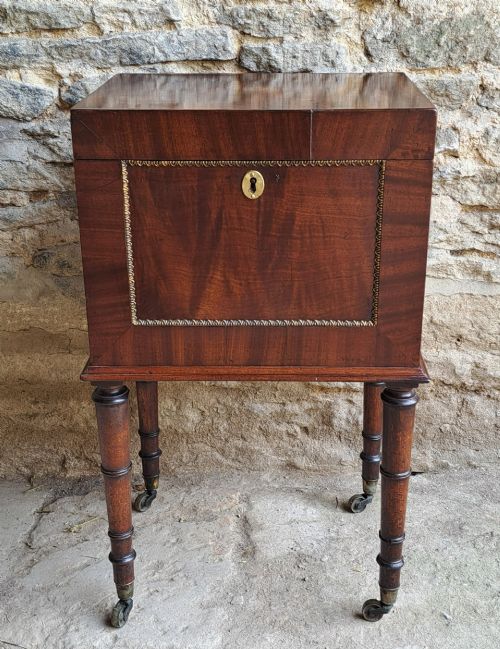
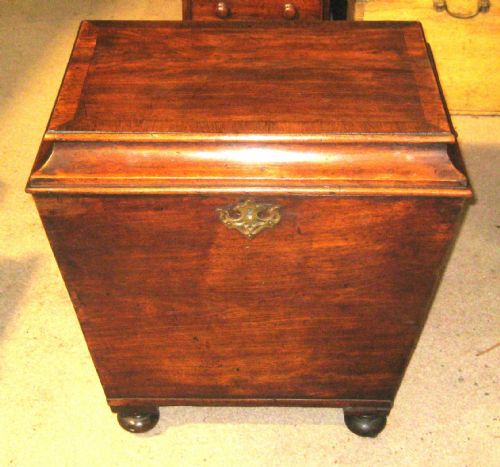

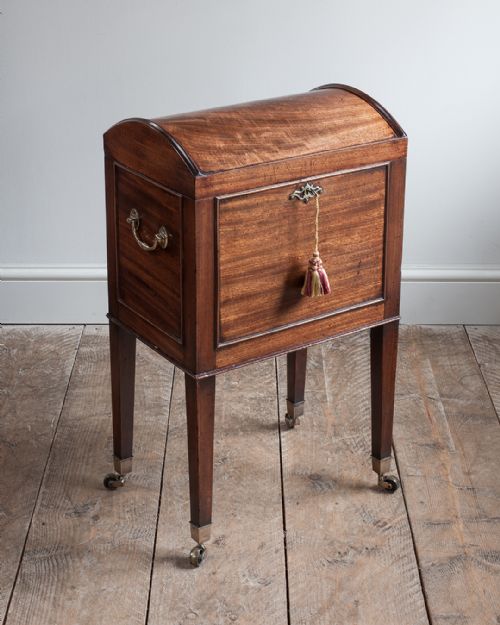


Wooden Sarcophagus Cellaret
These wooden sarcophagus cellaret pieces are handsome wine coolers designed to hold bottles in style at the dining table.
Wooden Sarcophagus Cellaret
A wooden sarcophagus cellaret is a substantial container designed for cooling and storing wine bottles during formal dining. These items take their distinctive tomb-like shape from classical antiquity, interpreted through Georgian and Regency design. Buyers looking for a wooden sarcophagus cellaret want a striking statement piece that roots a dining room in traditional craftsmanship.
The versions met on this page span the eighteenth and nineteenth centuries, including Georgian and Regency periods. Makers constructed these pieces primarily in mahogany, often incorporating satinwood inlay, brass fittings, and ormolu mounts. Forms range from straight-sided boxes to serpentine fronts and classical revival styles.
How they were made
Cabinetmakers built these heavy boxes using solid mahogany and oak, often applying delicate satinwood banding and stringing to enrich the exterior surfaces. The timber was selected for its rich grain, then polished and waxed by hand to achieve a deep lustre. Interior compartments were frequently lined with lead to hold ice and water safely without rotting the surrounding wood.
Decorative details included cast brass handles, paw feet, and ormolu mounts fixed securely to the corners and panels. Master joiners employed precise dovetailing for the structural carcass, ensuring the heavy weight of bottles and ice caused no strain on the joints over centuries of service.
Wooden Sarcophagus Cellaret Retail Price Guide 2026
Typical asking prices for wooden sarcophagus cellaret among the pieces listed under this phrase on Sellingantiques today, from the lower quarter to the upper quarter. They describe what is for sale here now, not the wider market.
Some of these heavy wine boxes include lead linings that once kept bottles cold beside Georgian dining tables.
What varies in quality
Quality in these pieces rests upon the crispness of the carving, the choice of timber figure, and the integration of classical decorative elements. Pieces featuring refined ormolu mounts, intricate satinwood inlay, and sculptural serpentine fronts stand apart from plain utility boxes. The joinery inside the box, particularly the original lead lining and surviving bottle dividers, determines the integrity of the piece.
The hand of the maker dictates the proportion and balance of the classical sarcophagus shape. Workshops such as those in Dublin or makers influenced by neoclassical designers applied ornamentation with greater restraint and precision. A superior box demonstrates careful grain matching across the lid and sides, maintaining visual harmony from every angle.
Robert Strahan and Company·Charles Heathcote Tatham
The Wooden Sarcophagus Cellaret Glossary
- Cellaret
- A lockable container used for storing wine bottles near the dining table. They were often lined with lead to hold ice for chilling.
- Sarcophagus
- A stone or wooden coffin shape derived from classical antiquity, which inspired the sweeping, flared profiles of these wine coolers.
- Ormolu
- Gilt bronze ornamentation applied to furniture and decorative objects. This technique added metallic contrast and rich golden highlights to dark mahogany surfaces.
- Serpentine front
- A furniture front curving inward centrally and outward at the ends in a graceful wave. This shape required advanced woodworking skill to execute properly.
- Satinwood
- A durable, yellowish exotic timber used for contrasting bandings, stringing, and inlay work on dark cabinet furniture.
Wooden Sarcophagus Cellaret: Frequently Asked Questions
What is a wooden sarcophagus cellaret used for?
These boxes served as portable wine coolers and secure storage units during formal meals in grand dining rooms. Servants placed ice and water inside the lead-lined interior to chill bottles before serving.
Today, collectors use them as statement furniture pieces in dining rooms or living spaces, often repurposing the interior for blanket storage or general organisation.
How do I date a cellaret?
Dating relies on observing the timber choice, hardware style, and overarching decorative period like Georgian or Regency. Earlier pieces from the eighteenth century tend to show simpler classical proportions.
Nineteenth-century examples often incorporate heavier neoclassical or ormolu ornament inspired by specific designers and architectural pattern books of the time.
Are these cellarets waterproof inside?
Many examples retain their original lead linings designed to hold melting ice without damaging the wooden structure. However, centuries of use can compromise these linings.
Modern owners generally avoid putting loose ice or water directly inside antique metal linings to preserve the historic fabric of the interior.
Which woods were used?
Mahogany is the primary timber found across these pieces, prized for its strength, rich reddish-brown colour, and smooth grain. Oak also appears frequently in structural carcass work.
Cabinetmakers embellished the primary mahogany surfaces with contrasting satinwood inlay, brass handles, and cast ormolu mounts.