


Regency Period Watercolour Painting
A regency period watercolour painting captures the elegance and intimacy of early nineteenth-century life through delicate brushwork and subtle washes.
Regency Period Watercolour Painting
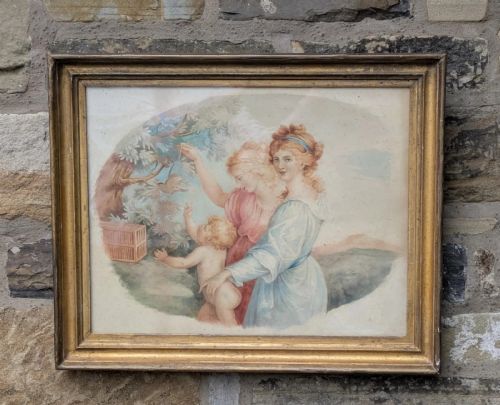
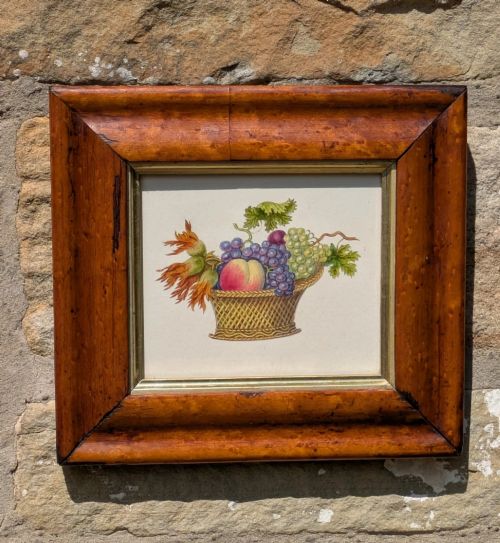
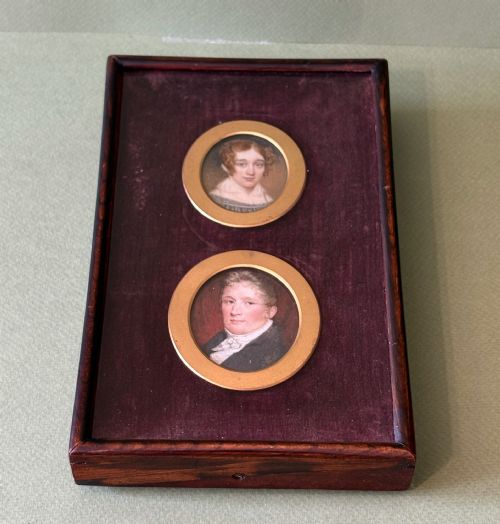
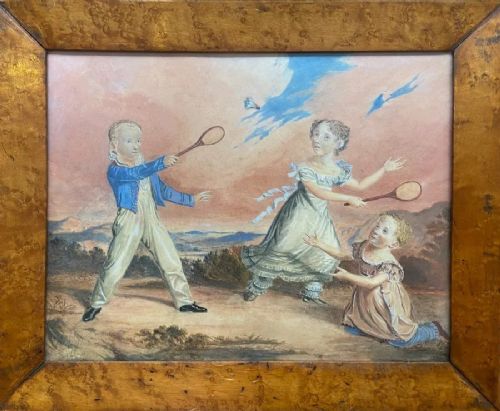
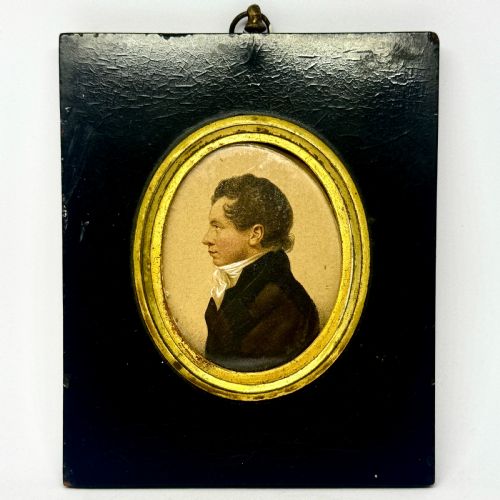
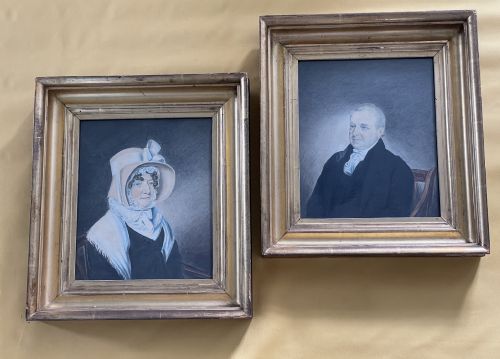
A regency period watercolour painting primarily takes the form of intimate portrait miniatures, character studies, and domestic scenes executed on paper. These works capture the likenesses of gentlemen, young girls in white dresses, and family groups, alongside classical scenes and architectural subjects.
Buyers will most frequently encounter framed miniatures and small-scale waterpaintings originating from the nineteenth century, often presented in period ebonised, giltwood, or brass frames. The selection ranges from crisp depictions by named artists to anonymous English school studies reflecting the tastes of the Georgian and Regency eras.
How they were made
Artists utilised watercolour and occasionally gouache pigments applied to fine paper surfaces to achieve translucent colour washes and precise linear detail. These delicate mediums required a steady hand and immediate brushwork, as watercolours brook little correction once laid.
Works were traditionally protected behind glass and housed within timber frames, frequently featuring ebonised finishes, gilt wood, or brass accents. The combination of paper, pigment, and secure framing preserved the fugitive colours of the paintings over centuries.
Listings feature works spanning the nineteenth century, with specific examples dated to the Regency period and the year eighteen hundred.
What varies in quality
Quality rests in the precision of the draughtsmanship and the expressive capability of the brushwork, distinguishing accomplished portraiture from stiff amateur output. Superior pieces capture personality and anatomical proportion with remarkable economy of line.
The preservation of the paper and the vibrancy of the pigments determine the overall standing of a piece. Original framing, particularly period ebonised surrounds and gilt mounts, adds historical integrity to the work.
Henry Travis·George Kilburne·John Augustus Atkinson·Thomas Woolnoth·Emma Kendrick·Thomas Rowlandson
The Regency Period Watercolour Painting Glossary
- Watercolour
- A painting method in which the paints are made of pigments suspended in a water-soluble vehicle. It allows for translucent layers of colour that reveal the reflective quality of the underlying paper.
- Miniature portrait
- A small-scale painting, highly detailed, designed to be held or hung closely. These works were often executed on paper or ivory during the Regency period.
- Gouache
- An opaque watercolour medium containing pigment combined with a binding agent and white filler. It provides greater opacity and body than standard watercolour.
- Ebonised
- Wood finished to resemble ebony through staining or painting. This dark treatment was popular for picture frames during the nineteenth century to contrast with gilt accents.
Regency Period Watercolour Painting: Frequently Asked Questions
How should I hang watercolour paintings?
Watercolours are sensitive to strong sunlight and can fade if exposed to direct rays for prolonged periods. Position them away from windows and direct heat sources to preserve the integrity of the pigments.
Utilise UV-filtering glass where possible and ensure the hanging wall remains free from dampness to protect both the paper and the original frame.
Are these paintings signed by the artists?
Many works from this era remain unsigned, as portrait miniatures and domestic watercolours were frequently produced anonymously or attributed to broader schools. Signed examples do appear, bearing the hand of noted painters.
Attribution often relies on stylistic comparison, subject matter, and archival context rather than a visible signature on the paper.
What frames are original to the pieces?
Period frames typically include ebonised wood, giltwood, or simple brass mounts that complement the small scale of the watercolours. These surrounds often show age-appropriate wear that matches the era of the painting.
Replacement frames occur frequently in works of this age, so examining the backing and mount helps determine original pairing.
How do I identify a Regency watercolour?
Stylistic cues such as costume, including high-waisted dresses or specific gentleman attire, often point toward the Regency and Georgian eras. The palette usually relies on soft washes and fine detailing characteristic of early nineteenth-century paper works.
Accompanying framing materials and historical subject matter further support the dating of these paintings.