
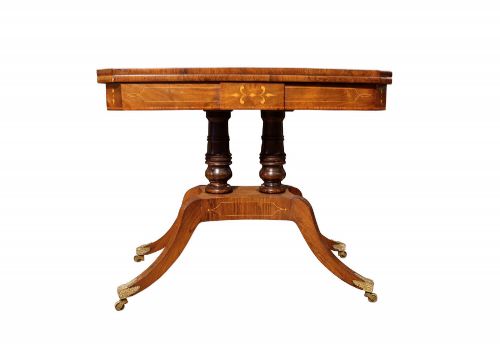
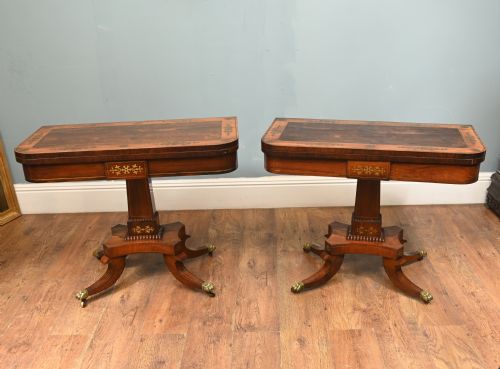


Regency Period Tea Table
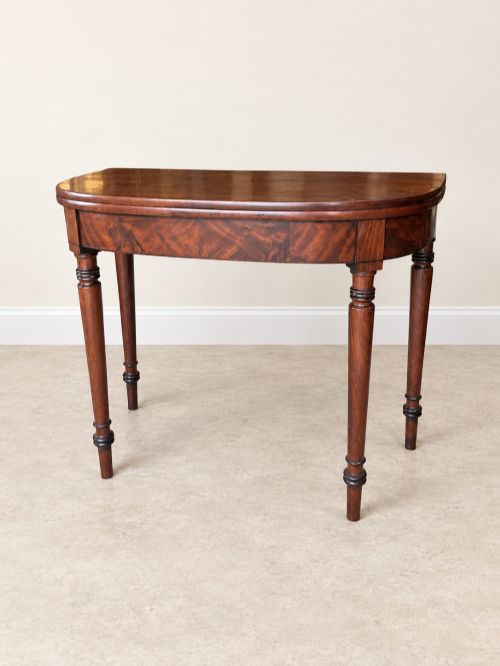
A regency period tea table brings architectural clarity and polished timbers to a room, offering a functional surface that folds or tilts when not in use.
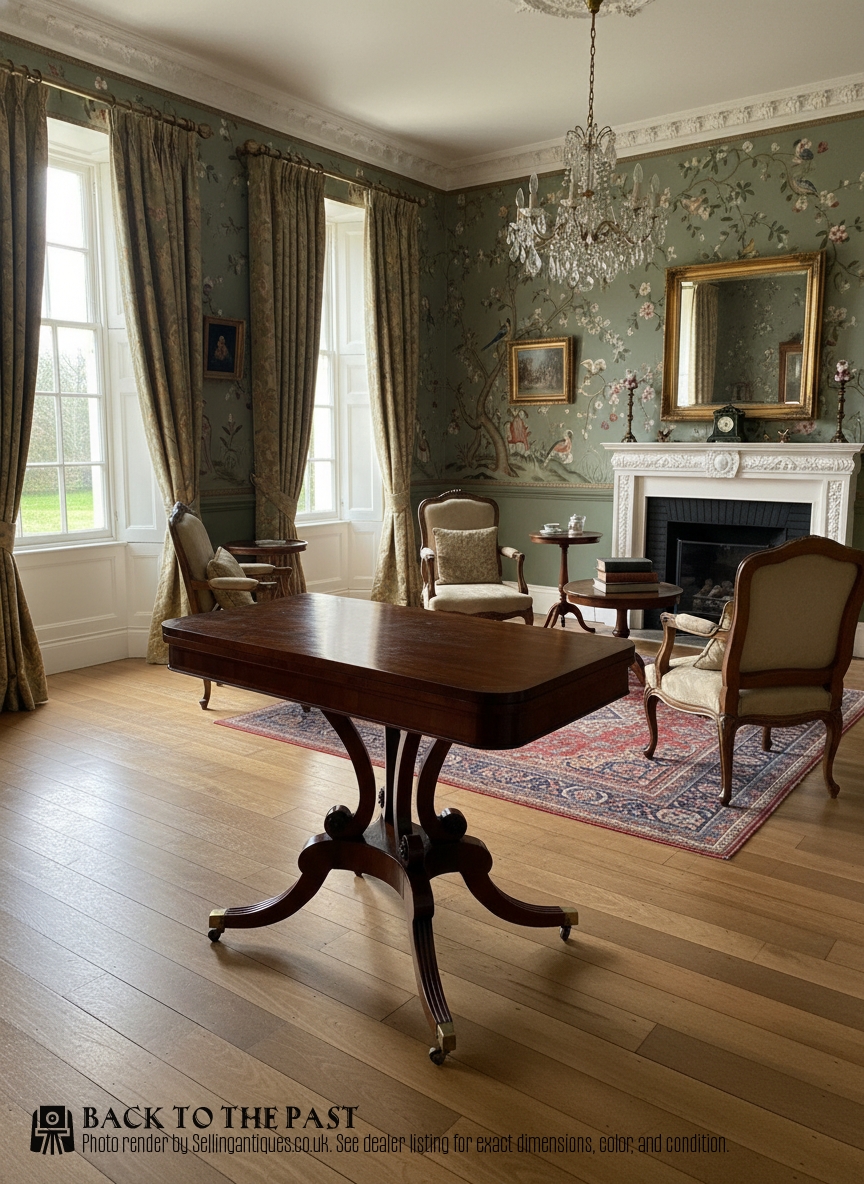
Regency Period Tea Table
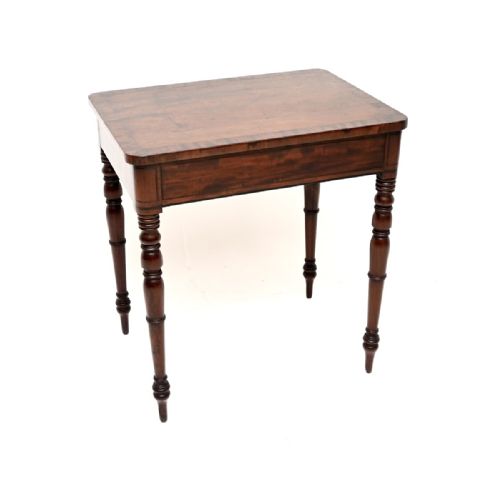
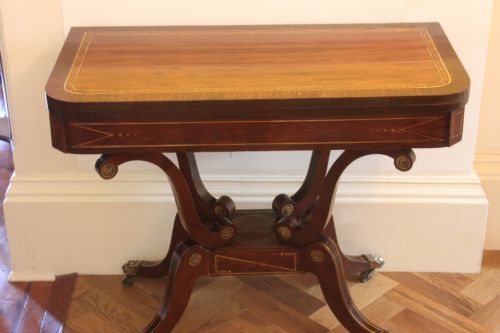
A regency period tea table serves as a versatile piece of domestic furniture designed for entertaining and display during the early nineteenth century. These tables emerge across periods including the Regency, Georgian, and William IV eras, capturing the formal elegance of the time.
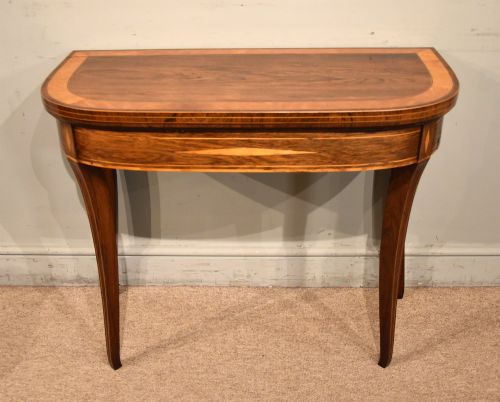
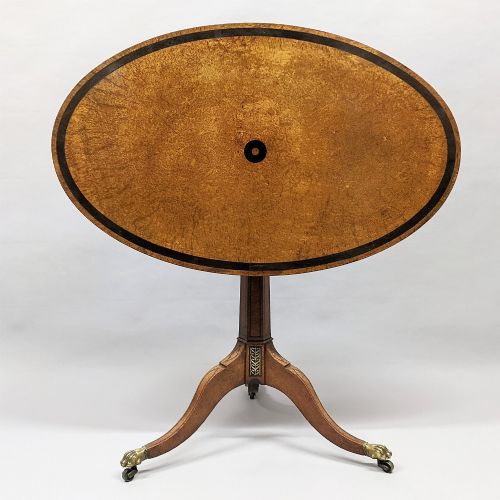
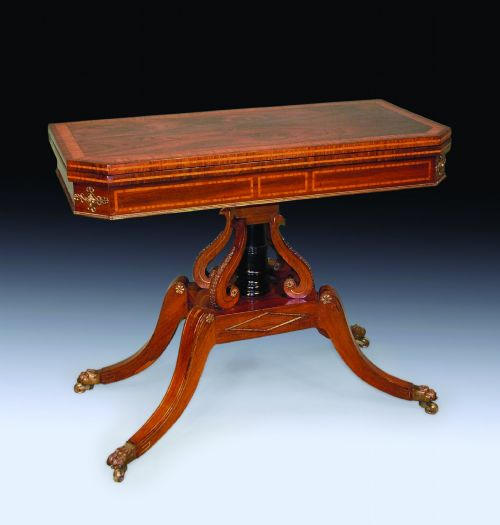
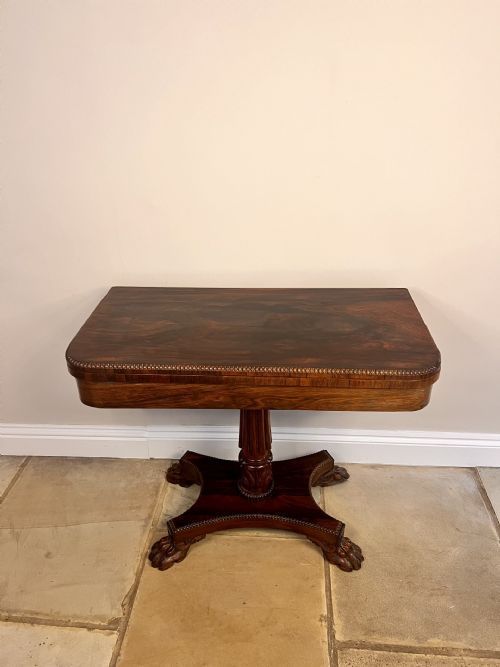
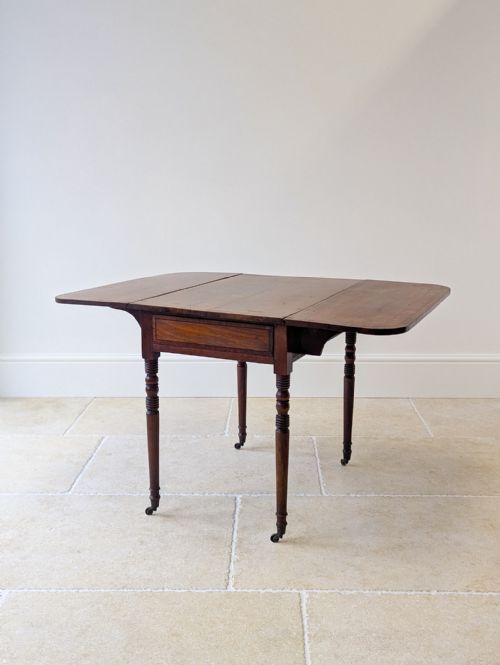
The most common formats on this page include fold-over card tables, D-shaped tea tables, and tilt-top examples that transition smoothly from wall console to centre stage. Makers constructed these objects in forms such as Pembroke tables, games tables, and occasional tables to suit the changing needs of polite society.
Originating predominantly from British workshops alongside notable Scottish makers, these pieces reflect the design vocabulary of Grand Regency and Anglo-Indian aesthetics. Buyers encounter diverse structural supports, from scrolling pedestal bases and lyre supports to carved dolphin bases and brass-mounted legs.
Materials and Construction
Cabinet makers relied heavily on rich primary timbers such as mahogany, rosewood, and calamander, often enhanced by flame mahogany veneer, amboyna, kingwood, and satinwood. Contrasting stringing and banding in ebony and boxwood added geometric precision to tabletops and friezes.
Brass formed a crucial element of the construction vocabulary, appearing as intricate inlay patterns, protective sabots, and functional castors on pedestal bases. Joinery techniques permitted folding leaves and snap-top mechanisms to operate with smooth mechanical accuracy.
Secondary ornamentation included fine gilding and paper-mache work, while structural supports utilised turned pillars, quadruple legs, and carved wooden motifs. Each component was selected for grain movement and resilience under daily domestic use.
Listings demonstrate a strong preference for rosewood and mahogany, frequently embellished with brass inlay and boxwood stringing.
Assessing Quality and Execution
Quality rests in the selection of timber veneers, where highly figured rosewood or flame mahogany displays deep chatoyancy and matched grain across the folding leaves. Lesser examples utilise plain or poorly joined timber that lacks optical depth.
The crispness of brass inlay and the precision of cabinet joinery dictate the tier of execution. Top-tier pieces exhibit integrated brass mounts, smoothly operating hinges, and stable pedestal bases that remain rigid over centuries of pivoting and folding.
Jennens And Bettridge·William Trotter
The Regency Period Tea Table Glossary
- Fold-over table
- A table with a hinged top that doubles the surface area when opened, frequently lined with baize for card games. This dual-purpose design defined the formal entertaining spaces of the nineteenth century.
- Tilt-top table
- A table featuring a mechanism that allows the top to pivot to a vertical position for storage against a wall. This space-saving construction was standard for smaller rooms.
- Sabot
- A metal sleeve fitted to the foot of a table leg to protect the timber from wear and moisture. They are commonly cast in brass and paired with matching castors.
- Lyre support
- A pedestal base shaped in the formal outline of a stringed musical instrument. This classical revival motif appeared frequently during the George IV and Regency periods.
- Stringing
- Thin inlay lines of contrasting wood, such as boxwood or ebony, embedded into the primary timber. It delineates the borders of tabletops and friezes.
Regency Period Tea Table: Frequently Asked Questions
How do I use a tea table today?
These tables function naturally as console surfaces against a wall, displaying lamps, books, or ceramics in a hallway or living room. Opening the hinged leaf transforms the unit into a serving surface or a compact dining table for two.
Because the footprint remains modest, they fit easily behind sofas or beneath windows. The pivoting and folding mechanisms continue to operate just as they did two centuries ago.
How do I tell a tea table from a card table?
Tea tables generally feature plain wooden interiors intended for serving beverages, while card tables historically concealed a baize or leather playing surface beneath the folded leaf. Both share the same fundamental fold-over cabinet structure.
Many listings combine the terms because households utilised the same piece of furniture for multiple evening entertainments. Examining the interior surface reveals whether the maker optimised the piece for gaming or tea service.
Are these tables sturdy enough for daily use?
Cabinet makers built these pieces to withstand the rigorous demands of nineteenth-century domestic life, utilising heavy pedestals and robust pivot hinges. Solid mahogany and rosewood frames provide inherent structural stability.
Careful handling of the folding leaf and avoiding excessive moisture protect the antique timber and brass elements. Regular placement on level flooring ensures the pedestal base remains balanced.
What distinguishes Regency style from William IV?
Regency design typically displays leaner proportions, classical restraint, and refined brass inlay work inspired by ancient Roman and Greek archaeology. The lines remain crisp and architectural.
William IV examples introduce heavier scrollwork, bolder carved elements like dolphin bases, and thicker pedestal columns. Timber selection shifts toward deeply figured rosewood with a heavier visual weight.