
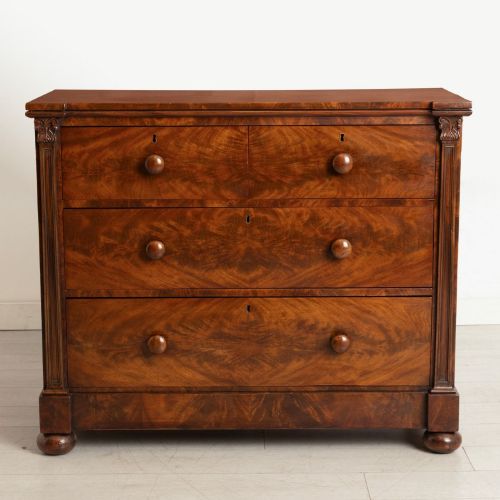
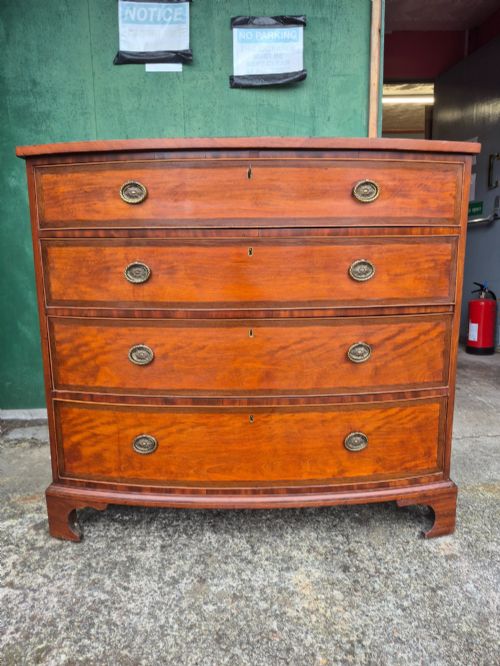
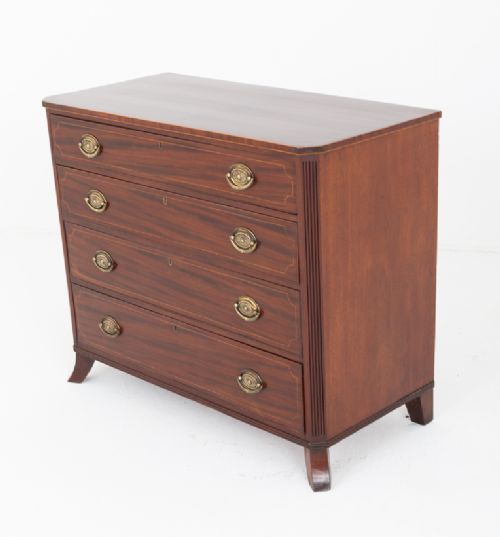

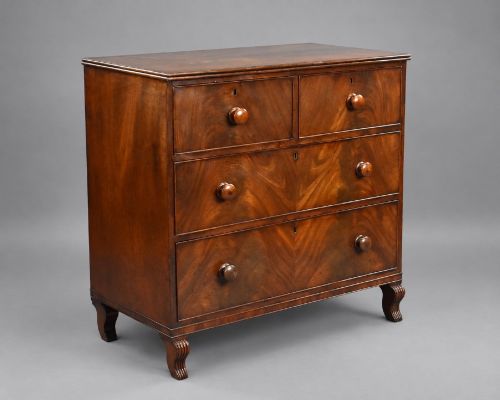
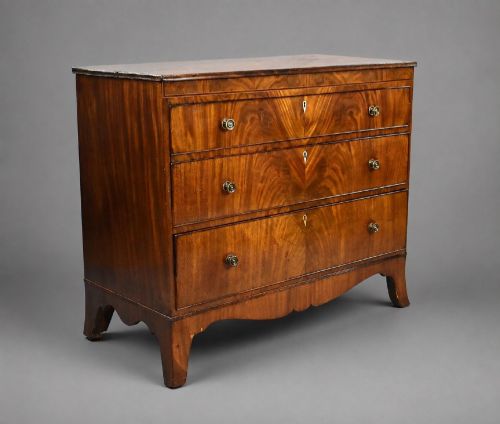
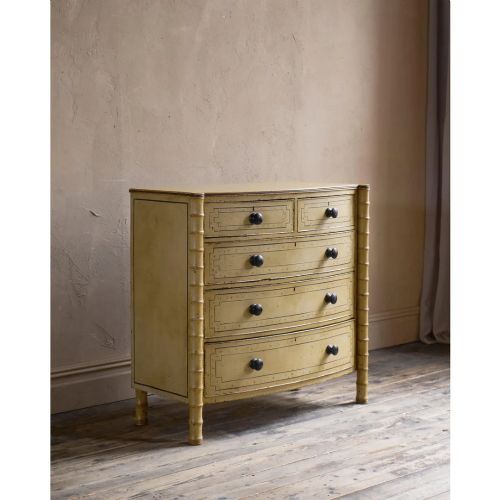
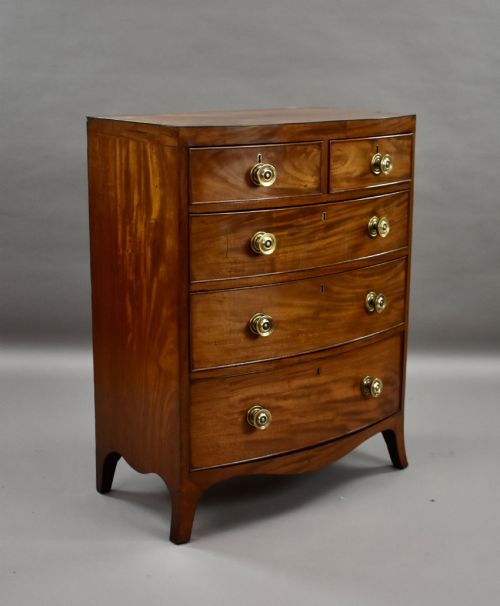
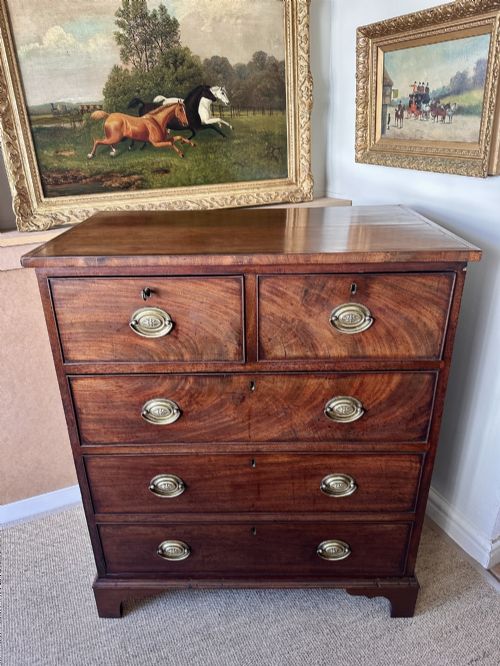
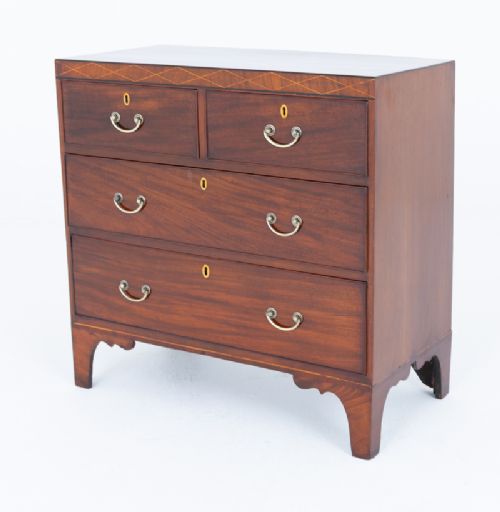
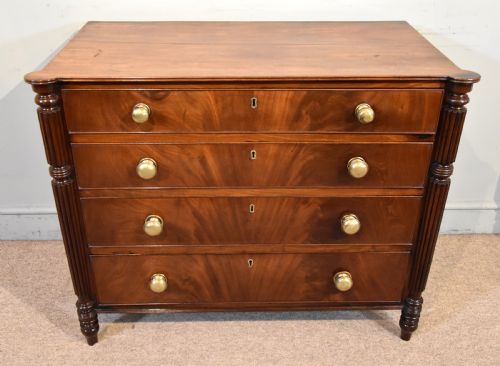


Regency Period Tallboy
A regency period tallboy brings architectural dignity and disciplined storage to a room, offering soaring vertical timber work built for serious spaces.
Regency Period Tallboy
A regency period tallboy combines substantial vertical presence with fine timber construction, typically presenting as a chest on chest or tall linen press. These pieces emerge primarily from the Regency, Georgian, and 19th Century eras, reflecting a design ethos focused on proportion and utility.
Most examples encountered on this page take the form of chest of drawers, linen presses, or secretaire chests rather than standard twin-section tallboys. The regional variations span English workshops and Irish cabinets, showing distinct regional choices in timber selection and drawer configuration.
Makers of the period utilised rich grain patterns and classical proportions to soften the formidable scale of these tall pieces. Buyers select them for both their commanding architectural presence and their capacity to organise substantial wardrobes within a modest floor footprint.
Materials and construction methods
Cabinet makers relied heavily on solid mahogany and flame mahogany veneer, often backed by secondary woods like oak and pine for structural rigidity. These dense timbers were selected for their stability and capacity to take a deep, mirror-like polish.
Decorative detailing incorporates brass fittings, bone inlay, and glass elements alongside hand-cut dovetail joints on the drawer construction. The integration of faux bamboo or neoclassical motifs reveals the stylistic breadth permitted within period workshops.
Working keys from the early nineteenth century still turn in the locks of these tall chests, guarding private papers and linens.
Distinctions in craftsmanship and finish
Quality separates standard utilitarian storage from high-style cabinet work through the selection and bookmatching of flame mahogany veneers across the drawer fronts. Superior pieces maintain crisp architectural moulding and original brass hardware without clumsy modern repairs.
The interior joinery and drawer linings indicate the original workshop standard, where secondary woods like oak denote a higher tier of production than cheaper pine alternatives. Proportional harmony and the crisp execution of bracket feet or plinth bases determine the visual success of the piece.
Gillows of Lancaster
The Regency Period Tallboy Glossary
- Tallboy
- A tall chest of drawers, traditionally built as one chest stacked upon another to maximise vertical storage. These pieces command attention through sheer height and disciplined timber surfaces.
- Flame mahogany
- A highly figured veneer sliced from timber where the branches join the trunk, creating vibrant flame-like patterns. Cabinet makers placed these carefully across prominent drawer fronts for maximum visual impact.
- Secretaire chest
- A chest of drawers featuring a fitted top drawer that drops down to reveal a writing desk complete with pigeonholes and small drawers. This clever form combines hidden utility with formal exterior dignity.
- Linen press
- A tall piece featuring upper cabinet doors enclosing sliding trays, sitting above a chest of base drawers. Originally designed for storing household linens flat, these provide immense internal volume.
- Bracket foot
- A structural foot shape formed by two pieces of wood mitred together at the corner, often shaped in an ogee or bracket profile. It lifts the heavy case slightly off the floor while maintaining a stable architectural base.
Regency Period Tallboy: Frequently Asked Questions
What is a regency period tallboy?
A regency period tallboy is a tall storage furniture piece designed during the early nineteenth century, usually featuring stacked drawer sections or a chest on chest configuration.
These pieces utilise dense timbers like mahogany to achieve a commanding vertical presence while offering generous internal storage capacity.
How do I use a tallboy today?
A tallboy serves effectively in bedrooms or dressing rooms for organising bulky clothing items, utilising vertical space where floor area is restricted.
The deep drawers and fitted secretaire compartments also lend themselves to storing paperwork or textiles in living spaces and studies.
How do I date a tallboy?
Dating relies on observing construction methods such as hand-cut dovetails, secondary woods like oak or pine, and stylistic markers like neoclassical or George IV motifs.
Hardware styles, timber veneers, and structural proportions further help narrow the period of manufacture between the late eighteenth and mid nineteenth centuries.
Are these pieces made of solid mahogany?
Most pieces combine solid mahogany frames and structural elements with figured mahogany veneers applied to prominent surfaces like drawer fronts and cabinet doors.
Secondary timbers such as oak and pine appear inside the drawers and cabinet backs to provide structural stability and durable support.