

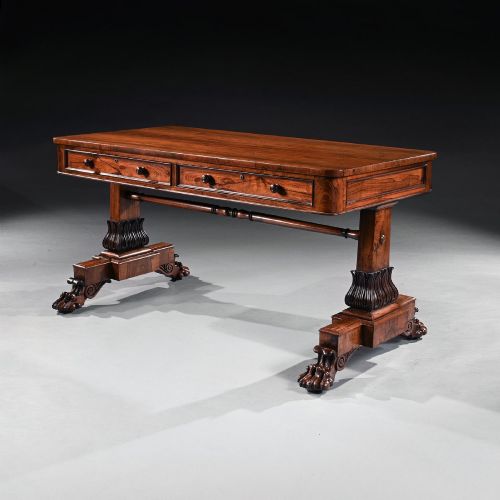


Regency Period Study Desk
A regency period study desk offers disciplined proportion and fine timber, bringing a purposeful elegance to a home workspace.
Regency Period Study Desk
A regency period study desk encompasses writing tables, library tables, and partner desks designed for serious correspondence and study. These forms belong to the Regency, George IV, and William IV periods, alongside the broader nineteenth century.
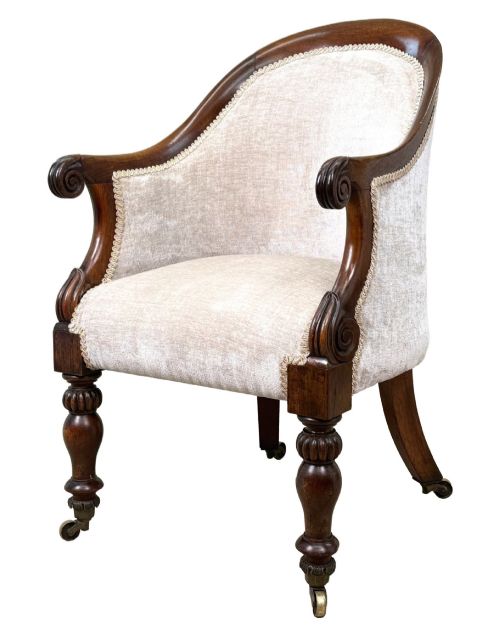
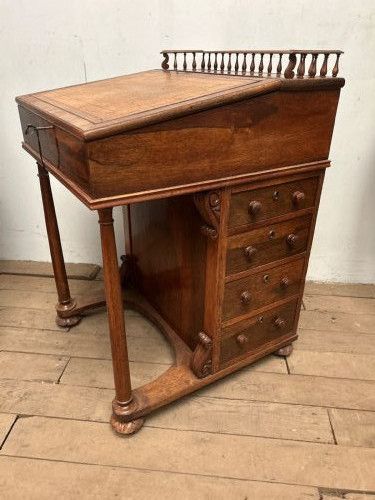
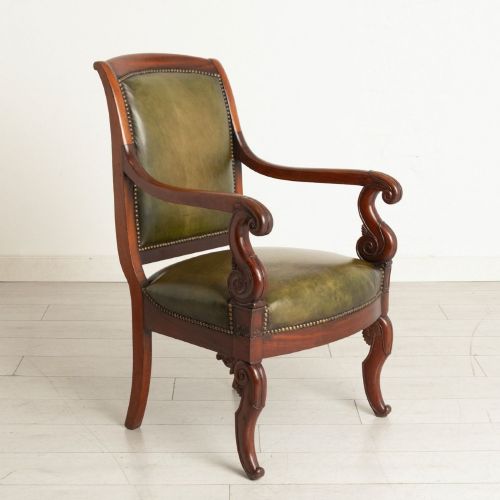
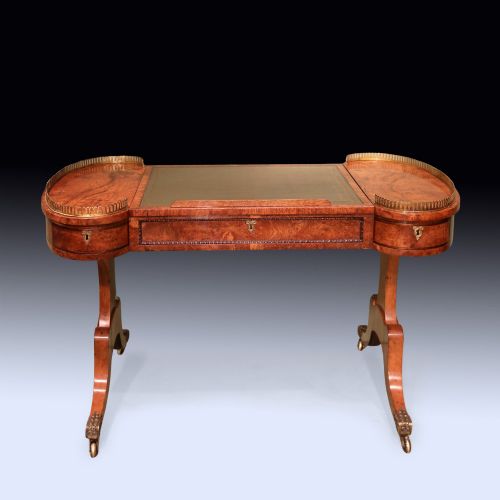
The pieces appearing here include compact davenports, kneehole desks, and larger end-support writing tables meant to sit centrally in a room. Alongside these surfaces, the listings incorporate matching armchairs, library chairs, and desk chairs upholstered in leather or textile.
Mahogany and rosewood dominate the selection, complemented by burr oak and standard oak. Most items date from the early nineteenth century around eighteen hundred to eighteen fifty, showing the restrained classical influence of the era.
Separating the finest examples
Quality rests primarily in the selection of the timber and the cleverness of its grain configuration across large surfaces. Highly figured rosewood or burr oak panels elevate a piece well above plain utilitarian alternatives.
Proportion and scale dictate the visual success of the piece, particularly on library tables designed to be viewed from all sides. A balanced relationship between the writing height, drawer depth, and overall width marks the distinction at the top of the range.
The selection includes dedicated partner desks, compact davenports, and broad library tables alongside matching upholstered armchairs and desk chairs.
Gillows of Lancaster
The Regency Period Study Desk Glossary
- Partners desk
- A large desk designed with drawers and cupboards on both sides, allowing two people to work opposite one another. These pieces often feature generous proportions and fine timber veneers.
- Davenport desk
- A compact writing desk featuring a sloping top hinged over a set of side drawers. This form combines storage with a relatively small footprint.
- Library table
- A freestanding table intended for books and paperwork, typically finished on all sides so it can float in the middle of a room. They frequently stand on pillars or end supports.
- Kneehole desk
- A desk featuring a central recessed space for the legs, flanked by pedestals of drawers on either side. These compact writing stations date back to the Georgian era and continue through the Regency.
- End-support table
- A table construction where the main weight is carried by two solid vertical pedestals or trestles connected by a stretcher. This design provides robust support for heavy library use.
Regency Period Study Desk: Frequently Asked Questions
What is a regency period study desk?
A regency period study desk is a nineteenth-century writing surface, library table, or partner desk designed for reading and correspondence. These pieces reflect the classical styling prevalent during the Regency, George IV, and William IV eras.
They are typically constructed from dense hardwoods like mahogany and rosewood, often featuring inset leather writing surfaces and turned or carved supports.
How do I style a library table at home?
Library tables work well as freestanding centrepieces in a room due to their finished backs and substantial proportions. You can place a pair of armchairs nearby or use the surface to hold lamps and books.
Pairing the table with a period desk chair or library armchair creates a cohesive study space that highlights the rich timber tones.
Are these desks suitable for daily use?
Most regency study desks and writing tables were built for heavy administrative or library work, making them sturdy enough for modern laptop use and writing. The integration of durable leather inserts provides a practical surface for daily tasks.
Care should be taken to protect antique timber veneers from excessive moisture and direct heat sources to preserve the finish.
How do I distinguish between Regency and William IV pieces?
Regency pieces generally display refined, slender proportions influenced by neoclassical restraint and delicate brass or carved details. William IV furniture tends towards a heavier, broader scale with bolder carving.
Both periods utilise similar materials like mahogany and rosewood, but the overall mass and architectural styling usually signal the transition from the earlier Regency aesthetic.