
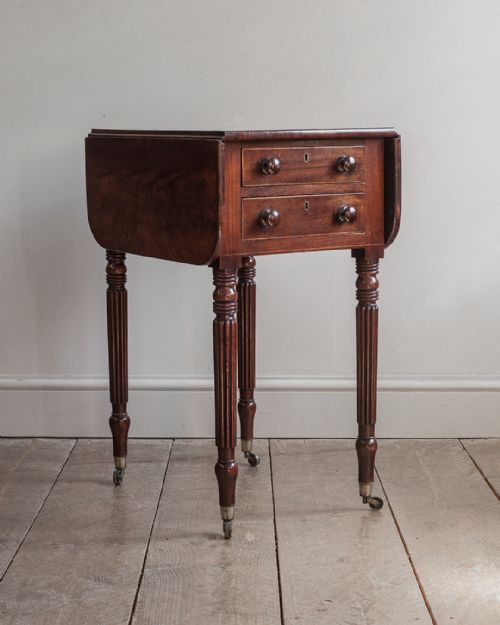


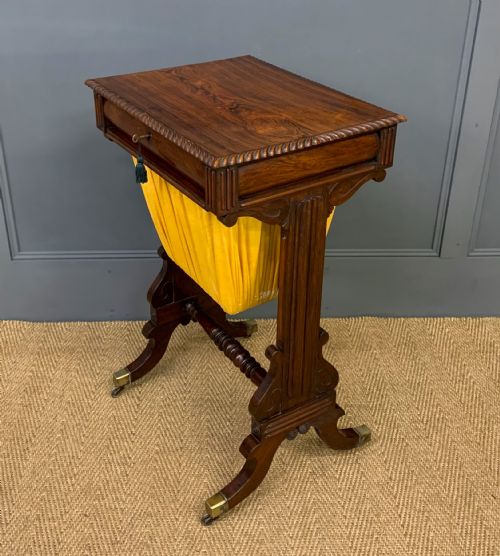
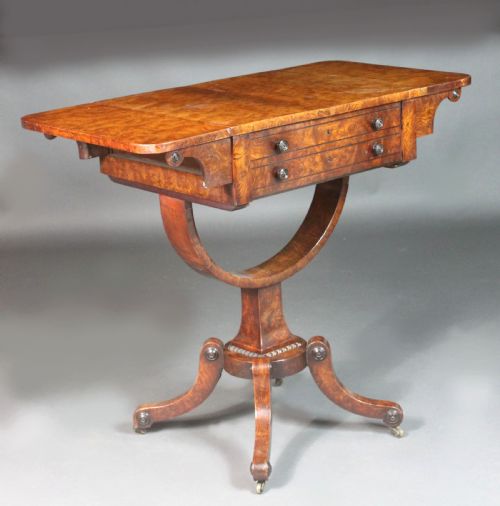


Regency Period Sewing Table
These pieces are a regency period sewing table, offering refined utility and elegant craftsmanship for the discerning interior.
Regency Period Sewing Table
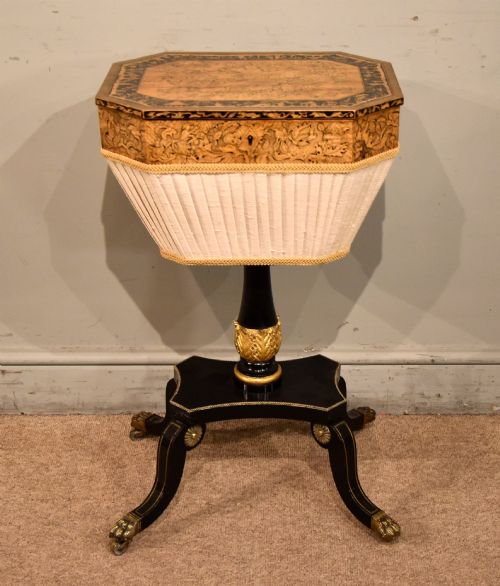
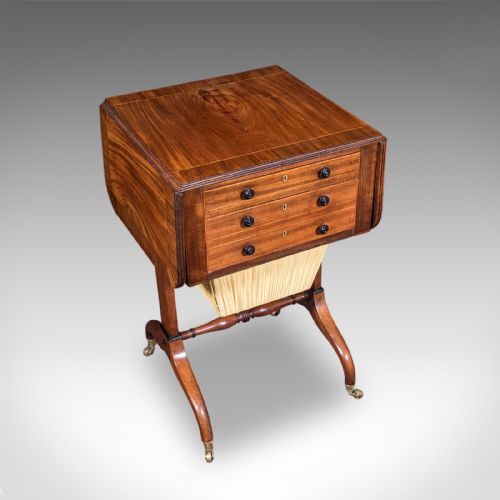
A regency period sewing table serves as a functional and decorative piece, combining storage for needlework with the elegance of a small occasional table. You will frequently encounter forms in mahogany and rosewood, often featuring drop leaves or fitted drawers designed for domestic crafts.
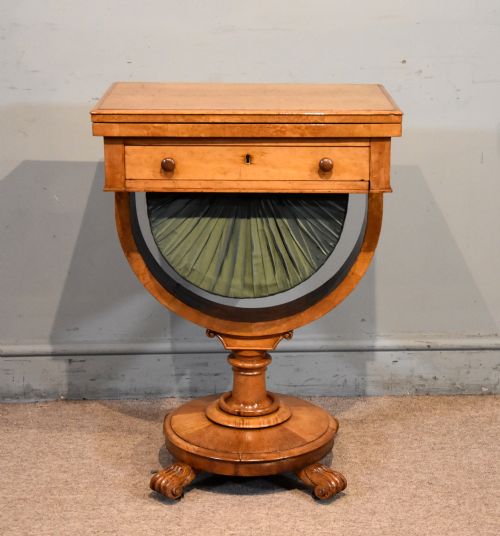
The materials and styles span the Georgian, Regency, and George IV eras, incorporating woods such as maple, pollard oak, amboyna, yew, and burr ash alongside classical proportions. Many examples function equally well as lamp tables, side tables, or occasional tables within a traditional room layout.
The origins of these tables reflect the height of British cabinet-making during the early nineteenth century, with specific pieces displaying influences from Sheraton or the manner of Gillows of Lancaster. The form bridges the gap between utilitarian needlework storage and polished drawing-room furniture.
Materials and Construction
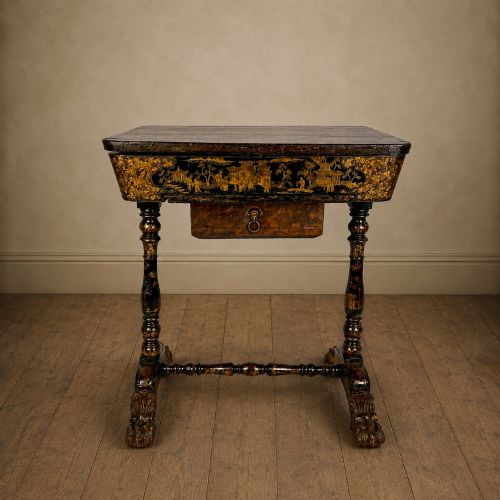
Makers utilised dense cabinet timbers like mahogany and figured rosewood as the primary carcase materials, supplemented by exotic veneers including Chinese export black and gilt lacquer, pollard oak, and amboyna. Boxwood and wood inlay provide delicate contrasting borders along the top surfaces and drawer fronts.
Brass details, such as inlaid stringing, mounts, and castors, add structural definition and decorative contrast to the darker woods. Silk and fabric components line the traditional hanging bags or internal compartments designated for sewing cottons and textiles.
Some sewing tables secretly doubled as gambling dens, hiding fold-out games boards beneath their genteel needlework drawers.
Distinctions in Quality
The refinement of the timber selection dictates the upper tier of these pieces, where highly figured rosewood, burr ash, or amboyna display striking natural grain patterns. Superior examples incorporate intricate specimen wood veneers and precise brass inlay rather than plain timber surfaces.
The integration of multi-purpose interiors - such as combined writing drawers, games boards, and silk work-bags - separates standard utility pieces from masterworks. Attribution to prominent workshops or the presence of sophisticated turning and joinery further elevates the standing of an individual table.
Gillows of Lancaster·John MaClean
The Regency Period Sewing Table Glossary
- Drop leaf
- A table top with hinged flaps that can be raised to extend the surface area or lowered when space is limited. This mechanism allows the furniture to adapt easily to smaller rooms.
- Penwork
- A decorative technique using ink applied to wood to simulate more expensive inlay or engraved ornamentation. It creates fine linear patterns reminiscent of marquetry.
- Work table
- A nineteenth-century term for a small domestic table equipped with drawers and hanging fabric bags for needlework. These items combined practical utility with parlour elegance.
- Specimen wood
- Small pieces of various contrasting timbers arranged to form geometric patterns or decorative pictures. This technique displays the artisan's skill in handling diverse materials.
Regency Period Sewing Table: Frequently Asked Questions
What is a regency period sewing table used for?
These tables were originally designed for ladies to store sewing equipment, threads, and needlework supplies inside fitted drawers and hanging silk bags.
Today, they function well as versatile side tables, lamp tables, or small occasional tables in sitting rooms and bedrooms.
How can I identify a genuine piece?
Authentic examples display early nineteenth-century construction methods, using period timbers like mahogany and rosewood combined with traditional hand-cut dovetails.
Look for period characteristics such as brass inlay, turned legs, and appropriate secondary woods within the drawer linings.
Did these tables have other functions?
Many examples incorporate multiple uses, doubling as writing desks with fitted internal compartments or transforming into gaming tables with inlaid boards.
This multi-functionality was popular during the Regency era to maximise utility in elegant drawing rooms.
How do I care for rosewood and mahogany?
Maintain the timber by keeping the table away from direct sunlight and heat sources to prevent the natural wood veneers from drying out or fading.
Apply a traditional wax polish occasionally to nourish the surface and preserve the depth of the grain.