


Regency Period Server
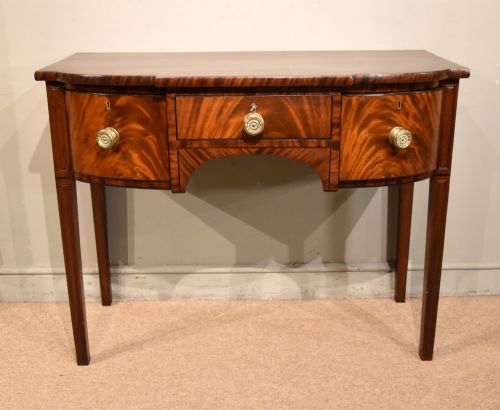
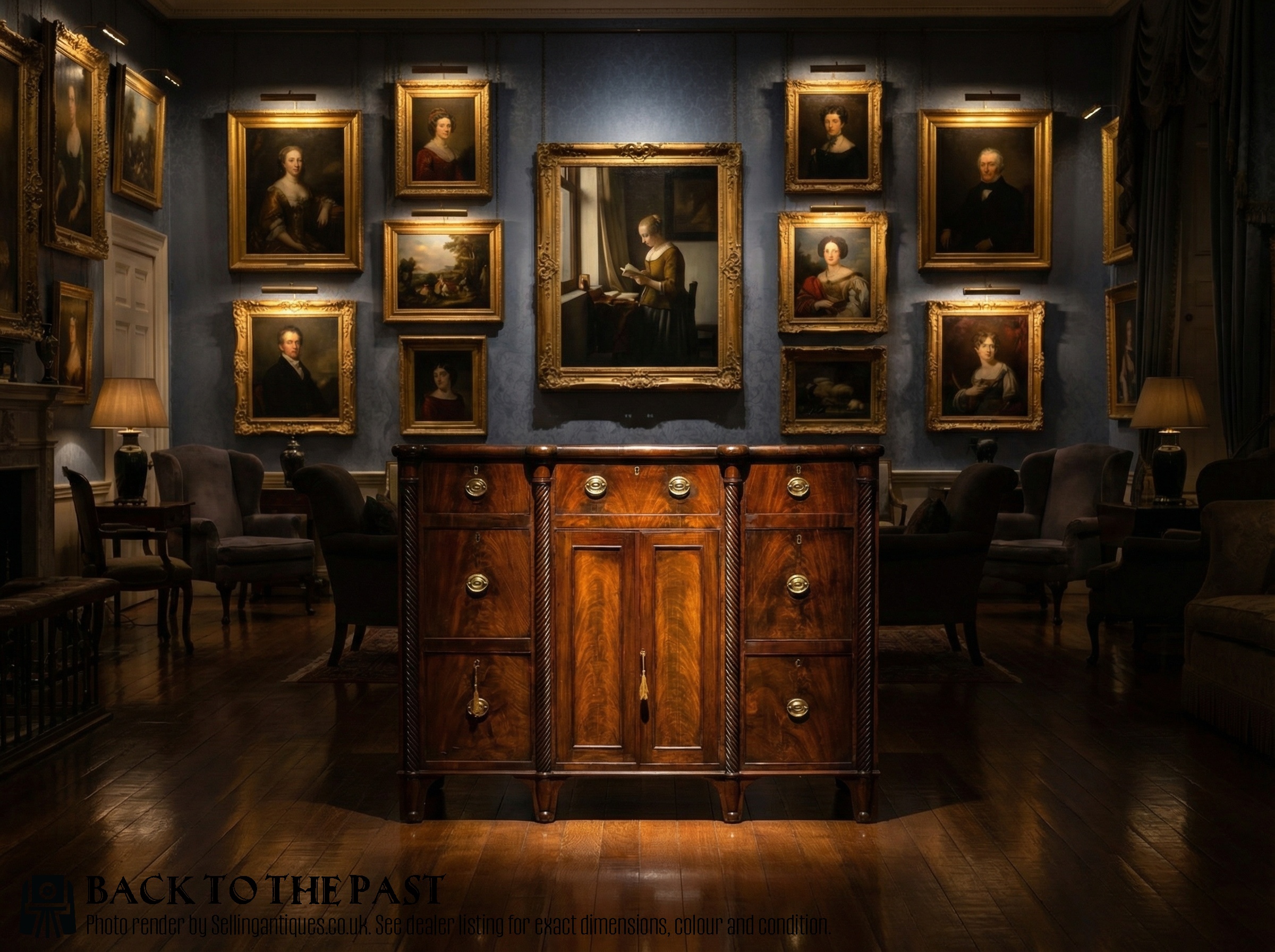
A regency period server is a substantial piece of dining furniture built for display and service, bringing architectural dignity to a room.
Regency Period Server
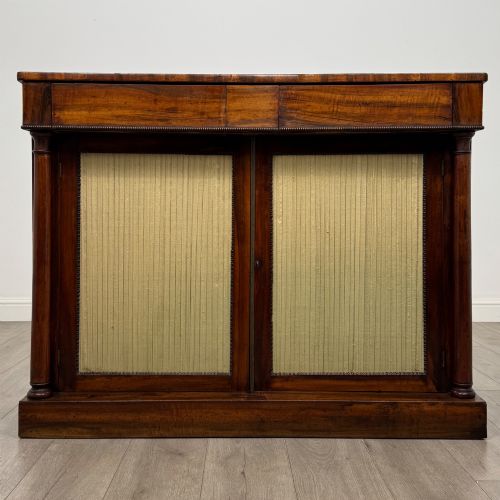
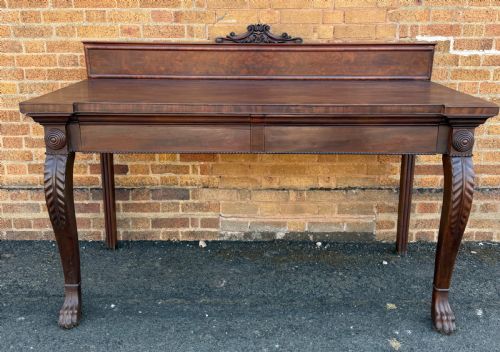
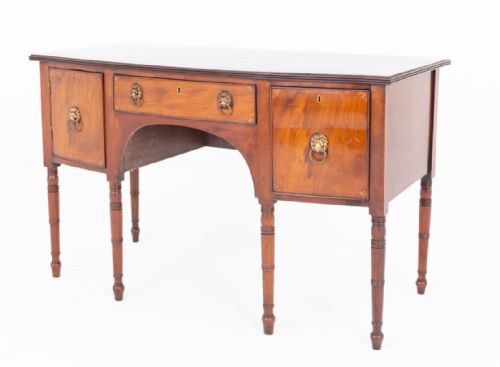
A regency period server spans forms such as serving tables, pedestal sideboards, chiffoniers, and side cabinets originating predominantly from the Regency, Georgian, and early nineteenth-century eras. These pieces accommodated the formal dining practices of their day, providing surface area for dishes and storage for silverware.
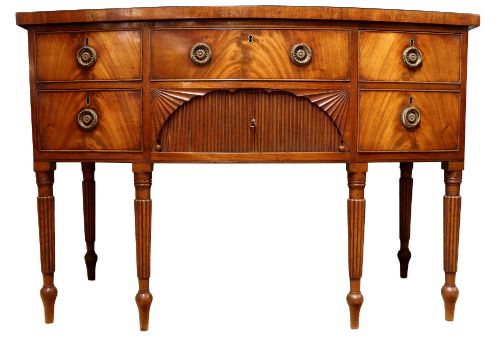
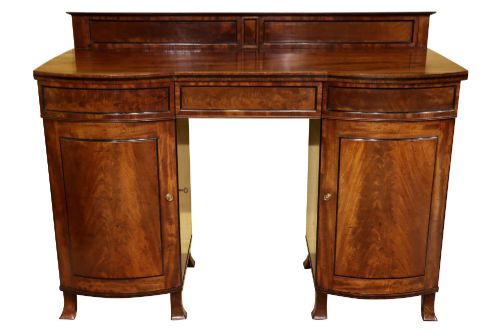
The selection ranges from bow-fronted sideboards to flat-front serving tables and multi-tiered buffets. Many examples exhibit regional variations, including Irish designs and pieces attributed to specific workshops.
Makers utilised architectural lines, incorporating pedestals, brass galleries, and cupboards tailored to the domestic interiors of the period.
Materials and Technique
Construction relies heavily on mahogany, flame mahogany veneer, and rosewood, chosen for their deep grain and rich visual weight. Cabinetmakers laid these veneers over secondary timbers to achieve striking surface patterns.
Decorative detailing often includes boxwood stringing, brass inlay, and brass galleries mounted to the upper surfaces. These metallic and lighter wood accents contrast sharply against the dark ground of the primary timber.
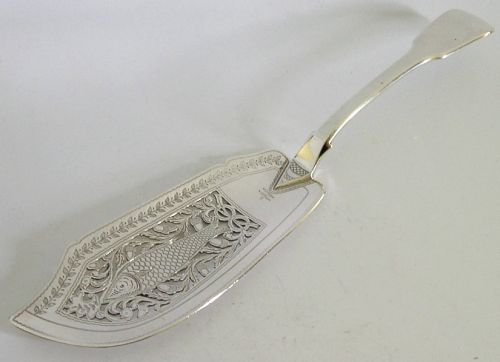
A fish server slice occasionally sneaks into the furniture line-up, proving that small silver eats big sideboards for breakfast.
Craftsmanship and Proportion
Quality rests upon the selection of timber figures, such as highly figured flame mahogany or rosewood, and the precision of the cabinet work in matching veneers across drawers and doors. Finer examples display balanced proportions and restrained inlay rather than excessive ornamentation.
Structural integrity reveals itself in the handling of heavy pedestals, the crispness of brass mounts, and the preservation of original surface finishes with good patina. Pieces featuring attribution to notable workshops or unusual formats demonstrate higher design ambition.
Gillows·Mack Williams and Gibton
The Regency Period Server Glossary
- Bow front
- A convex curved cabinet front that projects outward in a smooth arc. This shape softens the room's geometry and typifies many sideboards of the era.
- Chiffonier
- A compact sideboard or cabinet, often fitted with lower doors and sometimes an upper shelf supported by pillars. It serves smaller dining or reception rooms.
- Pedestal sideboard
- A form comprising two distinct pedestals flanking a central section, occasionally linked by a drop well. It offers substantial storage capacity.
- Flame mahogany
- Mahogany veneer cut to reveal a characteristic flickering, flame-like grain pattern. Cabinetmakers prized this figure for principal drawer fronts and doors.
- Brass gallery
- A low rail of pierced or spindle brass fitted to the rear or top surface of a server. It prevented serving dishes from sliding off during use.
Regency Period Server: Frequently Asked Questions
What is the difference between a sideboard and a serving table?
Sideboards typically incorporate enclosed storage, drawers, and cupboards for dining utensils and linens. Serving tables present an open framework with legs and a flat top designed strictly for placing dishes.
Both forms belong to the broader category of servers, though sideboards offer more concealed utility while serving tables emphasise clean architectural lines.
How do I identify a Regency server?
Look for classical proportions, dark mahogany or rosewood timbers, and decorative elements like brass inlay or boxwood stringing. The stylistic vocabulary draws heavily on neoclassical and Grecian motifs.
Dates generally cluster around the early nineteenth century, aligning with the Regency and George IV periods.
Where should I place a server in my home?
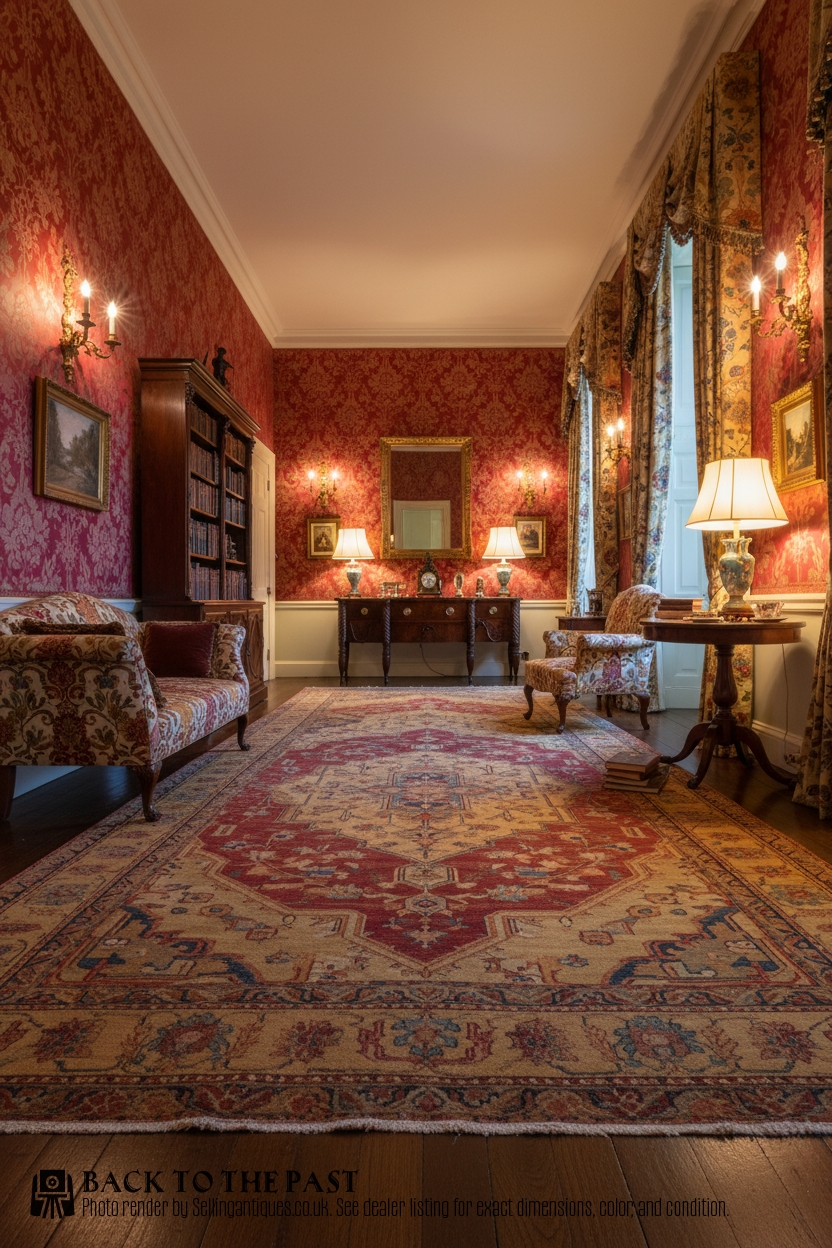
A server suits a dining room or large hallway where its length and surface depth can be appreciated. Taller pieces with cupboards also function well in living spaces for general storage.
Ensure adequate clearance around the piece, as pedestals and bow fronts require physical space to read correctly in a room.
Are these servers made of solid mahogany?
Most examples utilise mahogany veneers applied over stable secondary woods for large surfaces like doors and drawer fronts. Solid timber appears more frequently in structural elements such as legs, framing, and mouldings.
This technique prevented warping while allowing cabinetmakers to showcase highly figured flame veneers.