



Nineteenth Century Mahogany Buffet
These nineteenth century mahogany buffet options bring robust dining room storage and display, pairing solid timber with clever tiers and pedestals.
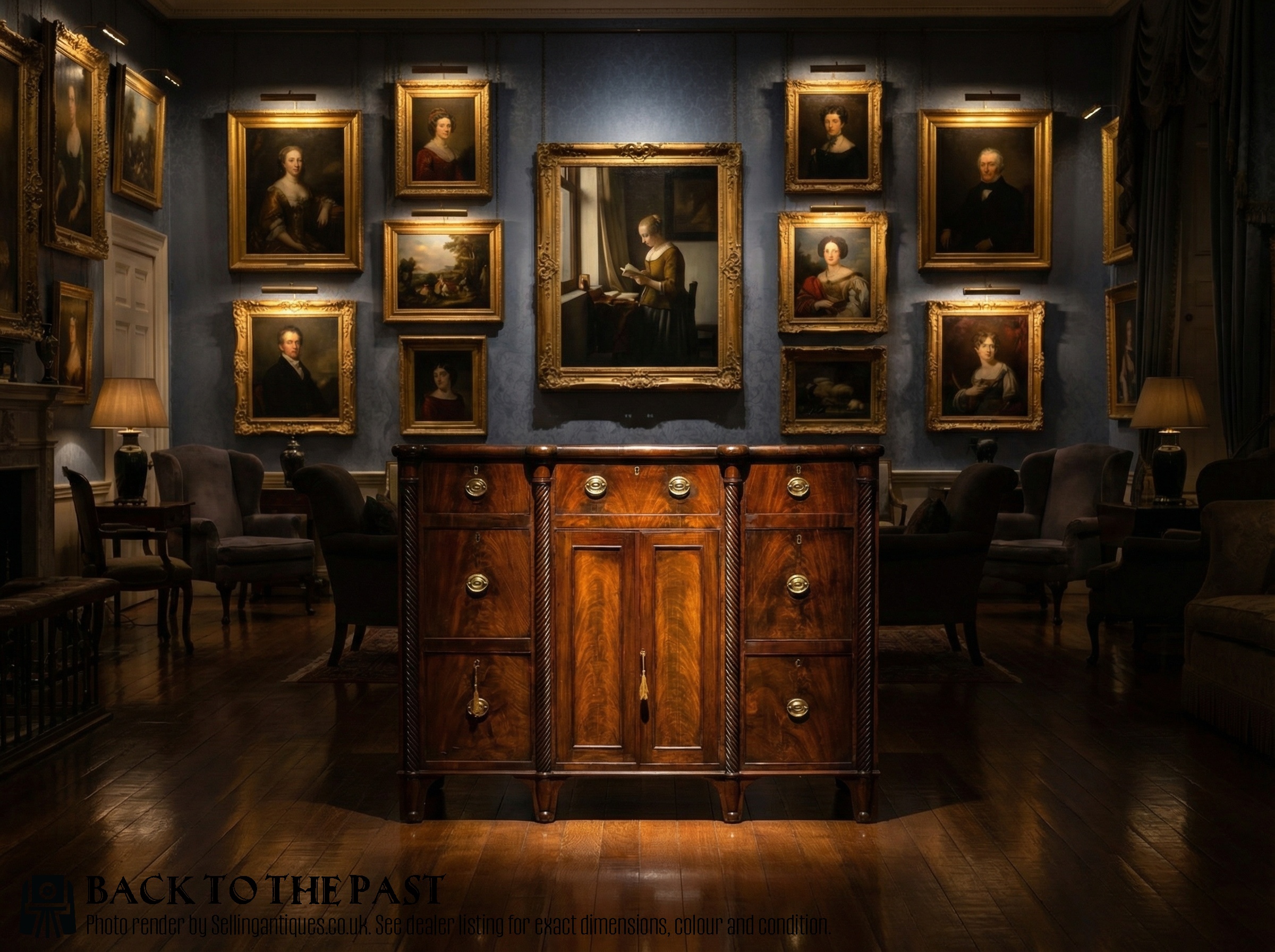
Nineteenth Century Mahogany Buffet
A nineteenth century mahogany buffet functions as a substantial dining room serving station or display piece, encompassing sideboards, chiffoniers, cabinets, and tiered trolleys. These forms emerge primarily through the Regency, William IV, and Victorian periods, showcasing substantial timber construction intended for hosting.
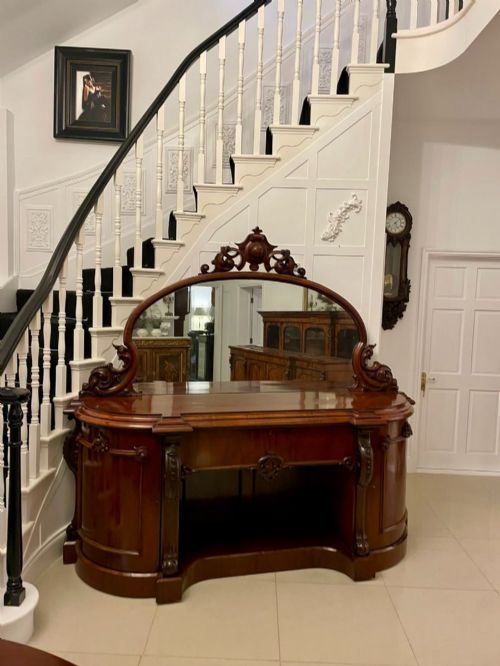
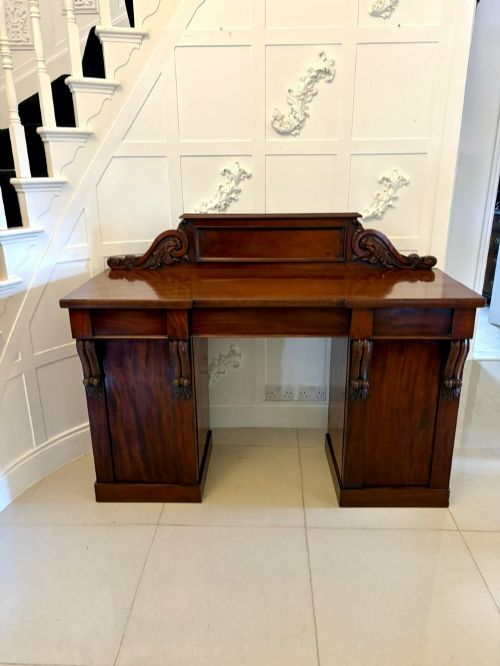
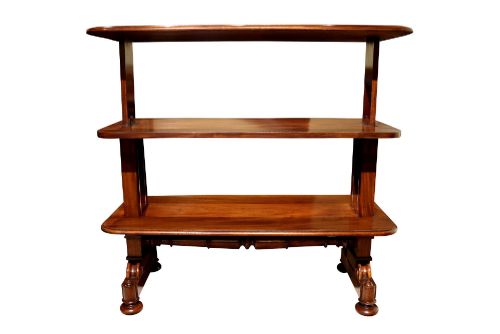
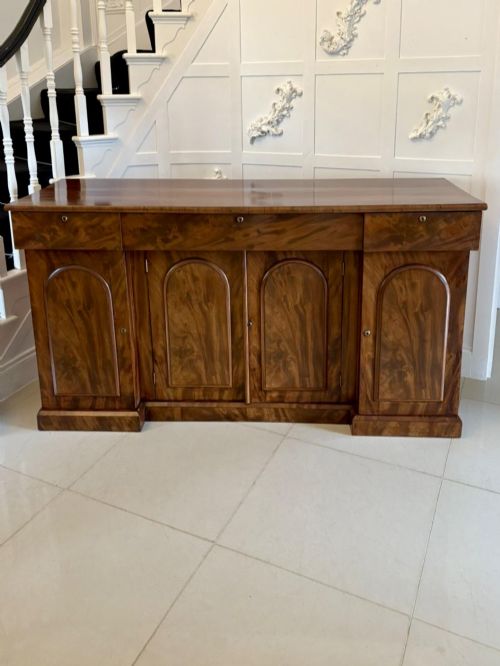
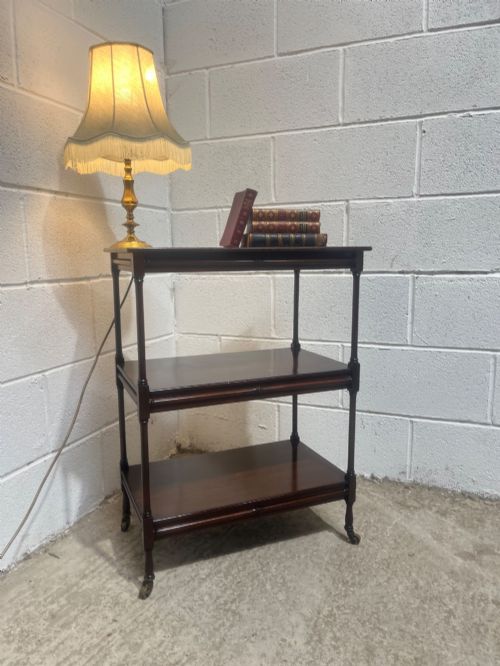
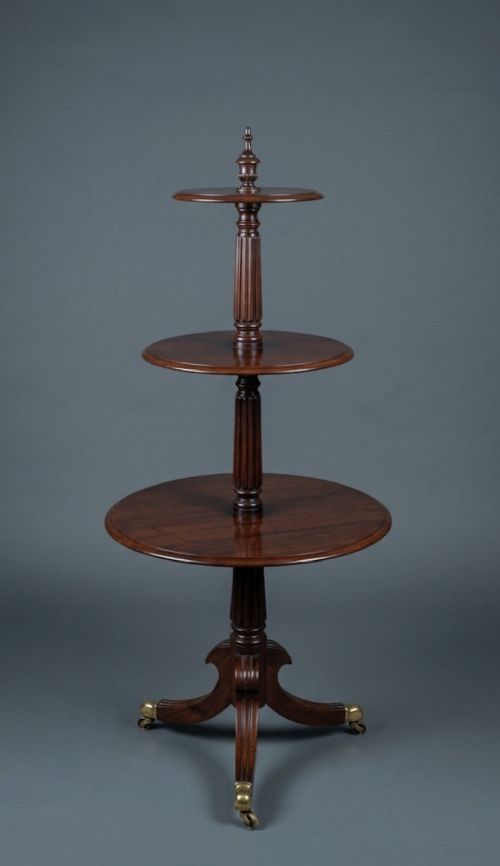
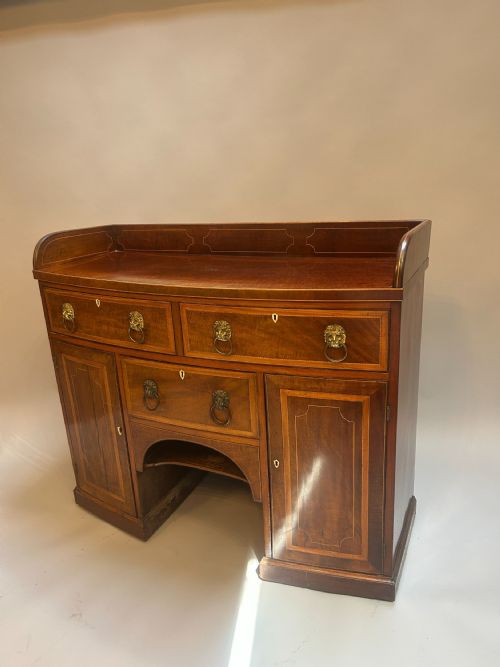
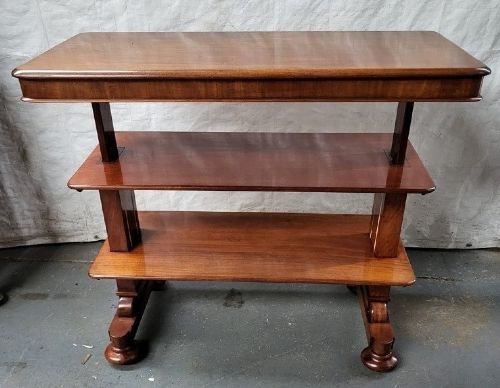
The pieces listed on this page range from compact side cabinets and tiered dumb waiters to large pedestal sideboards and mirror-backed servers. Buyers encounter functional tiered units and monumental breakfront designs that anchor a dining space with period presence.
Makers and workshops of the era adapted these serving tables and credenzas to changing domestic needs, incorporating metamorphic actions, drop shelves, and enclosed cupboards. Each configuration reflects the specific storage demands of nineteenth century dining rooms.
Materials and Construction
Cabinet makers utilised solid mahogany and figured flame mahogany veneers over secondary timbers, exploiting the rich grain patterns for visual depth. Surfaces often feature contrasting stringing and inlay work executed in boxwood and ebony.
Metal and glass components appear alongside the timber, with brass inlay and hardware adding structural accents to Regency and Victorian pieces. Tiered trolleys and dumb waiters utilise turned columns and brass castors to ensure mobility and support heavy plateware.
Design styles span Regency, Victorian, William IV, George IV, and French Empire influences.
Assessing Craftsmanship
Quality rests upon the selection of timber, distinguishing plain sawn boards from deeply figured flame mahogany veneers and crisp boxwood stringing. Superior examples display seamless matching of grain across drawer fronts and cabinet doors.
Construction methods dictate longevity, seen in the precision of dovetailed drawer boxes and the stability of carved scrollwork or turned pillars. Finer pieces maintain original brass hardware, working locks, and smooth mechanisms on rise-and-fall tiers or metamorphic elements.
The Woodworkers Ltd Kilkenny
The Nineteenth Century Mahogany Buffet Glossary
- Flame mahogany
- A veneer cut from timber where the branch meets the trunk, producing a distinctive, fiery grain pattern. Cabinet makers reserved this highly decorative wood for prominent surfaces like drawer fronts and cabinet doors.
- Chiffonier
- A compact sideboard or cabinet featuring enclosed shelving below and sometimes a small gallery or shelf above. This form became popular during the nineteenth century for smaller dining spaces and parlours.
- Dumb waiter
- A tiered serving table fitted with multiple rotating or fixed shelves on a central column. These pieces allowed diners to access side dishes and wine without the presence of servants.
- Breakfront
- A piece of furniture where the central section projects forward from the flanking outer cabinets. This architectural layout creates depth and shadow on large sideboards.
- Stringing
- Thin inlaid lines of contrasting timber, such as boxwood or ebony, used to outline panels and drawers. This decorative technique highlights the geometric lines of Regency and Victorian cabinetry.
Nineteenth Century Mahogany Buffet: Frequently Asked Questions
How do I use a buffet in a modern home?
A nineteenth century mahogany buffet serves well as a dining room server for glassware and linens, or as a media console in a living space. The generous top surface provides an ideal platform for lamps, serving trays, or decorative collections.
Enclosed cupboards and drawers conceal modern items while keeping everyday necessities within reach. Their rich timber tones anchor contemporary neutral interiors with historic character.
What is the difference between a sideboard and a buffet?
While terms often overlap, traditional sideboards focus on flat serving surfaces with drawers and cupboards beneath for tableware. Buffets frequently incorporate tiered shelves, upper galleries, or serving surfaces designed specifically for food presentation.
Tiered buffet variants like dumb waiters and trolley forms offer vertical display space rather than broad flat tops. Both types fulfilled dining room service duties during the nineteenth century.
How do I distinguish Regency pieces from Victorian ones?
Regency furniture, dating from the early nineteenth century, typically exhibits clean classical lines, restrained brass inlay, and delicate proportions. Woods like flame mahogany are paired with geometric stringing in boxwood or ebony.
Victorian pieces from the mid-to-late nineteenth century often scale larger, featuring heavier carved details, mirror backs, and elaborate paneling. Proportions become more substantial, reflecting changing industrial capabilities and interior tastes.
What are metamorphic buffets?
Metamorphic furniture pieces incorporate mechanical actions that allow them to transform between different configurations, such as rising tiers or expanding shelves. These clever designs maximised utility in nineteenth century dining rooms where space and versatility mattered.
Operating mechanisms rely on concealed ratchets, weights, or pivoted arms integrated into the timber frame. They represent the ingenuity of period cabinet makers solving practical entertaining challenges.