


Regency Period Mahogany Chest
A regency period mahogany chest brings architectural restraint and rich, figured timbers into a room with understated authority.
Regency Period Mahogany Chest
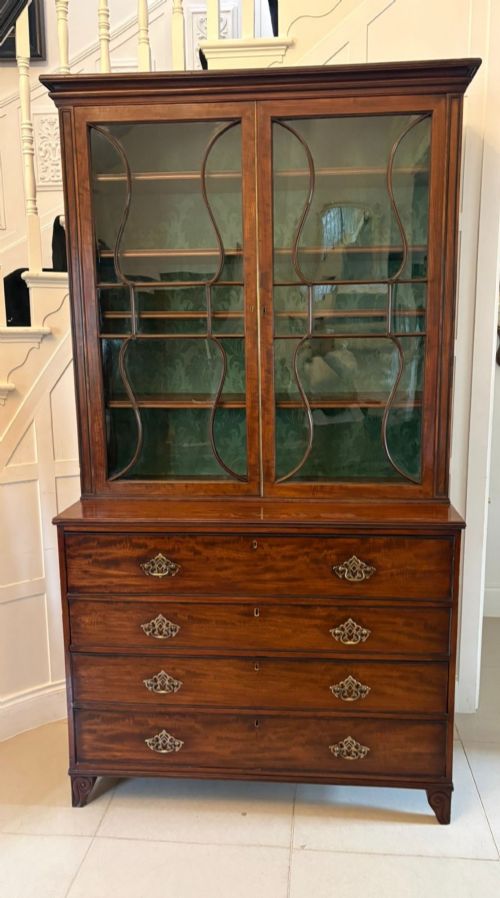
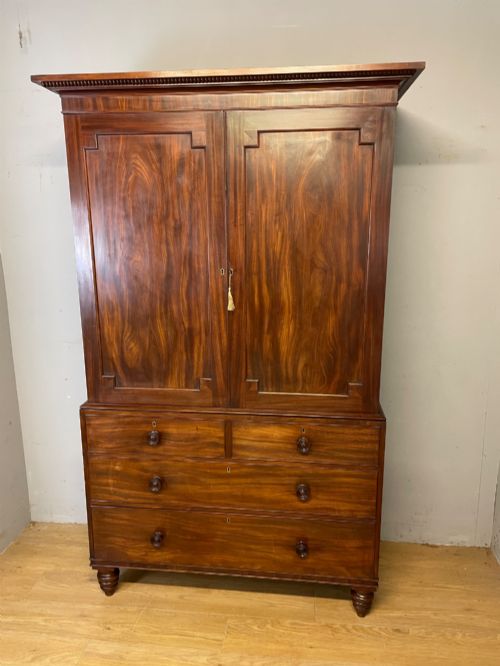
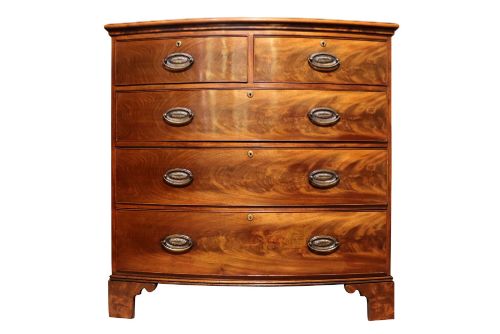
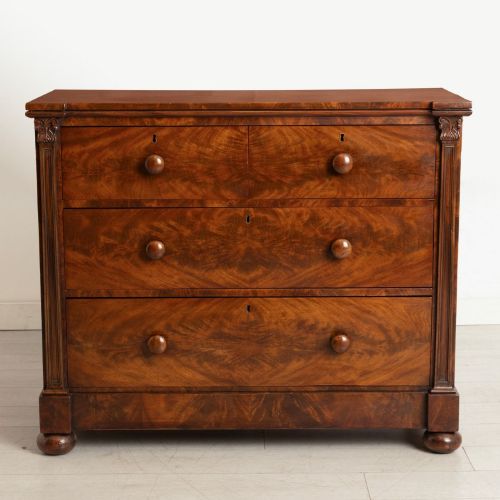
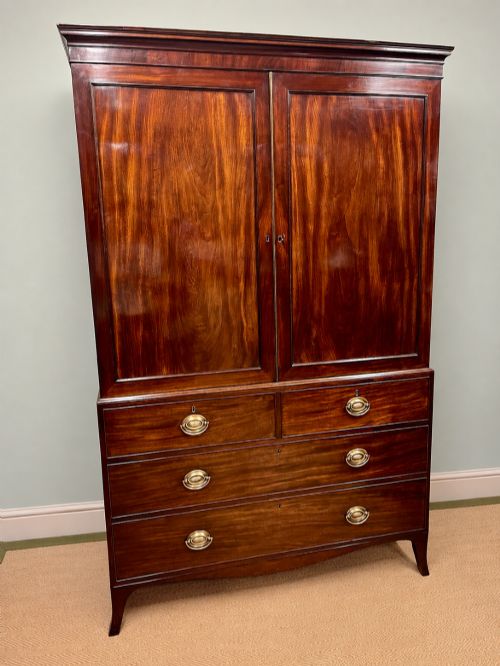
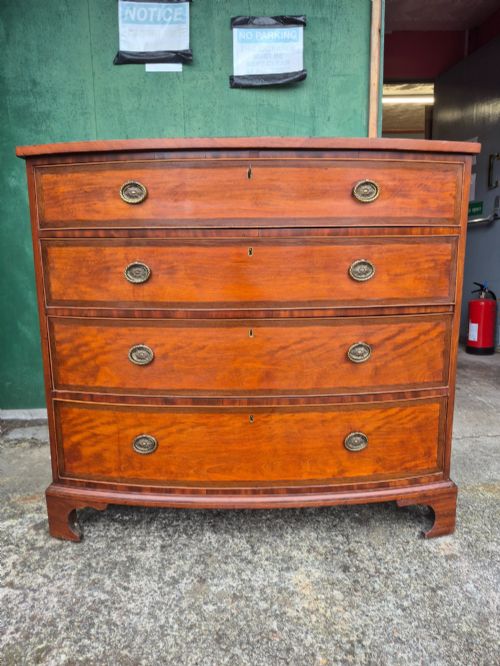
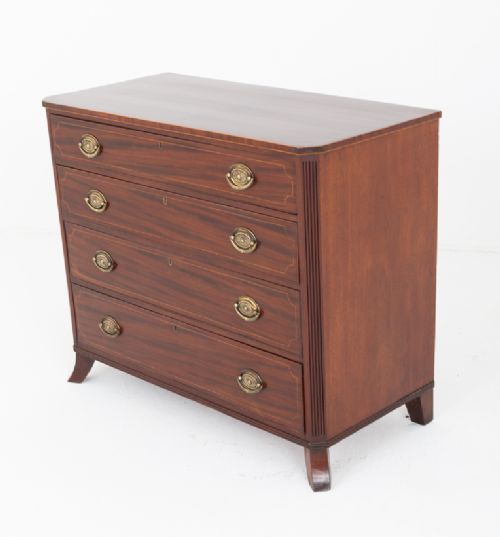
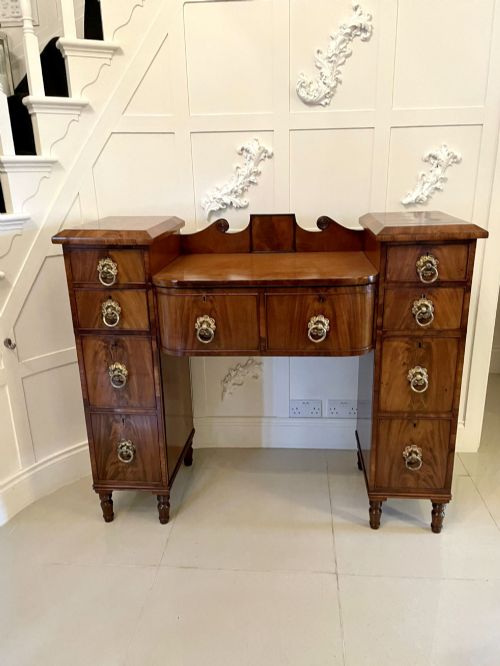
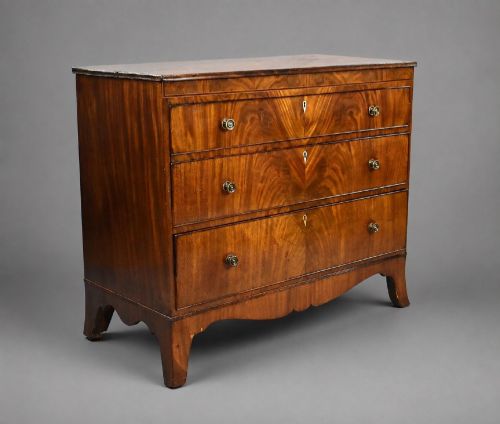
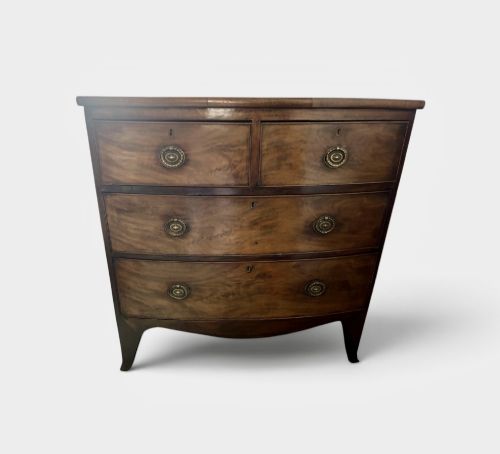
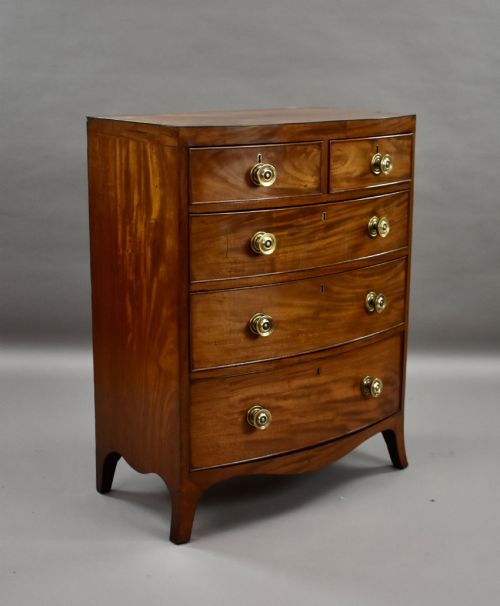
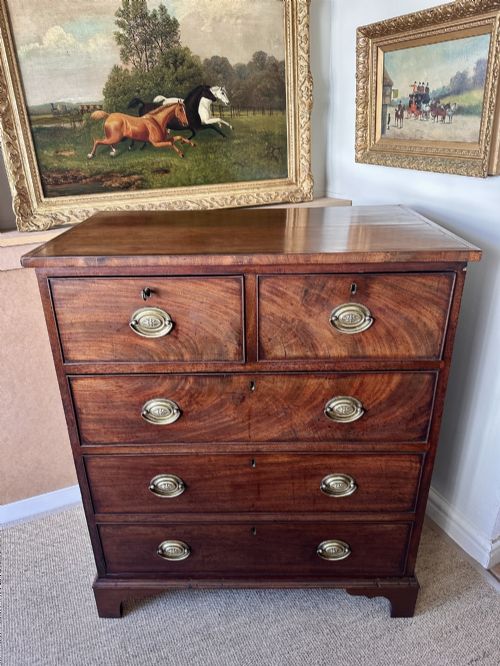
A regency period mahogany chest is primarily encountered as a bow fronted chest of drawers, alongside taller formats like tallboys and linen presses, dating from the early nineteenth century. These pieces reflect the neoclassical tastes of the Regency, George IV, and late Georgian eras, prioritising clean structural lines.
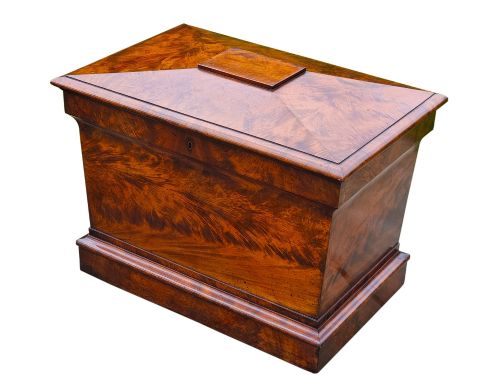
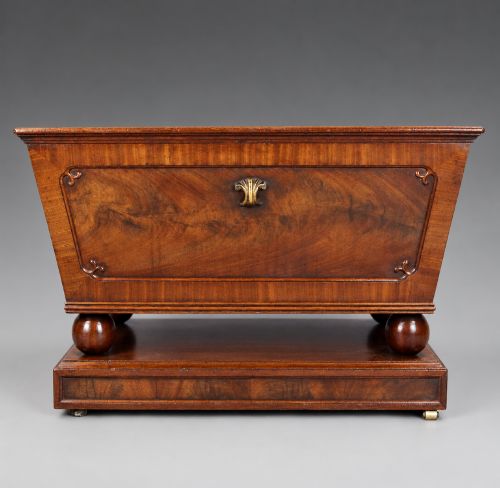
Beyond standard drawer units, the category encompasses specialised forms such as secretaire chests with fitted writing desks, dressing chests, and occasional cellar pieces like wine coolers or sarcophagus cellarettes. Oak often serves as the secondary wood for drawer linings, while the primary exteriors display the period's characteristic dense grain.
Most examples originate from English workshops, though Scottish pieces with distinct proportions and regional timbers also appear regularly. Buyers seeking this phrase typically navigate a selection dominated by compact bow fronts and wider four drawer configurations.
Materials and Construction
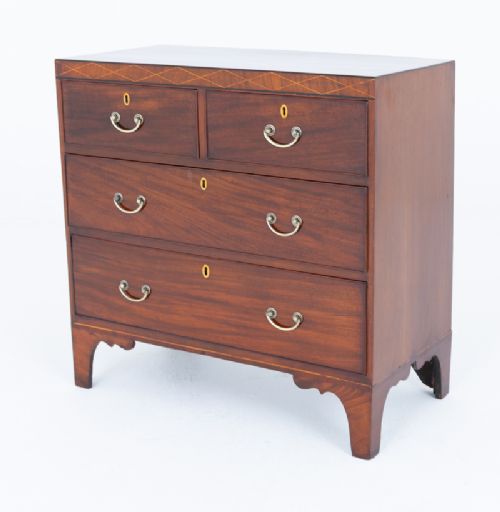
Cabinet makers utilised solid mahogany and highly figured veneers, particularly flame mahogany and plum pudding variations, laid over stable secondary woods like oak. Selected sections often incorporated contrasting stringing or crossbanding in ebony and other dark timbers to frame the drawer fronts.
Structural hardware included brass drop handles, ring pulls, and occasionally bone escutcheons surrounding working keyholes. Specialised items like cellarettes integrated functional lead liners to hold ice and bottles securely.
Regency Period Mahogany Chest Retail Price Guide 2026
Typical asking prices for regency period mahogany chest among the pieces listed under this phrase on Sellingantiques today, from the lower quarter to the upper quarter. They describe what is for sale here now, not the wider market.
Primary materials recorded across the inventory include solid mahogany, flame mahogany veneer, oak, ebony, and lead.
Factors of Quality
Quality rests upon the selection of the mahogany veneer and how symmetrically the grain patterns are matched across the drawer fronts. Superior pieces display deep, active figuring that wraps cohesively around the curved contours of a bow front.
The refinement of the proportions and the crispness of secondary details, such as bracket feet, turned legs, or inlaid edge banding, separate standard utility furniture from high workshop production. Original brass hardware and cleanly fitted oak drawer linings further distinguish finer examples.
George Simpson·Thomas Hope
The Regency Period Mahogany Chest Glossary
- Bow front
- A convex curved front facade characteristic of many nineteenth century case pieces. This shape softens the corners of the furniture while maximising internal storage depth.
- Flame mahogany
- A veneer cut from the fork of the mahogany tree where branches meet the trunk. The resulting grain creates a dramatic, feather like pattern resembling flickering flames.
- Secretaire chest
- A drawer unit featuring a hinged upper drawer that folds down to reveal a fitted writing surface and small pigeonholes. It combines a chest of drawers with a compact bureau.
- Cellarette
- A freestanding or fitted container designed to hold wine bottles and ice during dining. Regency examples often take a sarcophagus shape with an internal lead lining.
- Tallboy
- A tall chest on chest configuration stacking one set of drawers directly upon a larger lower section. This form maximises vertical storage capacity within a compact footprint.
Regency Period Mahogany Chest: Frequently Asked Questions
How do I identify a genuine Regency chest?
Authentic pieces rely on period construction methods, utilising oak secondary timbers inside the drawers and hand cut dovetails rather than modern fixings. The proportions typically follow neoclassical design rules, featuring restrained mouldings and dense, heavy timbers characteristic of the early nineteenth century.
Surface patination develops naturally over decades, showing soft wax accumulation rather than chemical varnishes. Examining the timber behind the backboards and beneath the baseboards often reveals the hand tool marks left by period cabinet makers.
How should I care for a mahogany chest?
Keep antique mahogany away from direct heat sources and sudden humidity shifts to prevent the timber and veneer from splitting or warping. Natural beeswax applied sparingly helps nourish the grain and maintain the soft sheen without building up heavy chemical layers.
Avoid placing damp objects or direct sunlight onto the polished top surface, as nineteenth century finishes remain sensitive to moisture and UV bleaching. Lifting the piece entirely rather than dragging it protects the bracket feet and leg joints from structural stress.
Were these chests made in Scotland as well as England?
Scottish workshops produced distinct regional variations of these chests, often characterised by heavier proportions, deeply figured plum pudding mahogany, and specific internal drawer configurations. These Scottish pieces possess a robust presence that differs slightly from standard London cabinet work.
Regional makers frequently utilised local framing timbers alongside imported tropical hardwoods to construct the internal carcase. This regional diversity adds distinct character for collectors studying nineteenth century case furniture origins.