
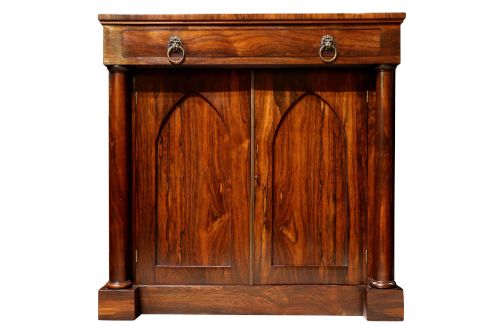
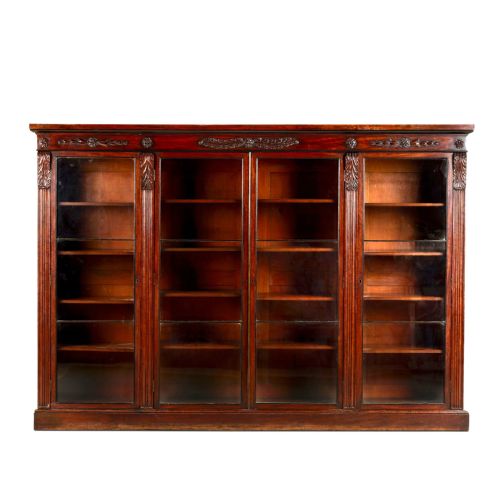
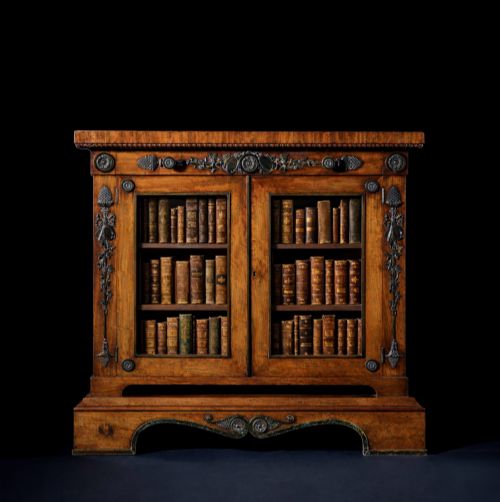
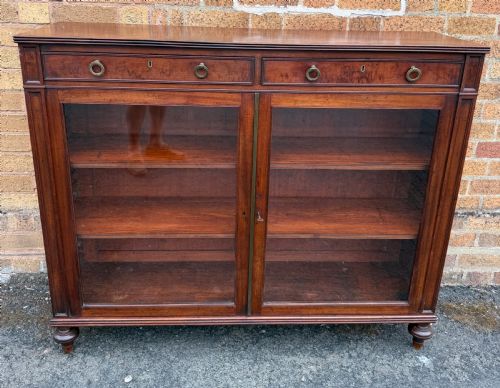



Regency Period Low Cabinet
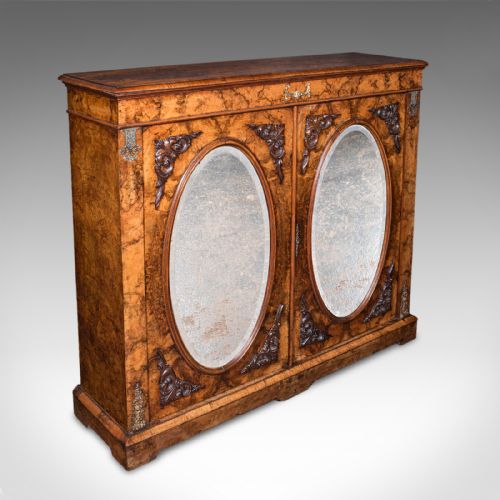
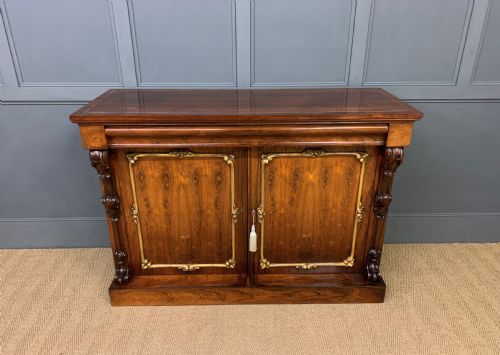
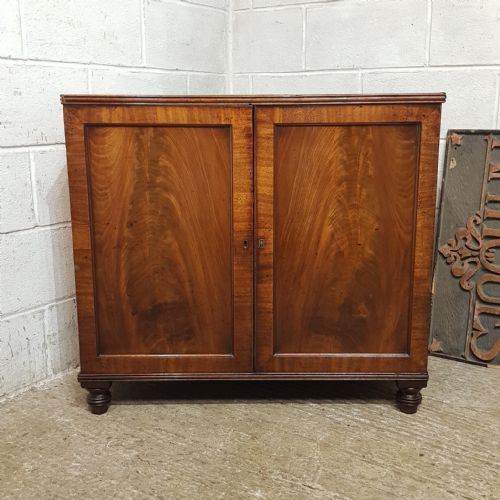
A regency period low cabinet brings architectural precision and rich exotic timbers into a room, offering both display space and concealed storage.
Regency Period Low Cabinet
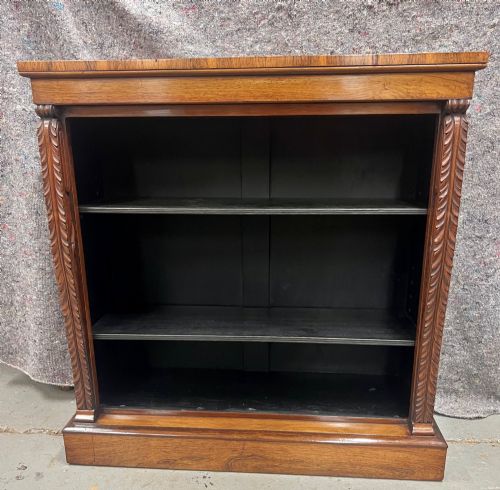
When searching for a regency period low cabinet, you encounter a variety of forms including chiffoniers, low cupboards, bookcases, and side cabinets originating from the Regency, George III, George IV, William IV, and broader nineteenth-century periods.
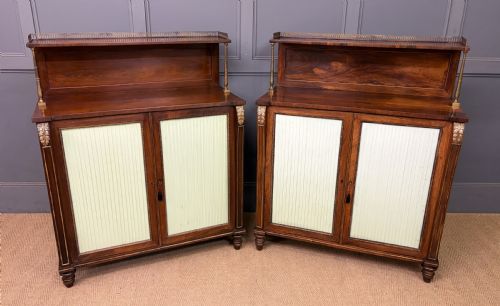
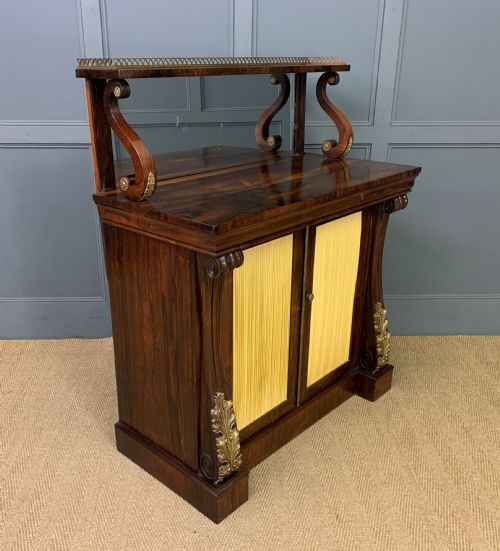
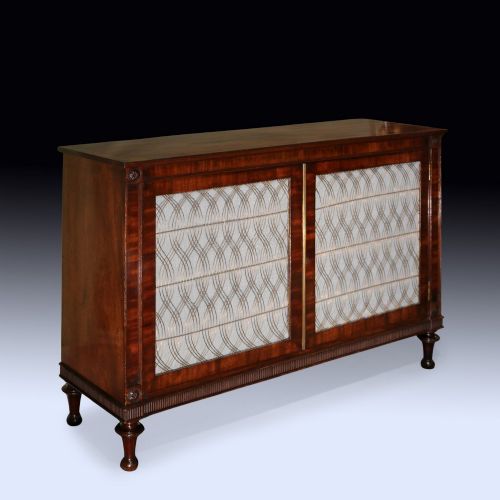
The rosewood side cabinet represents the most frequent form on this page, often equipped with glazed doors, brass grilles, or pleated chiffon panels set within architectural proportions.
Makers and workshops of the era employed diverse timber selections, ranging from traditional mahogany and walnut to highly figured amboyna, gonçalo alves, thuya wood, and palisander.
Materials and construction methods
Cabinet makers utilised dense exotic hardwoods such as rosewood and mahogany, frequently enhanced by decorative veneers including plum pudding mahogany and simulated rosewood finishes.
Metal detailing played a structural and decorative role, incorporating cast or chased ormolu, bronze mounts, and fine brass inlays alongside pierced brass grilles.
Interiors often combined silk or fabric panels, leather details, and marble tops to create textured surfaces across bookcases and chiffoniers.
Listings feature items from the Regency, Georgian, and William IV periods, incorporating rosewood, mahogany, marble, and ormolu.
Distinguishing quality in cabinet work
The tier of a piece depends heavily on the choice of timber figure, such as richly variegated amboyna or striking gonçalo alves, matched with skilled veneer selection.
Execution of specialised ornamentation, including pen-work, Egyptian Revival motifs, or precision brass inlay, separates standard cabinet making from exceptional workshop production.
Gillow·Harrods
The Regency Period Low Cabinet Glossary
- Chiffonier
- A low cabinet featuring shelves or enclosed storage below, often topped with a raised superstructure or mirrored back. These pieces evolved during the nineteenth century primarily for drawing rooms and morning rooms.
- Breakfront
- A piece of furniture where the central section projects forward from the flanking wings. This architectural arrangement creates depth and emphasises proportions in large bookcases and side cabinets.
- Gonçalo Alves
- A dense exotic hardwood prized for its striking contrasting grain patterns. Makers utilised this timber during the Regency period to provide dramatic visual texture.
- Ormolu
- Gilded bronze mounted onto furniture as decorative hardware and mounts. It added opulent metallic highlights to dark exotic woods.
- Palisander
- A term historically applied to various rich, dark rosewood timbers with strong grain markings. It appears frequently on nineteenth-century sideboards and chiffoniers.
Regency Period Low Cabinet: Frequently Asked Questions
What is a regency period low cabinet?
A regency period low cabinet is a compact nineteenth-century storage piece, including forms such as chiffoniers, side cabinets, and low bookcases designed during the Regency, Georgian, and William IV eras.
These items combine practical low shelving or enclosed cupboards with decorative timber veneers and brass or bronze mounts.
How do I identify a chiffonier?
A chiffonier is a specific type of low cabinet or sideboard distinguished by enclosed lower cupboards and often a shelf superstructure or panelled doors.
Many examples on this page feature rosewood or mahogany construction paired with pleated fabric panels, brass grilles, or marble tops.
What woods were used for these cabinets?
Cabinet makers predominantly used exotic and native timbers including rosewood, mahogany, amboyna, gonçalo alves, thuya wood, and palisander.
Surfaces were also finished with simulated rosewood paint or enhanced through pen-work and parcel gilding.
Are marble tops common on these cabinets?
Marble tops appear on specific nineteenth-century chiffoniers and side cabinets, often paired with rosewood bodies.
This stone surface provided a durable and contrasting top finish suited to formal entertaining spaces.