




Regency Period Cut Glass
Regency period cut glass brings together lead crystal and bright metal to catch candlelight across the dining table.
Regency Period Cut Glass
Regency period cut glass encompasses tablewares and decorative objects shaped by Georgian and nineteenth-century makers using heavy lead crystal. The most frequently encountered pieces on this page are decanters, port glasses, finger bowls, and table lustres designed for the formal dining room.
Forms range from ship's decanters and whisky tumblers to bon-bon jars, cornucopias, and biscuit barrels. These objects date from the Regency era and the broader Georgian period, often combining clear lead crystal with gilt bronze or ormolu mounts.
Materials and technique
Pieces are formed from heavy lead crystal or lead crystal glass, providing the weight and clarity necessary for deep wheel-cutting. Artisans employed hobnail, blaze, and ring cutting to create multifaceted surfaces that refract light.
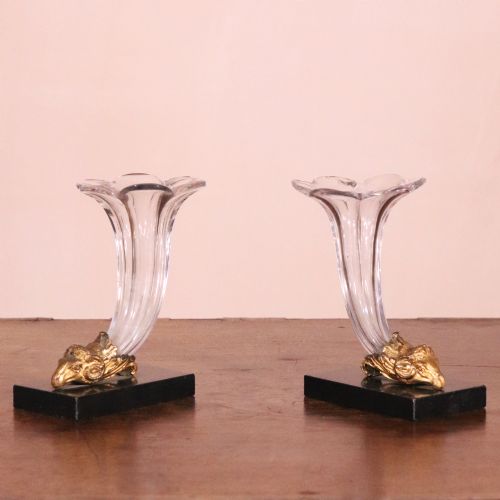
Metal components in gilt bronze, bronze, or ormolu are frequently paired with the glass elements, particularly in candlesticks, cornucopias, and chandeliers. Marble and straw-coloured amber glass also appear among the materials used to mount and colour the wares.
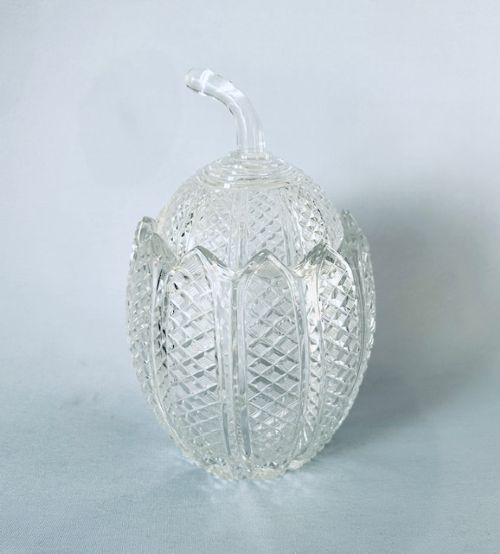
A melon-shaped biscuit barrel proves that early nineteenth-century hosts took their dry baked goods with considerable architectural seriousness.
Quality and execution
The standard of cutting determines the definition and sharpness of facets across the crystal surface. Superior examples display precise wheel work where edges remain crisp and symmetrical.
Weight and metalwork finish also separate ordinary production from finer pieces. Heavy lead crystal paired with cleanly chased gilt bronze or ormolu mounts distinguishes the more accomplished objects in this group.
The Regency Period Cut Glass Glossary
- Lead crystal
- Heavy, high-clarity glass containing lead oxide, which increases brilliance and makes the material suitable for deep cutting. This substance gives Regency tablewares their characteristic heft.
- Hobnail cut
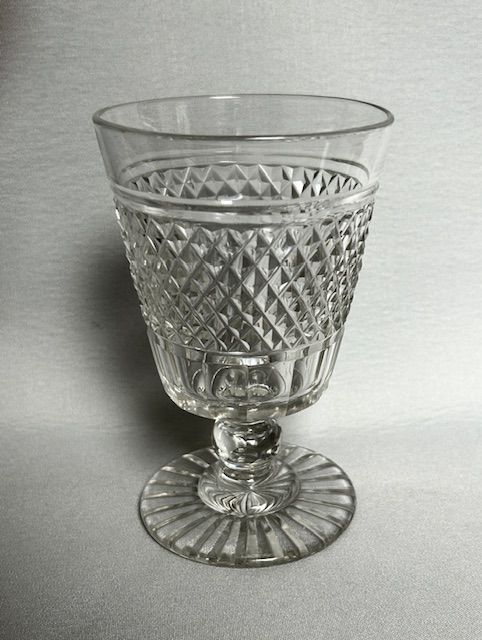
- A decorative surface pattern consisting of rows of small, pointed pyramids cut into the glass. It creates a tactile, light-catching texture seen on rummers and other drinking vessels.
- Table lustre
- A decorative candleholder hung with glass prisms designed to refract light. These ornaments stood on tables and mantelpieces during the nineteenth century.
- Ship's decanter
- A decanter with a broad, flat base and a conical body designed to prevent tipping at sea. The shape keeps the vessel stable during movement.
- Ormolu
- Gilt bronze mounts applied to glass bodies on pieces such as chandeliers and cornucopias. The technique involves coating bronze with a finely ground mercury and gold amalgam.
Regency Period Cut Glass: Frequently Asked Questions
What is Regency cut glass?
Regency cut glass refers to crystal tablewares and decorative objects produced during the early nineteenth century. These pieces feature geometric wheel-cut patterns designed to catch candlelight.
Items range from decanters and wine coolers to table lustres and butter tubs, often combining heavy lead crystal with gilt bronze mounts.
How do I clean cut glass?
Wash pieces by hand in warm water using mild detergent and a soft cloth. Avoid sudden temperature changes to protect the heavy lead crystal.
Dry the glass immediately with a lint-free cloth to maintain the clarity of the cut facets and prevent water spots.
Are these pieces English or Irish?
The listings include both English and Irish production from the Georgian and Regency eras. Irish glasshouses were particularly noted during this period for the exceptional weight and clarity of their lead crystal.
Specific origins often depend on the vessel type and the characteristics of the glass metal itself.
How were these items used?
These objects served functional roles during formal dining and entertaining. Decanters held wine and spirits, while finger bowls and rinsers cleansed the hands between courses.
Other items, such as cornucopias and lustres, provided decorative illumination and adornment for dining rooms and drawing rooms.