



Regency Period Cane Chair
These regency period cane chair pieces combine classical elegance with practical seating, offering timeless style and craftsmanship.
Regency Period Cane Chair
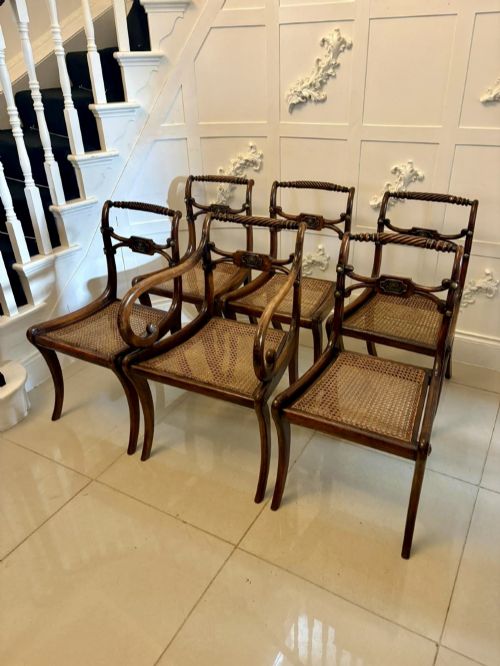
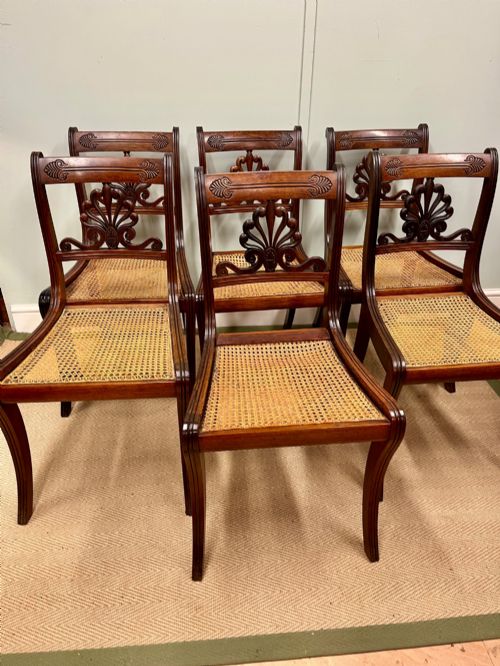
A regency period cane chair brings classical design and woven seating into domestic spaces, appearing primarily in dining and library settings. These pieces range from single side chairs to generous elbow armchairs and large matched sets.
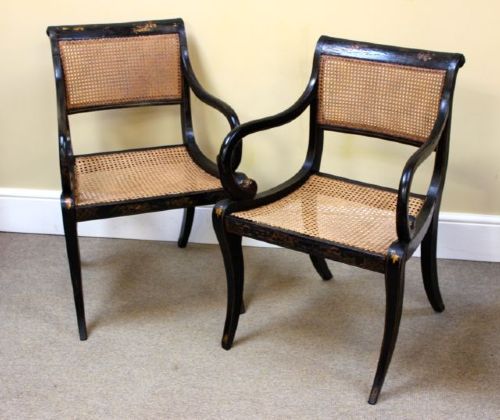
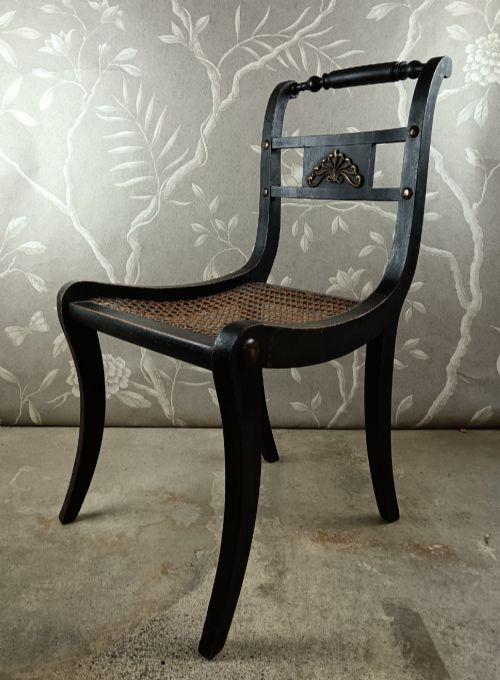
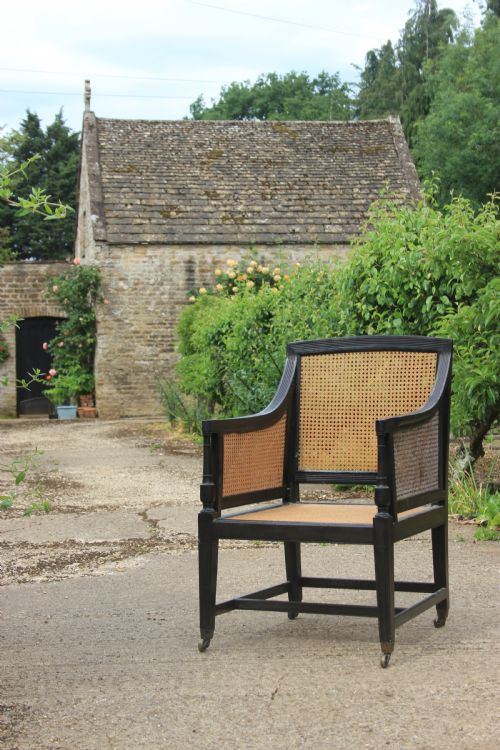
Buyers will encounter various forms on this page, including dining chairs with cane seats, library armchairs with bergere construction, and occasional chairs. Materials span mahogany, rosewood, ebonised wood, and painted finishes.
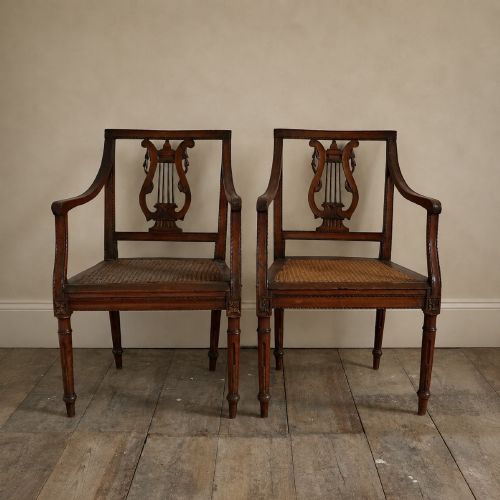
The selection includes authentic period examples alongside pieces from later revivals, reflecting the enduring appeal of the aesthetic. Whether configured as a pair or in larger dining sets, each piece provides a distinct silhouette.
Materials and construction
Makers utilised dense timbers such as mahogany, rosewood, ebony, and satin birch to build sturdy frames, frequently applying ebonisation or painted finishes for decorative contrast. Brass accents and leather elements appear alongside the primary woodwork.
Seats and backs incorporate woven cane panels, which provide flexible support and a lightweight appearance within the heavy wooden frames. Skilled artisans pierced and turned the timber to form sabre legs, lyre backs, and rope twist details.
Listings feature woods including mahogany, rosewood, ebony, and satin birch, alongside painted and ebonised finishes.
Distinguishing quality
The standard of a regency period cane chair depends on the crispness of the turning, the tightness and uniformity of the cane weave, and the integrity of the timber frame. Finer examples display well-proportioned sabre legs and refined decorative painting or gilding.
Subtle differences in timber selection and the elegance of the backrest design elevate certain pieces above standard production. The preservation of original surface finishes and the structural tightness of the joinery mark the distinction between ordinary and exceptional items.
Gillows
The Regency Period Cane Chair Glossary
- Bergere
- An enclosed upholstered or caned armchair with solid sides, often featuring a deep seat designed for relaxing. These chairs frequently use mahogany or painted frames.
- Sabre leg
- A curved, outwardly tapering leg resembling a cavalry sword, commonly found on seating from this era. This form adds dynamic line and stability to the frame.
- Cane
- Woven material made from the peeled bark of rattan palms, utilised to create flexible and breathable seat panels. It offers both durability and visual lightness.
- Carver
- An armchair designed to match a set of dining chairs, typically positioned at the head of a table. These pieces share stylistic details with their companion single chairs.
- Giltwood
- Timber treated with gold leaf or gold paint to create a lustrous metallic finish. This technique highlights decorative carvings on formal occasional chairs.
Regency Period Cane Chair: Frequently Asked Questions
How do I care for cane seats?
Keep cane seats clean using a soft brush to remove dust from the woven interstices. Avoid placing them in direct sunlight or near heat sources to prevent the natural material from drying out and snapping.
Period cane benefits from occasional light conditioning with a damp sponge to maintain flexibility. Weight should be distributed evenly to avoid stressing the tension of the weave.
Were these chairs used for dining?
Many of these pieces were specifically created as dining chairs, often appearing in large sets with matching carvers. The woven seats provided practical comfort during long formal meals.
Other variations served as library armchairs or occasional seating in salons and bedrooms. Their versatile design allowed them to function across multiple rooms in a home.
How do I distinguish original period pieces?
Examine the construction methods, timber patination, and the uniformity of the hand-woven cane panels. Period examples exhibit traditional joinery techniques and wear patterns consistent with age.
Stylistic markers such as sabre legs, ebonised finishes, and specific brass or painted details help align the piece with its era. Comparing proportions and decorative motifs against documented examples confirms authenticity.
Can these chairs support daily sitting?
Sturdy frames and sound cane work remain capable of regular daily use when handled with reasonable care. Checking the structural integrity of the joints ensures long-term stability.
Heavier users should exercise caution with antique woven seats, as historical cane can lose tension over time. Placing them in domestic areas where they receive appropriate care preserves both frame and weave.