



Regency Period Bronzes
Regency period bronzes combine severe classical design with rich patination and fire gilding to anchor a refined interior.
Regency Period Bronzes
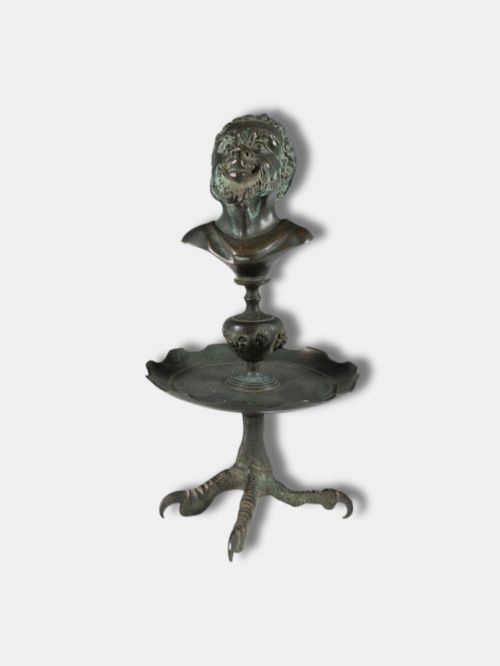
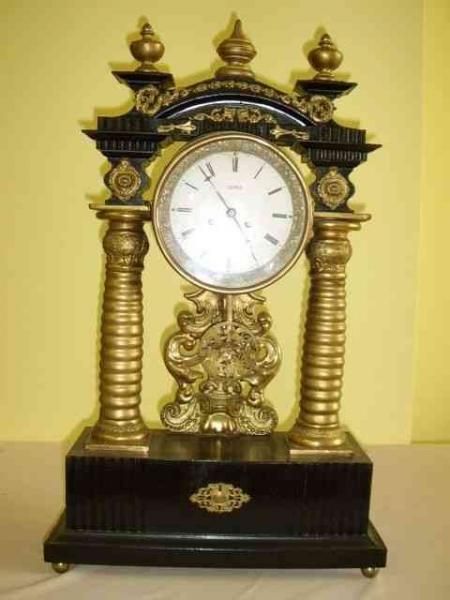
When you search for regency period bronzes, you encounter heavy decorative metalwork spanning mantel clocks, candlesticks, candelabra, and small architectural ornaments. These pieces bridge the late eighteenth century and the early decades of the nineteenth century, drawing heavily on French Empire and Neoclassical vocabularies.
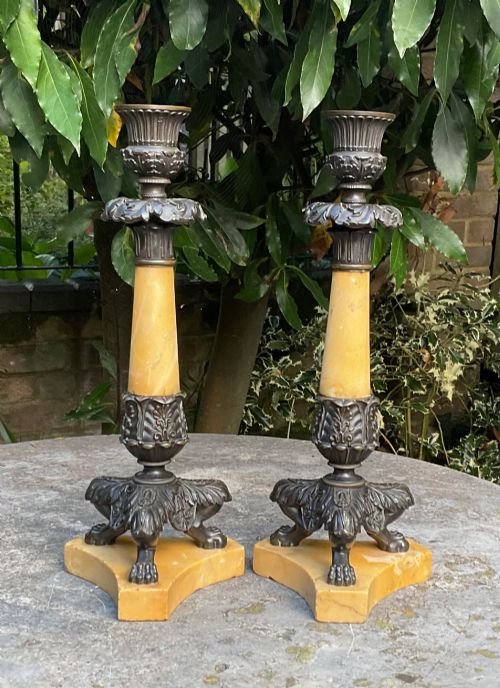
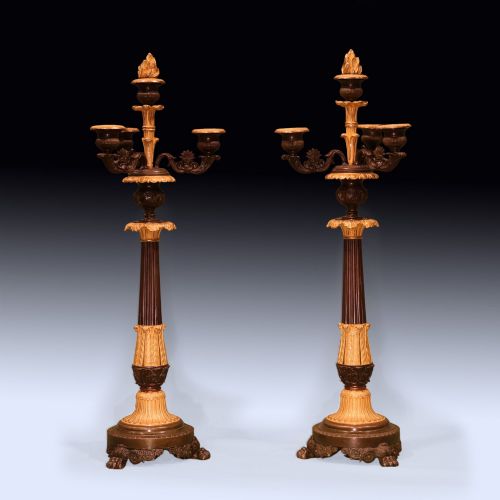
The version you are most likely to meet on this page is the pair of candelabra or candlesticks, frequently combining dark patinated bronze with bright ormolu mounts. English and continental workshops produced these items to sit upon marble plinths, chimneypieces, and side tables in grand reception rooms.
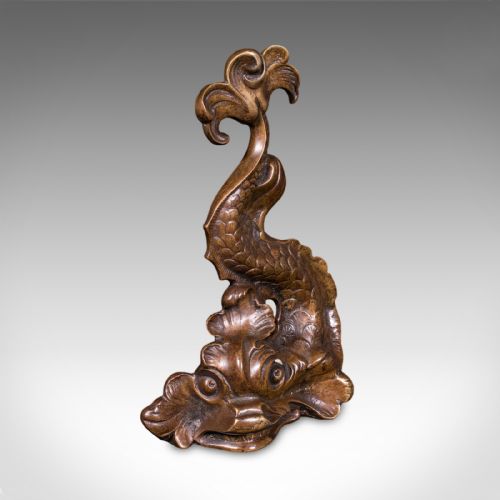
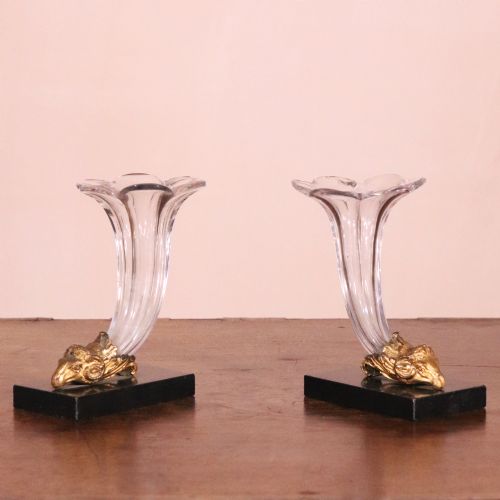
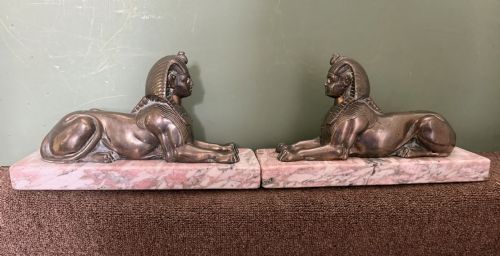
Beyond lighting, the selections include architectural hardware, doorstops, desk items, and sculptural mantel clocks driven by chain fusee movements. The forms adhere strictly to classical antiquity, displaying griffins, sphinxes, dolphins, and campana urns derived from archaeological discoveries.
Materials and technique
Foundry workers cast the primary forms in bronze before applying chemical patination to achieve deep brown or black surfaces, or employing mercury gilding to create ormolu. This fire gilding process bonded a gold and mercury amalgam to the metal base, producing a lasting lustre that differs fundamentally from modern electroplating.
Makers combined these contrasting metal finishes with contrasting media such as white or sienna marble bases, glass lustres, and enamel clock dials. Precision turning and chasing on the workbench sharpened the cast details of acanthus leaves, drapery, and animal musculature before final assembly.
Listings feature items dated from 1780 to 1920, with a strong concentration of pieces made around 1820 during the height of the Regency period.
Distinctions in craftsmanship
The standard of a casting separates ordinary production from exceptional work, visible in the crispness of undercut foliage and the naturalism of figural elements. Inferior pieces rely on surface chasing to correct soft casts, whereas superior examples emerge from the mould with sharp, deliberate detail.
The handling of the ormolu surface indicates workshop pedigree, distinguishing between bright, durable fire gilding and thin, flat plating. Additionally, the integration of secondary materials like veined marble plinths and precision clock movements demonstrates the maker's investment in the complete object.
Mathew Gregson·Pons De Paul·William Hardy London·FB Adams London·Baetens London
The Regency Period Bronzes Glossary
- Ormolu
- Finely ground gold amalgam fired onto a bronze base to produce a rich, durable golden surface. This technique was widely practiced by French and English bronze workers during the early nineteenth century.
- Patinated bronze
- Metal treated with chemical solutions to darken the surface into shades of brown, green, or near-black. It provides a visual contrast against bright ormolu mounts.
- Fusee movement
- A conical pulley mechanism inside a clock that equalises the diminishing power of the mainspring as it unwinds. It ensures consistent timekeeping across an eight-day cycle.
- Cassolette
- A decorative vase or urn with a reversible lid that functions either as a closed vessel or as a candleholder. These double-ended objects sat prominently on mantelpieces.
- Athenienne
- A tripod stand supporting a classical basin or urn, adapted during the Regency period for use as a pillar candlestick or lamp base. The form derives from excavations at Pompeii and Herculaneum.
- Cornucopia
- A horn-shaped ornament overflowing with fruit and flowers, symbolising abundance in classical design. Bronze versions often served as wall brackets or table ornaments.
Regency Period Bronzes: Frequently Asked Questions
What is the difference between French and English pieces?
French bronzes from the Empire period often display sharper, more flamboyant casting with extensive use of bright ormolu and mythological subjects. English Regency alternatives tend toward a heavier, more restrained interpretation of classical forms, frequently incorporating native timbers or subtle patinated surfaces.
Horology also reveals origin, with London makers favoring precision chain fusee movements while French workshops utilised spring-driven striking trains signed by Parisian horologists.
Were these candelabra converted from gas or oil?
Most lighting apparatus from this era was originally designed to burn tallow candles or animal oil before the widespread adoption of domestic gas lighting. Conversion to electricity typically occurs later in the lifespan of the object, utilising concealed wiring that preserves the integrity of the original bronze channels.
Inspect the socket fittings and base drilling to understand how previous owners adapted the lighting mechanism for modern domestic use.
How can I tell a Regency piece from a later copy?
Examine the construction of the joints, screws, and fixings beneath the base or inside the movement housing. Period items utilise hand-cut threaded screws and heavy sand-cast components rather than uniform modern machine fasteners.
The weight, depth of the metal colour, and hand-chased surface details also indicate whether an object emerged from an early nineteenth-century workshop or a later revival period.