
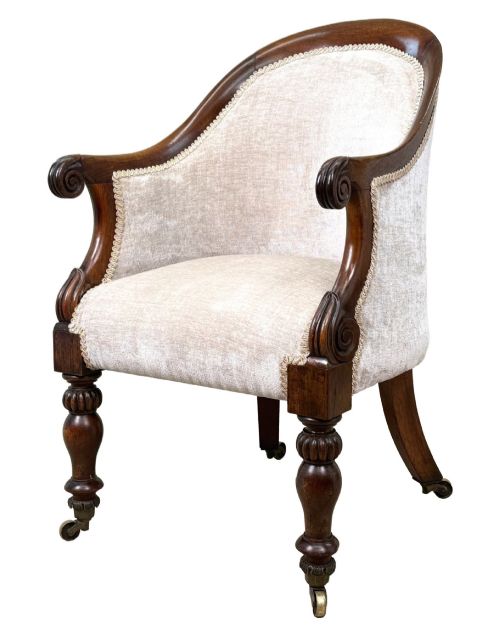
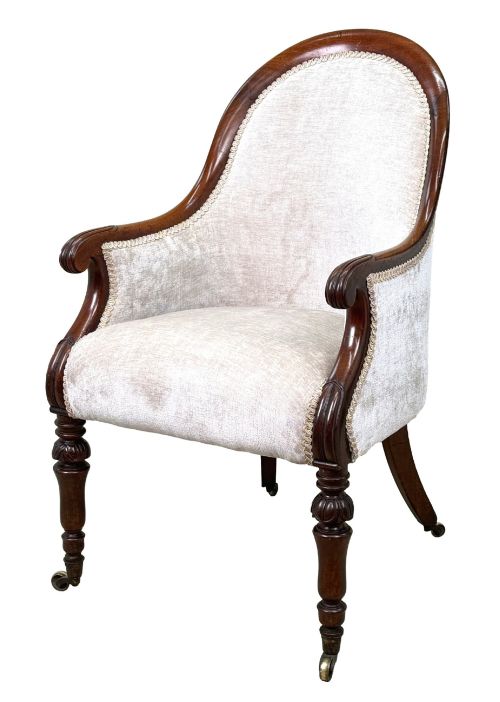
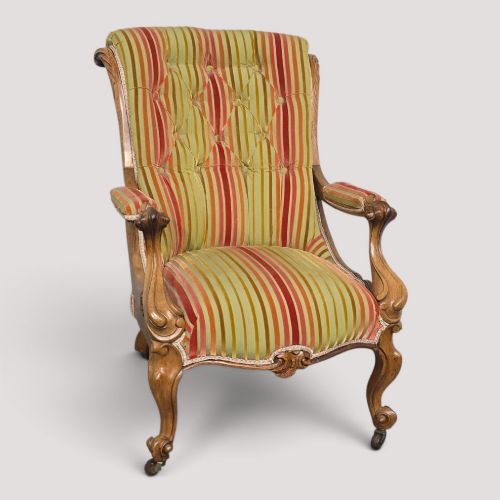
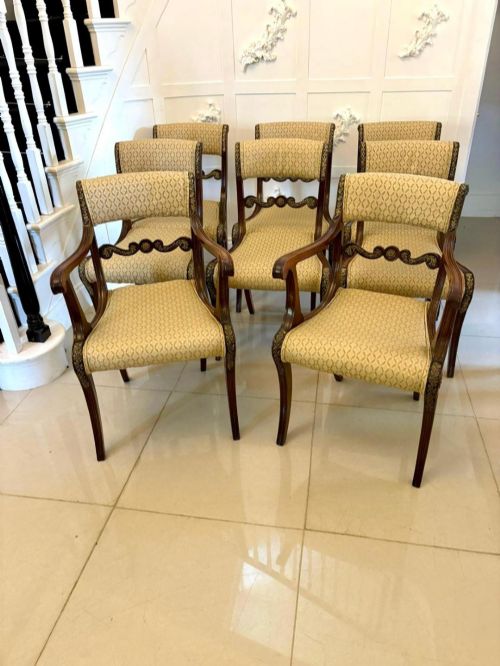

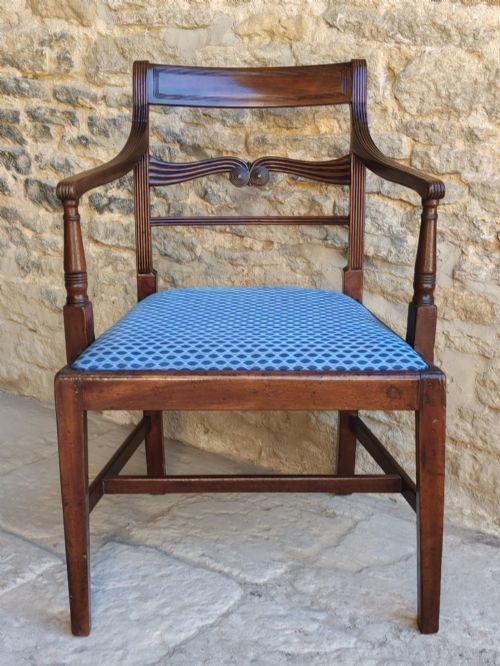
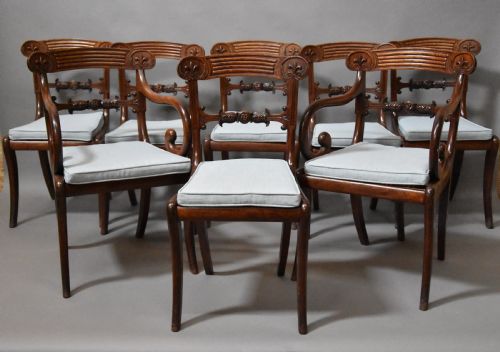
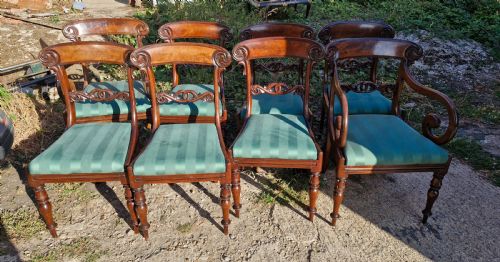
Regency Period Armchairs
Regency period armchairs combine architectural clarity with domestic comfort, offering seating that defines a classic interior with balanced proportion and rich timber.
Understanding Regency Period Armchairs
When you search for regency period armchairs, you encounter seating designed during the early nineteenth century and the subsequent William IV era. These chairs serve primarily as library, desk, or dining seating within formal rooms.
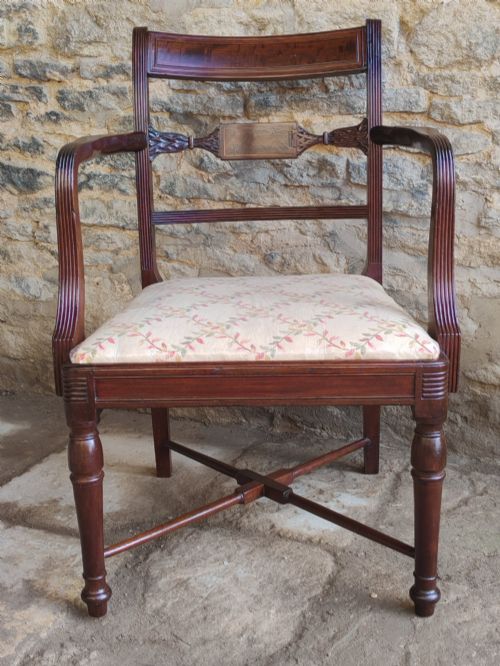
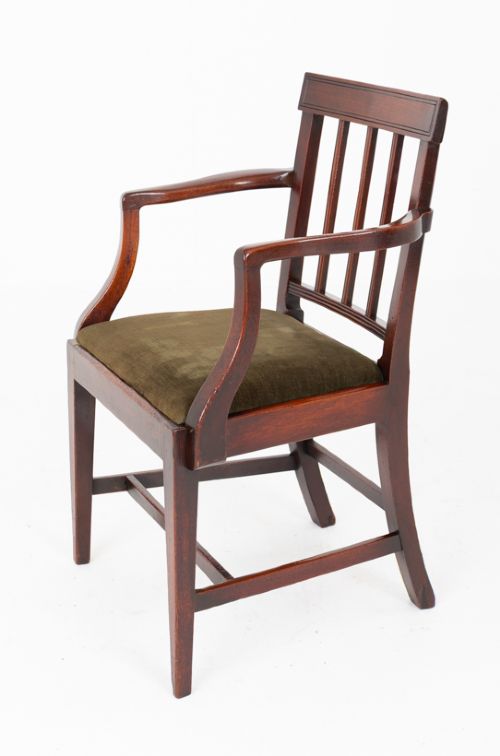
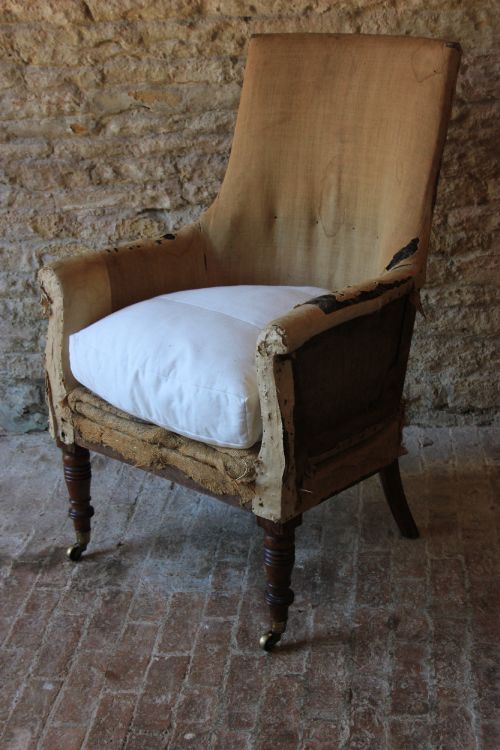
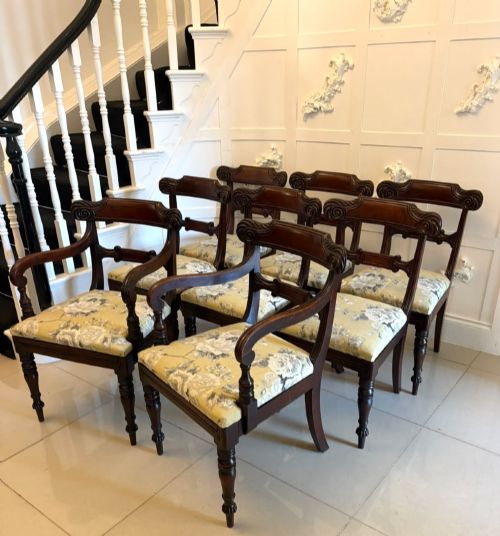
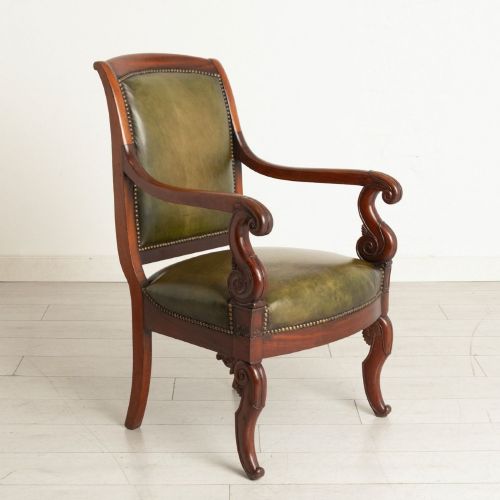
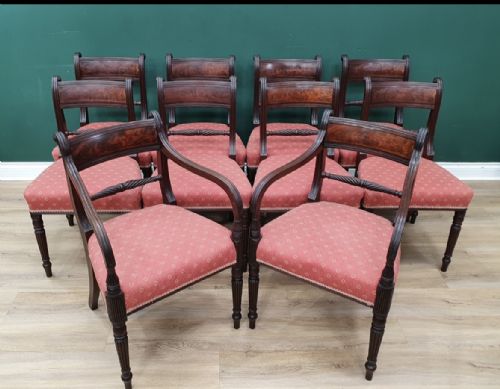
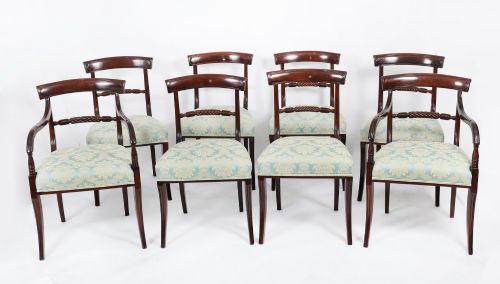
The pieces appearing on this page include armchairs, carver chairs, library chairs, and bergere chairs. Most examples emerge as pairs, often suited for placement beside a desk or flanking a fireplace.
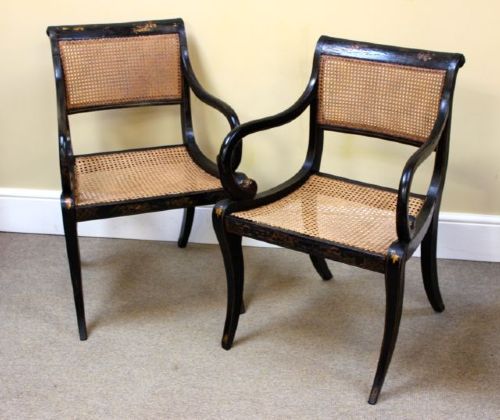
Makers of the period drew inspiration from classical Greek and Roman designs, translating ancient forms into practical domestic seating in mahogany, painted wood, and cane.
Materials and Construction
Makers relied heavily on mahogany as the primary timber, sometimes shaping it with painted finishes or accentuating the wood with brass inlay. Construction methods included sliding mechanisms for library seating and bobbin-turned detailing.
Seating surfaces involved a range of materials including leather, upholstery fabric, needlepoint, and cane. Skilled artisans combined these textiles with sturdy wooden frames to support daily use.
Retail Price Guide 2026
Typical UK retail prices for regency period armchairs, calculated from the Sellingantiques database of over a million retail prices indexed since 2003. This retail price guide relies exclusively on Sellingantiques data; no external sources or auction records are used, so the figures do not describe the wider market.
Recorded listings span the Regency and William IV periods, extending into mid-nineteenth century examples around eighteen-fifty.
Distinctions in Quality
Quality rests in the precision of the timber work and the integration of decorative elements such as brass inlay or painted surfaces. Chairs displaying sophisticated turning or specialised mechanisms like sliding actions demonstrate greater workshop ambition.
The choice of covering, whether supple leather, traditional needlepoint, or woven cane, reflects the original commission's cost and purpose. Cohesion between the frame's architectural lines and the upholstery determines the success of the piece.
The Regency Period Armchairs Glossary
- Bergere
- An enclosed upholstered armchair with wooden framing exposed around the sides and back. This French-inspired form often incorporates cane work.
- Carver
- A sturdy armchair designed to sit at the head of a dining table or serve as a desk chair. These pieces match standard dining chair sets while offering armrests.
- Sabre leg
- A concave-curving leg that tapers toward the foot, mimicking the shape of a cavalry sword. This feature appears frequently on classical seating of the period.
- Library chair
- A substantial armchair built for reading and study, often upholstered in leather. Such chairs provide comfort during long hours at a desk.
Frequently Asked Questions
What rooms suit regency period armchairs?
These chairs fit naturally into studies, libraries, and formal living spaces where traditional furniture establishes the room's character. Their architectural presence makes them effective accent pieces beside a desk or fireplace.
Because many examples survive as pairs, they offer balanced placement options on either side of a mantelpiece or window. Their classic proportions allow them to integrate smoothly alongside later nineteenth-century furniture.
How do library chairs differ from dining chairs?
Library chairs provide broader proportions and more substantial padding designed for extended sitting during reading or writing. They frequently incorporate leather or needlepoint upholstery for durability and comfort.
Dining chairs and carvers are lighter in scale to allow easy movement around a table. Their frames prioritize upright posture rather than the relaxed recline found in library seating.
What timber was used for these armchairs?
Mahogany serves as the dominant wood across the recorded pieces, valued for its dense grain and deep natural colour. Workshops polished the timber to a smooth finish that highlighted the material's grain.
Selected examples feature painted wood surfaces or incorporate contrasting brass inlay. These decorative variations allowed makers to tailor the aesthetic of the seating to specific interior schemes.
How do I identify William IV style features?
William IV pieces, dating toward the middle of the nineteenth century, often display heavier proportions than earlier Regency designs. They maintain classical influences while embracing robust construction and pronounced wood turning.
Bobbin-turned elements and substantial mahogany frames characterise these later chairs. They represent a continuation of classical motifs into a heavier Victorian transitional phase.