

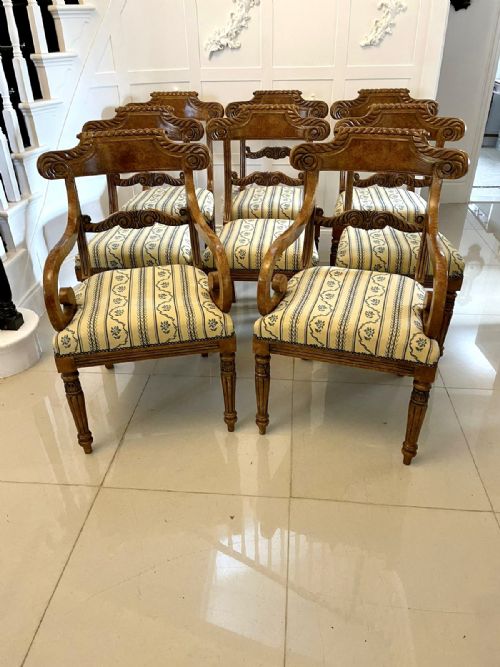

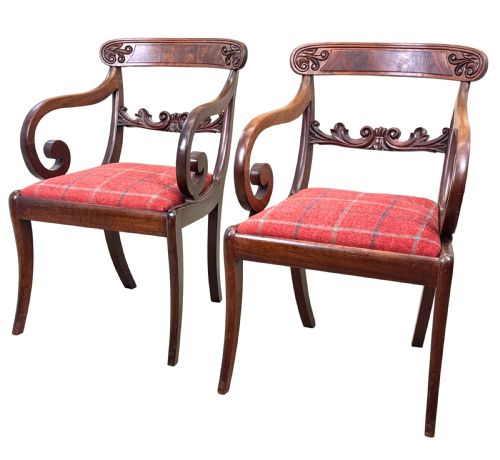


Regency Period Arm Chair
A regency period arm chair brings architectural clarity and rich timber tone to a room, offering both formal seating and comfort.
Regency Period Arm Chair
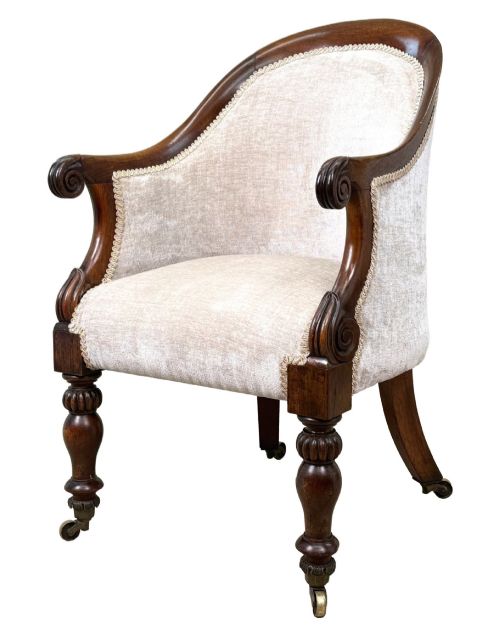
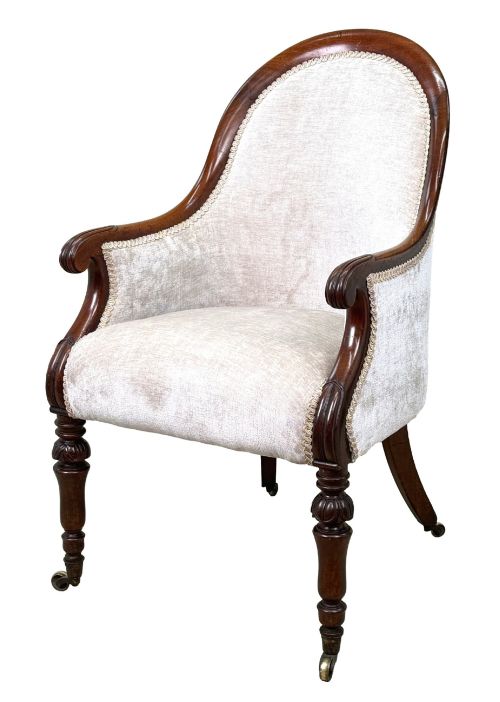
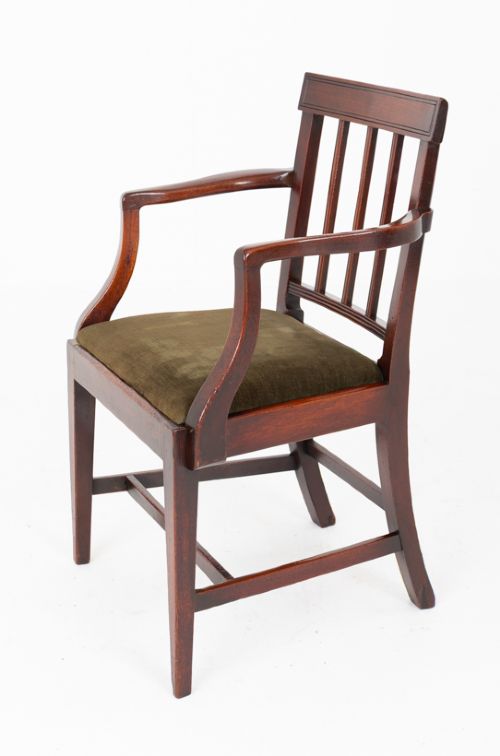
A regency period arm chair encompasses seating designed during the early nineteenth century, alongside later nineteenth-century interpretations and Georgian precursors. The forms seen most frequently on this page include library armchairs, desk chairs, and carvers intended for dining spaces.
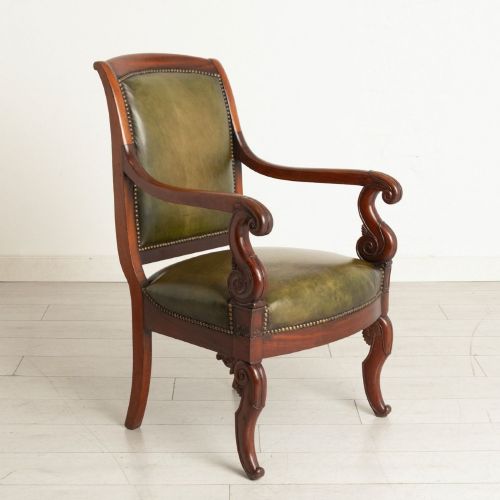
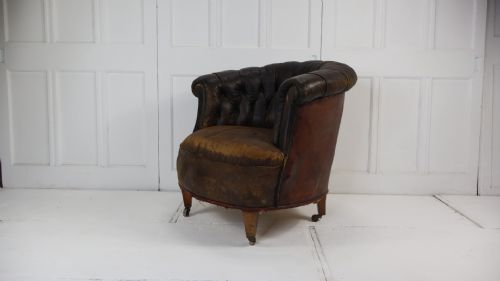
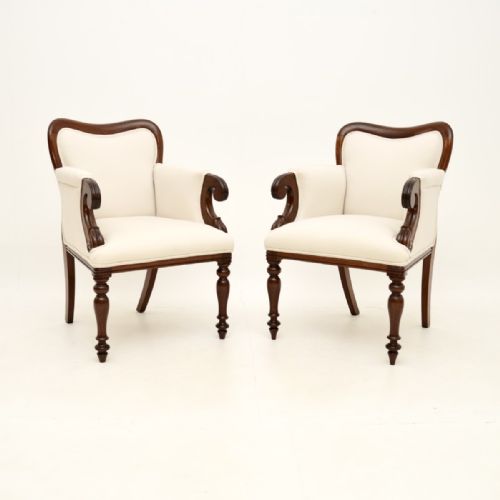
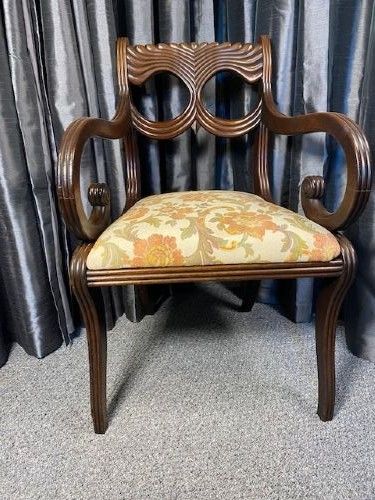
Makers and workshops of the era produced these seats in mahogany, rosewood, and oak, often configuring them as tub chairs, bergères with cane panels, or elbow chairs with scroll arms.
Materials and Technique
Cabinetmakers constructed these frames primarily from dense hardwoods like mahogany and rosewood, frequently incorporating brass inlay, gilt accents, or ebonised finishes. Upholstery materials recorded in the archive range from green leather and velvet to patterned fabric and needlepoint.
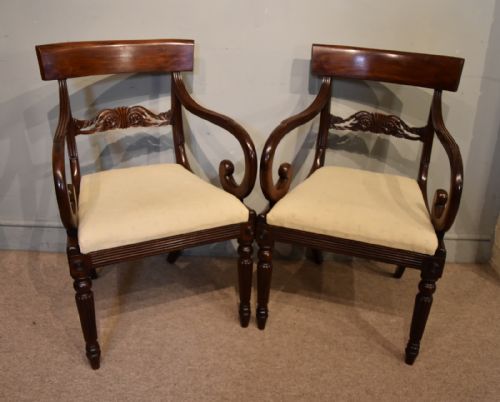
Structural elements rely on traditional joinery, paired with curved sabre legs, reeded framing, and turned supports that reflect the classical design vocabulary of the period.
Regency Period Arm Chair Retail Price Guide 2026
Typical asking prices for regency period arm chair among the pieces listed under this phrase on Sellingantiques today, from the lower quarter to the upper quarter. They describe what is for sale here now, not the wider market.
Listings demonstrate a strong preference for mahogany and rosewood frames, frequently complemented by leather upholstery or brass inlay.
Judging Quality
The distinction between standard examples and superior pieces rests on timber selection and the crispness of carved or brass-inlaid detail. Richness of grain, particularly in Cuban mahogany or rosewood, elevates an armchair, as does the presence of documented workshop attribution.
Proportion and execution define the higher tier, where elements like scroll arms, reeded frames, and original leather or cane work remain intact and balanced.
Gillows
The Regency Period Arm Chair Glossary
- Bergère
- An enclosed armchair with upholstered back and sides, often featuring cane panels. This form gained popularity during the Regency era for library and drawing room use.
- Carver
- An armchair designed to match a set of dining chairs, typically featuring open arms to accommodate formal dress. These appear frequently in sets alongside standard dining seats.
- Sabre leg
- A concave, outwardly curving furniture leg that tapers toward the foot, characteristic of Regency seating design. It provides both stability and a sense of dynamic movement.
- Tub chair
- A curved, half-cylindrical armchair where the back rail flows continuously into the arms. They offer enclosed comfort and frequently serve as library or desk seating.
Regency Period Arm Chair: Frequently Asked Questions
Where were these chairs used?
A regency period arm chair served primarily in formal rooms such as libraries, drawing rooms, and studies. They were also utilised as carvers at the ends of dining tables or placed at partners desks.
The specific form generally dictated the room, with bergères and tub chairs assigned to reading spaces, while lighter open-arm chairs suited dressing tables and salons.
How do I spot a fake?
Distinguishing period pieces relies on examining timber ageing, joint construction, and tool marks hidden beneath the frame. Nineteenth-century cabinetmakers used specific joinery techniques that differ from later reproduction methods.
Attention should be paid to the integration of brass inlay and carved details, ensuring they match the wear and patina expected of early furniture.
Are they comfortable for daily use?
Many examples provide sturdy, upright seating designed for writing or formal conversation rather than lounging. Upholstered versions with leather or fabric padding offer moderate support, though seat heights sometimes differ from modern standards.
Library armchairs and bergères generally feature deeper proportions suited to extended periods of reading.
What is the difference between Regency and Georgian?
Georgian furniture spans a broad eighteenth-century aesthetic that gradually shifted toward neoclassical severity. The Regency period represents the final phase of this trajectory, marked by direct inspiration from ancient Greek, Roman, and Egyptian forms.
Chairs from the Regency era typically display cleaner lines, brass or gilt ornamentation, and distinctive elements like sabre legs and reeded framing.