

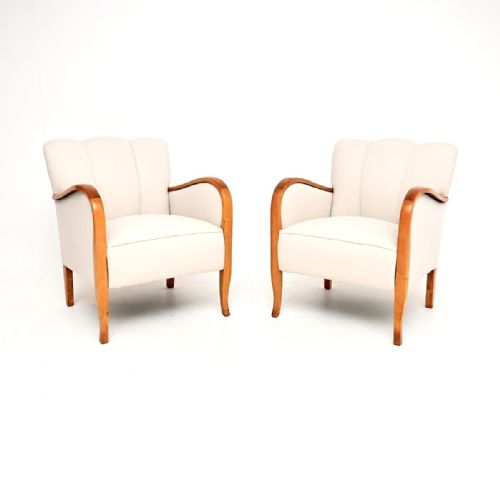
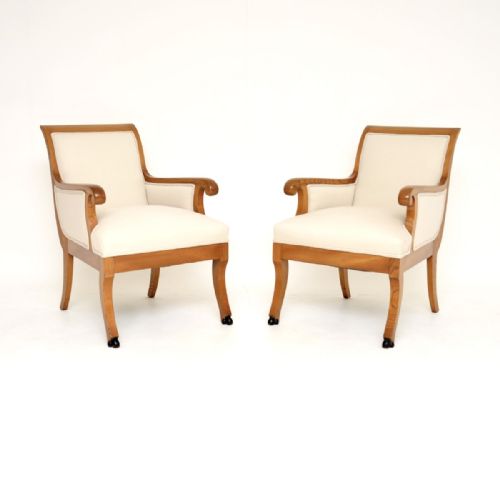


Curved Arm Accent Chair
These curved arm accent chair selections offer distinctive seating forms shaped across the nineteenth and twentieth centuries.
Curved Arm Accent Chair
A curved arm accent chair brings a distinct silhouette to a room, drawing on forms from the nineteenth century through to the nineteen-thirties. You encounter pieces spanning Regency styles, Victorian ebonised rocking chairs, and streamlined Art Deco designs.
The selection ranges from Swedish neoclassical elm armchairs and Biedermeier birchwood seats to French bridge chairs and traditional Chinese horseshoe shapes. Most examples function as occasional seating in drawing rooms, studies, and bedrooms.
Makers and workshops across Europe and Asia utilised various regional aesthetics, yielding elbow chairs and low armchairs with characteristic sweeping armrests. Each piece reflects the dominant stylistic preferences of its respective period.
How they were made
Construction relies on solid timbers such as beech, elm, hardwood, satin birch, and satinwood, frequently paired with ebonised finishes. Selected nineteenth-century and twentieth-century examples incorporate bentwood techniques to achieve flowing structural curves.
Upholstery materials include traditional fabric and cigar brown leather, while specific Asian models feature brass inlaid detailing into the wooden frame. Workshops combined traditional joinery with decorative surface treatments appropriate to each design era.
Curved Arm Accent Chair Retail Price Guide 2026
Typical asking prices for curved arm accent chair among the pieces listed under this phrase on Sellingantiques today, from the lower quarter to the upper quarter. They describe what is for sale here now, not the wider market.
Several chairs feature horseshoe curves that politely hug you while you read.
What varies in quality
The refinement of the silhouette distinguishes standard domestic seating from finer salon or drawing room examples. Surface treatments, whether polished wood or brass inlay, reveal the level of artisan skill applied during production.
Thonet
The Curved Arm Accent Chair Glossary
- Accent chair
- A standalone seat chosen to complement a room's primary scheme through distinct style and form. These chairs often feature prominent curved arms and decorative wood or upholstery.
- Biedermeier
- A Central European design style from the nineteenth century prioritising clean lines and utilitarian grace. Furniture from this tradition uses native woods like birch without excessive ornamentation.
- Bentwood
- A technique of steaming wood to make it pliable enough to bend into curved structural forms. This method defines many nineteenth-century rocking chairs and twentieth-century seating designs.
- Elbow chair
- A traditional term for a wooden armchair with low arms designed to support the elbows. They frequently serve as desk chairs or occasional seating in studies and drawing rooms.
- Horseshoe shape
- A continuous curved armrest and backrest profile originating in traditional Chinese seating design. This ergonomic contour wraps around the user for comfort.
Curved Arm Accent Chair: Frequently Asked Questions
Where should I place a curved arm accent chair?
These chairs suit drawing rooms, studies, and bedrooms where an occasional seat is required. Their compact footprint allows them to sit comfortably in corners or alongside larger sofas.
Choose a location that highlights the distinctive arm profile and woodwork, whether it is satin birch, ebonised timber, or inlaid brass.
How do I identify a Regency style chair?
Regency style seating draws on neoclassical design principles popular during the early nineteenth century. Look for ebonised finishes, classical proportions, and restrained decorative details.
These elbow chairs often feature elegant framing suitable for formal drawing rooms and studies.
How do Art Deco and Biedermeier differ?
Biedermeier furniture dates from the nineteenth century, focusing on clean, practical lines using blonde woods like birch. Art Deco emerged later, defining the nineteen-thirties with streamlined, modern geometries and often incorporating leather upholstery.
Both styles employ curved arm designs but reflect vastly different periods of craftsmanship.
Are bentwood rocking chairs durable?
Bentwood rocking chairs utilise steam-bent timber to create resilient, springy frames that withstand regular motion. Nineteenth-century examples demonstrate the lasting strength of this specialised manufacturing technique.
Their lightweight construction combines structural flexibility with enduring stability.