


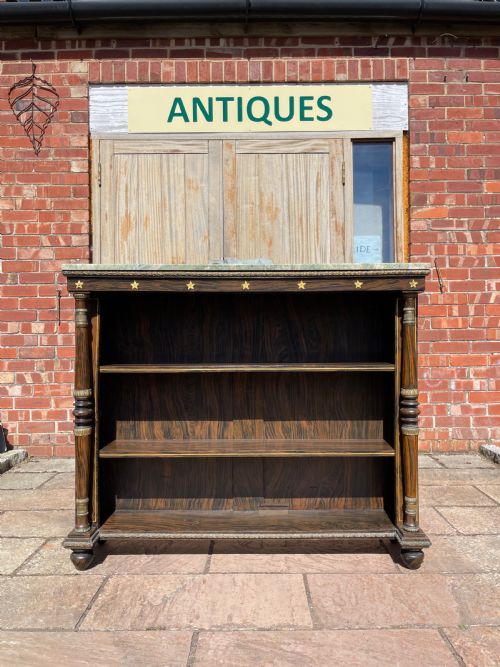
Regency Painted Display Cabinet
Regency painted display cabinet examples combine neoclassical lines with decorative finishes, offering collectors a striking way to house ceramics and books.
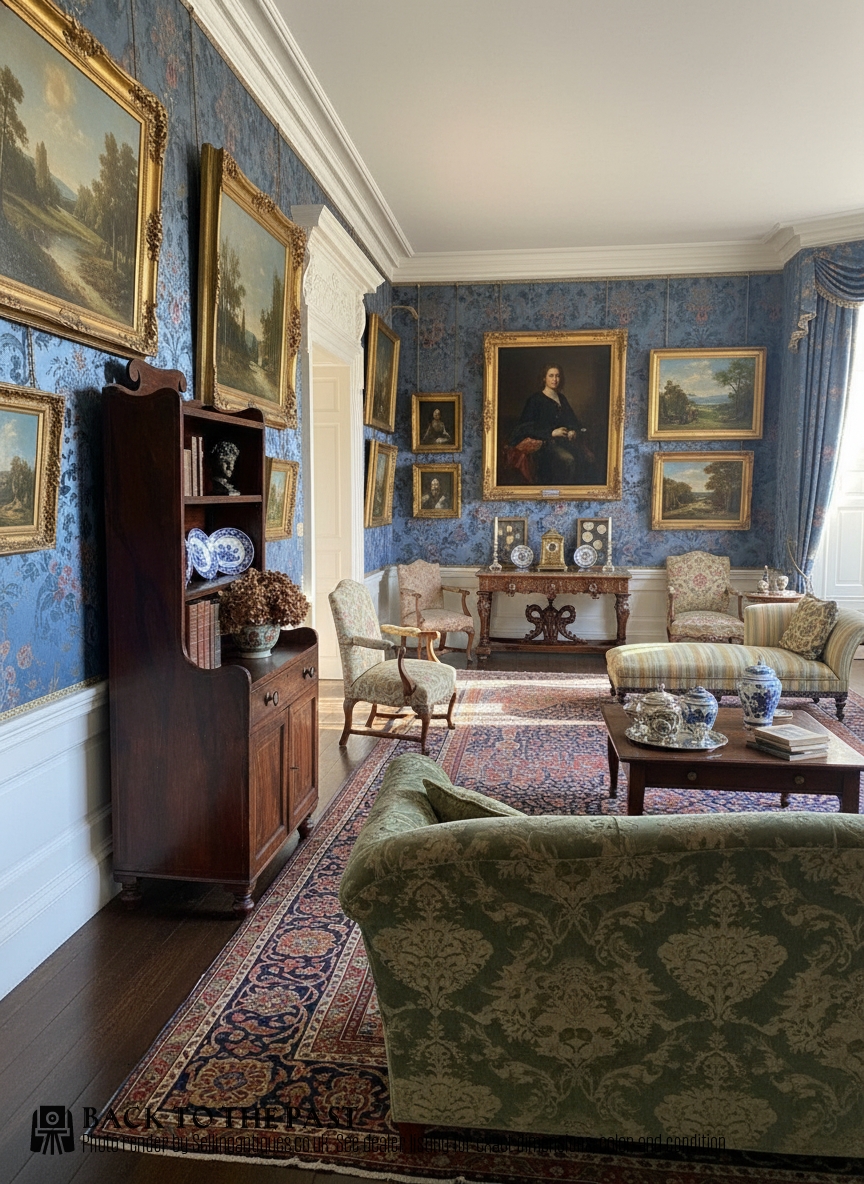
Regency Painted Display Cabinet
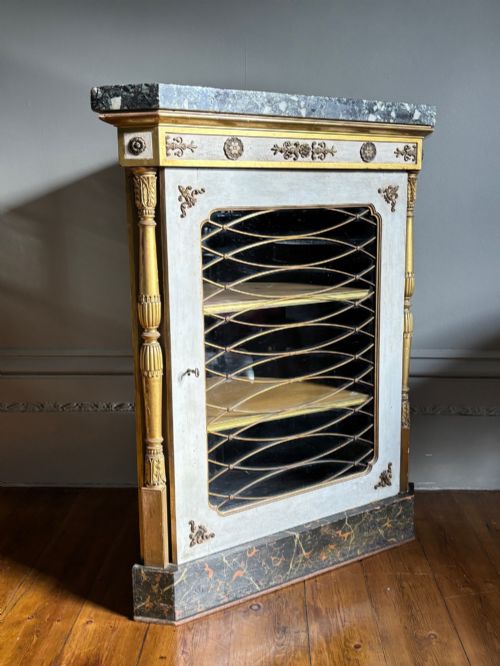
When you search for a regency painted display cabinet, you encounter a selection spanning the nineteenth century, including pieces from the Georgian and Victorian eras. These items encompass breakfront bookcases, side cabinets, and corner cupboards finished in painted wood, simulated rosewood, and grained surfaces. Regional pieces such as Scottish bookcases and Chinese influence designs also appear alongside traditional neoclassical forms.
The objects listed display various forms of decorative treatment, from architectural bookcases dated to 1860 to dwarf bookcases in original grained finish. Buyers often encounter pieces incorporating marble tops and simulated paint techniques that mimic finer timbers. The material palette extends to gilt, brass, and wood, reflecting the diverse manufacturing practices of the period.
Assessing quality in painted display furniture
Quality in these pieces rests primarily on the execution of the painted or grained finish and the integrity of the underlying woodwork. Superior examples exhibit finely rendered simulated paint effects that retain their original character without excessive modern intervention. The balance of architectural proportions and the crispness of decorative detailing further differentiate finer items from standard production.
The preservation of original surfaces, including grained finishes and marble components, dictates the standing of a piece within the range. Craftsmanship is visible in the stability of the cabinetry, the neatness of joinery, and the harmonious application of paint or gilt work. Pieces that maintain their untouched decorative schemes command greater attention from discerning collectors.
Listings feature 19th Century, Regency, Georgian, and Victorian periods alongside materials such as painted wood, enamel, porcelain, and brass.
H and R Daniel·Wedgwood·Newhall·Berlin·Derby·Coalport·Barr Flight and Barr·Flight Barr and Barr·Ridgway·Bloor Derby
The Regency Painted Display Cabinet Glossary
- Breakfront
- A cabinet or bookcase whose central section projects forward from the flanking sections. This configuration adds depth and visual interest to large pieces of furniture.
- Grained finish
- A painted surface treatment designed to imitate the natural grain patterns of expensive woods like rosewood or mahogany. Artisans used combs and specialised brushes to achieve this effect.
- Simulated rosewood
- A painted substitution where common timber is treated to look like genuine rosewood. This technique was popular during the Regency period for economic and decorative reasons.
- Neoclassical
- A style rooted in classical antiquity that influenced Regency design through symmetry and restraint. It frequently informs the architectural lines of period cabinets.
- Corner cupboard
- A specialised storage piece designed to fit neatly into the corner of a room. These items maximise space while providing display surfaces.
Regency Painted Display Cabinet: Frequently Asked Questions
What defines a regency painted display cabinet?
These cabinets are defined by their nineteenth-century origins, architectural proportions, and painted or grained wood surfaces. They often incorporate neoclassical design elements.
Such pieces serve to house and display decorative objects, utilising glass doors and specialised finishes to enhance their visual appeal within an interior.
How should I care for a painted finish?
Maintenance requires avoiding direct sunlight and excessive moisture to protect the historic painted or grained surfaces. Gentle dusting with a dry cloth is generally sufficient.
Harsh chemical cleaners must be avoided, as they can strip or damage the delicate historical layers of paint and simulation work.
Where were corner cabinets placed?
Corner cabinets were traditionally utilised in dining rooms or parlours to make efficient use of unutilised wall junctions. They provided secure storage for porcelain and serving dishes.
Their triangular footprint allowed them to sit flush against two adjacent walls, freeing up central floor space in smaller rooms.
How do I identify a simulated wood surface?
Simulated wood finishes reveal brush strokes or combed patterns under close inspection, mimicking the growth rings of species like rosewood. The underlying material is typically a softer or more common timber.
This technique allowed cabinet makers to achieve high-status aesthetics using readily available domestic woods during the nineteenth century.