
Regency Open Shelf
A regency open shelf provides accessible, architectural display space for books and objects, bringing period proportion directly into a room.
Regency Open Shelf
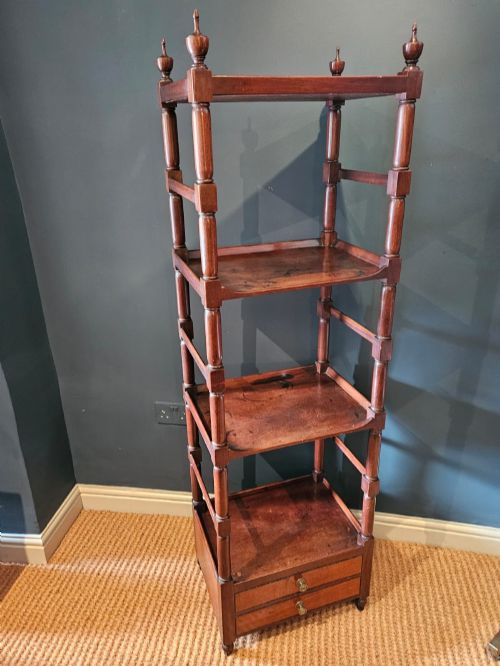
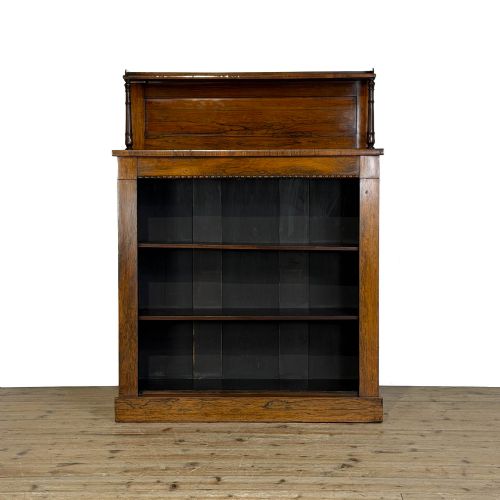
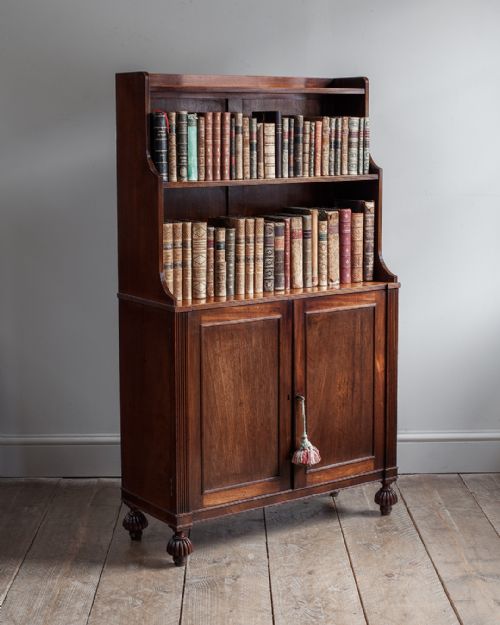
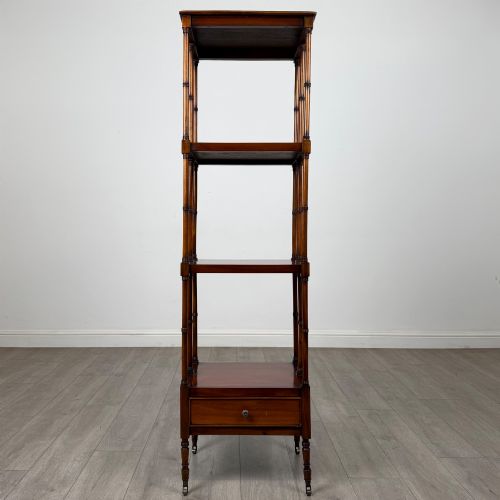
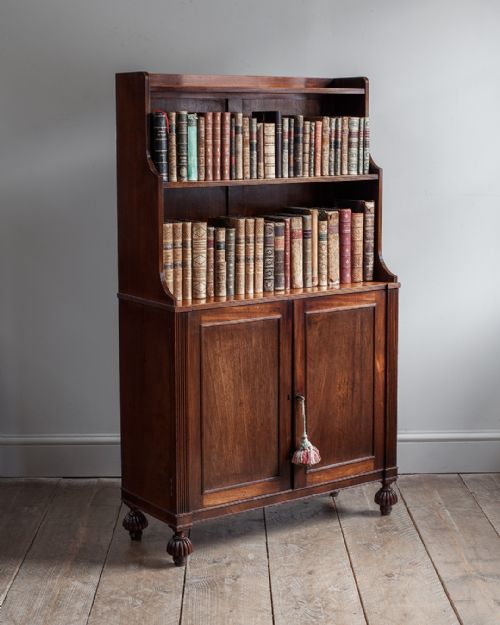
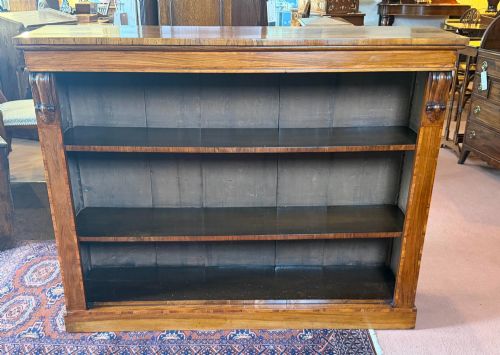
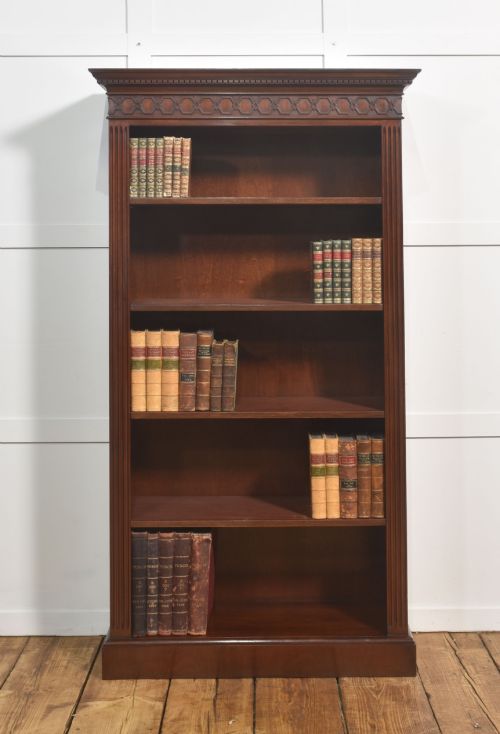
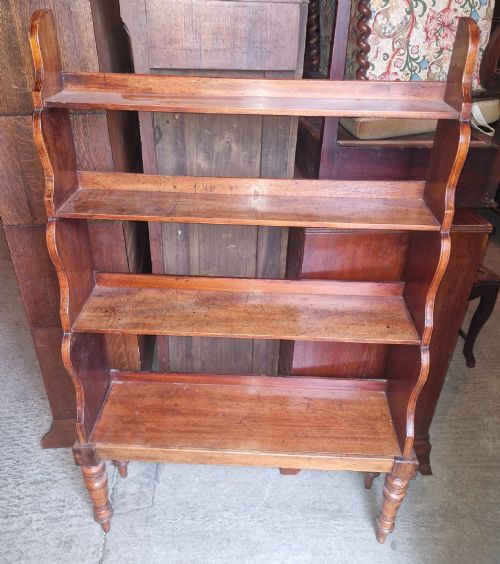
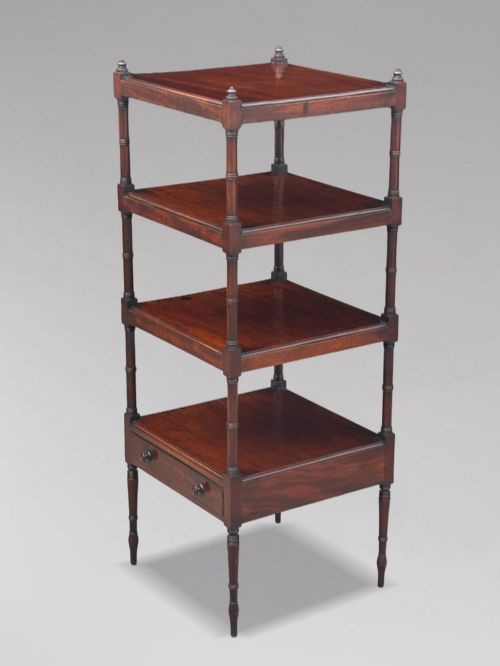
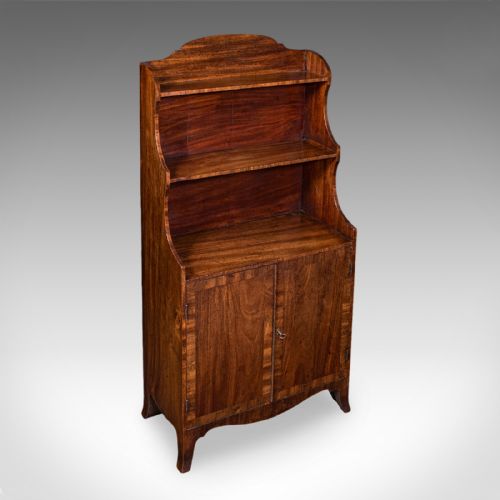
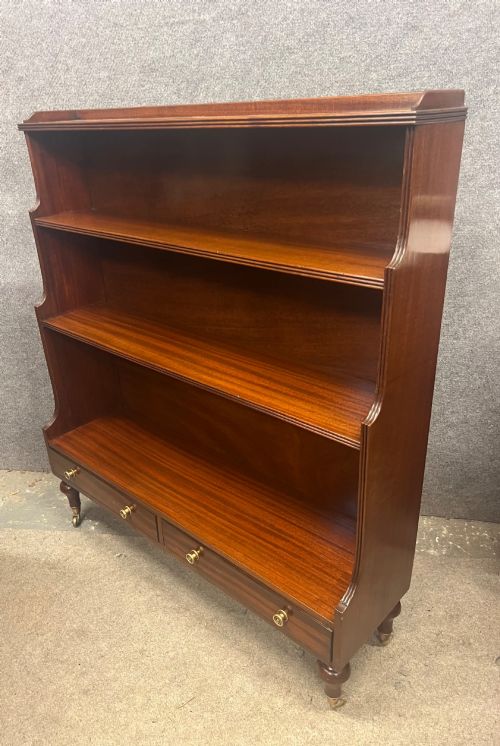
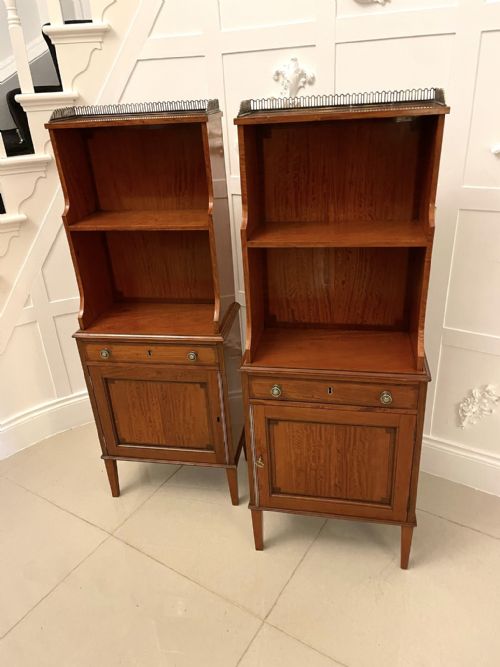
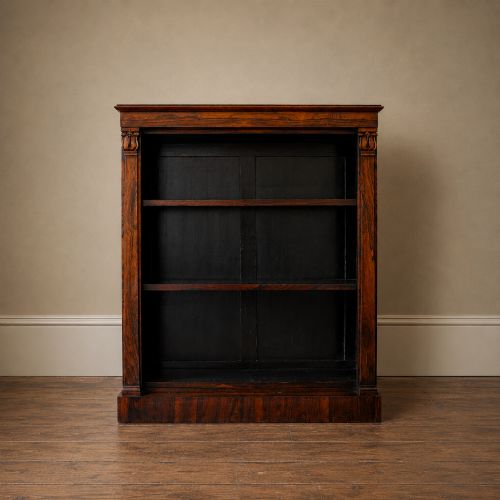
A regency open shelf encompasses low bookcases, tiered what-nots, and waterfall shelving units designed for domestic display and storage.
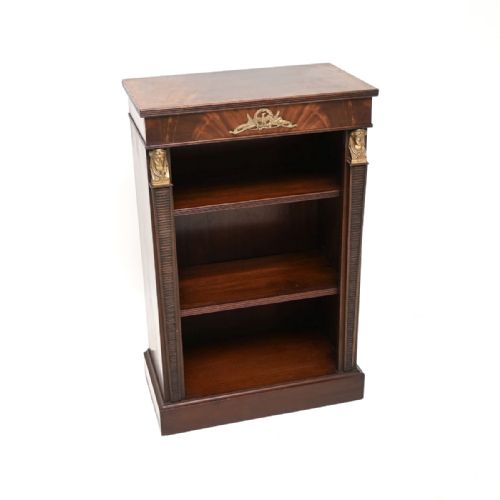
The pieces appearing here span the Regency, Georgian, and Victorian periods, alongside later Revival interpretations from the Edwardian era.
Mahogany and rosewood dominate the surviving forms, frequently appearing as freestanding bookcases or multi-tiered open shelves with adjustable boards.
Gradations of Craft
Quality rests in the selection of timber figure, such as richly grained flame mahogany or rosewood veneers, rather than simple utility.
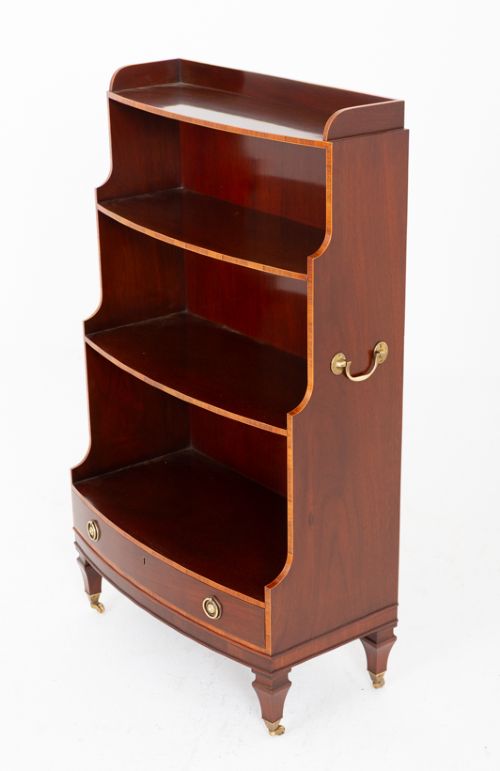
Refinement shows in the precision of brass inlay, the construction of tiered shelving, and whether shelves are adjustable.
Music stands appear amongst the shelving, proving nineteenth-century musicians also needed somewhere to leave their sheet music open.
Gillows
The Regency Open Shelf Glossary
- Waterfall bookcase
- A graduated set of open shelves stepping back towards the top, popular in mahogany during the nineteenth century.
- Whatnot
- A multi-tiered piece of freestanding furniture used for displaying ornaments, books, or music stands.
- Chiffonier
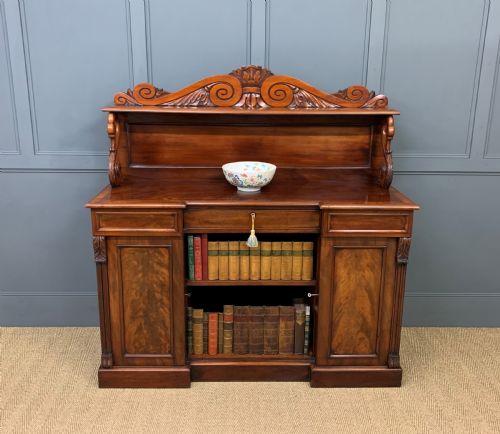
- A low cabinet, sometimes incorporating open shelving or a bookcase top, originating in the Regency period.
- Ormolu
- Gilt bronze mounts applied to furniture for decorative enrichment on classical Revival pieces.
Regency Open Shelf: Frequently Asked Questions
How do I style a waterfall bookcase?
A waterfall bookcase suits books, small sculptures, and ceramics arranged across its graduated, stepping shelves. The open design allows light to pass through.
Keep larger volumes on the deeper bottom tiers and lighter objects on the narrower upper shelves.
Are these shelves suitable for modern books?
Many period open bookcases and what-nots include adjustable shelves to accommodate varying book heights. Depth varies according to whether the piece is a dwarf bookcase or a compact whatnot.
Check the internal dimensions of each shelf tier to ensure standard modern volumes fit comfortably.
How do I date a rosewood bookcase?
Dating relies on timber choice, construction methods, and stylistic markers such as brass inlay or neoclassical proportions. Rosewood and flame mahogany appear frequently in Regency and William IV pieces.
Later Revival pieces from the Edwardian period or the twentieth century adopt these earlier Regency forms and materials.