
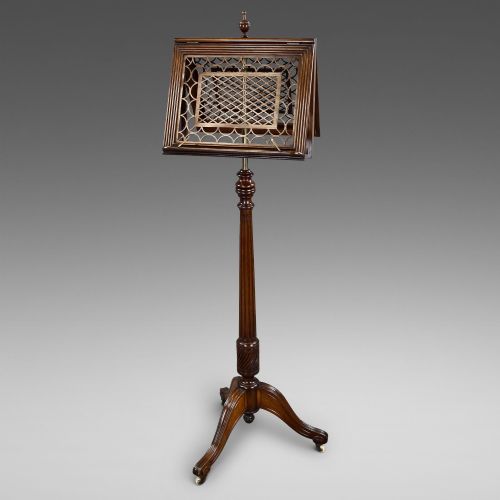
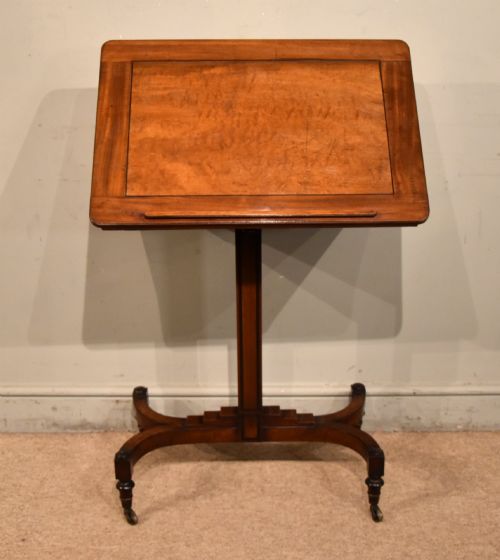
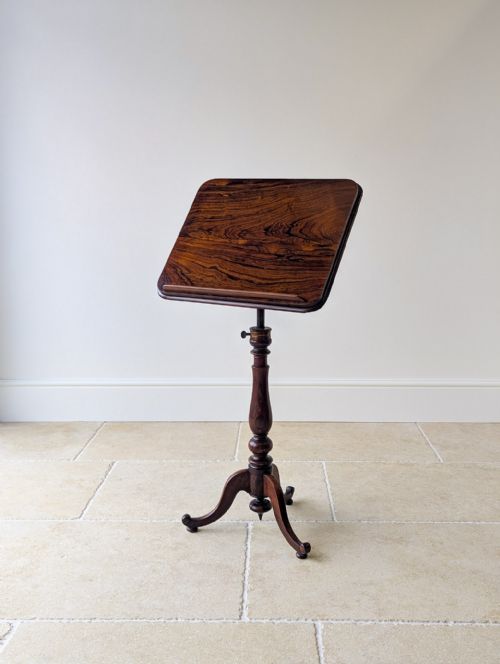
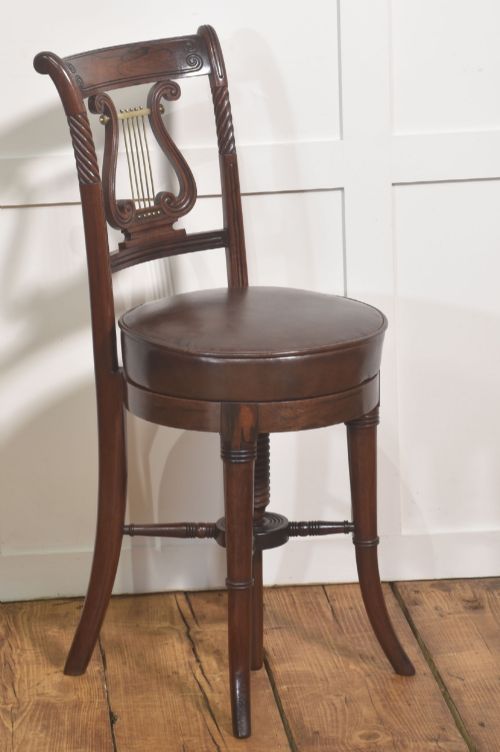


Regency Music Desk
These pieces of regency music desk design are adjustable stands and tables crafted to hold scores and books for musicians and readers.
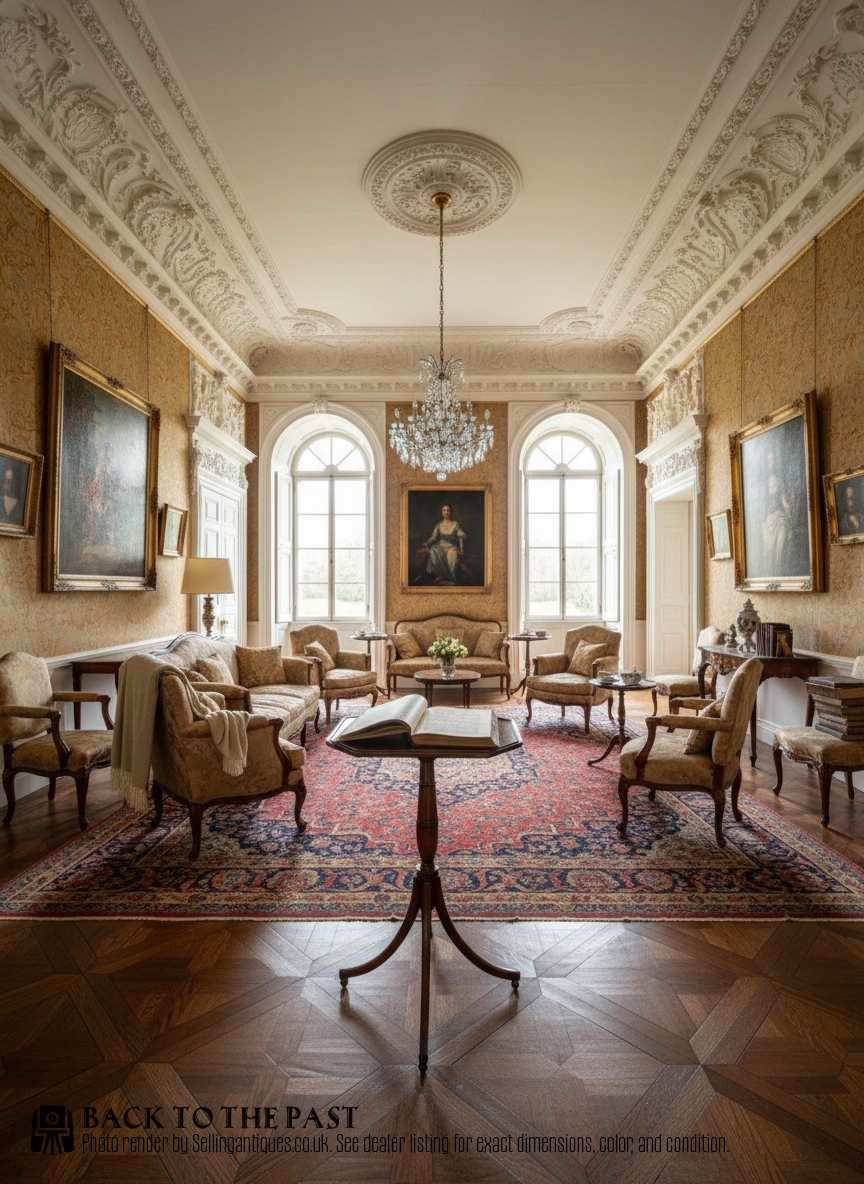
Regency Music Desk
When you search for a regency music desk, you encounter reading stands, duet stands, and combination tables designed for the parlour or study. The selection on this page spans the nineteenth century, encompassing Georgian, Regency, William IV, George IV, and Victorian periods.
Most examples function as adjustable music stands or reading tables, whilst others take the form of whatnots or occasional furniture. Materials such as mahogany and rosewood dominate the form, often accompanied by brass fittings and satinwood inlay.
Makers and workshops of the era, including pieces attributed to Gillows, produced these adjustable stands to meet the domestic musical requirements of the period. Forms range from tripod bases to lyre-shaped supports and revolving chair combinations.
Materials and construction
Cabinet makers utilised dense hardwoods like mahogany, rosewood, and gonçalo alves to build stable tripod bases and heavy reading surfaces. Satinwood inlay frequently provides decorative contrast on the timber panels.
Brass mechanisms and steel adjustments allow the stands to alter in height and angle for the performer or reader. Leather surfaces sometimes line the top reading ledges to secure books and sheet music during use.
The listings on this site record pieces spanning the nineteenth century, including Regency, Georgian, and Victorian periods executed in mahogany and rosewood.
Judging quality in these pieces
The refinement of the turning on the central pillar and the precision of the brass ratchets distinguish finer examples from simpler workshop output. Cabinet work involving intricate fretting or delicate satinwood inlay reflects higher labour investment by the maker.
The integrity of the adjustable mechanism determines daily utility, where smooth movement in the screw or peg adjustments indicates superior original engineering. Figured timber grain selected for the music rest or tabletop adds visual depth absent in plain planks.
The Regency Music Desk Glossary
- Duet Stand
- A music stand wide enough to accommodate two musicians reading shared or separate sheet music simultaneously. These often feature adjustable twin desks.
- Whatnot
- A set of open shelves used for displaying or holding books and small items, occasionally combined with a reading stand function. They appear in mahogany and rosewood.
- Tripod Base
- A three-legged support structure providing stability for adjustable music stands on uneven floors. This configuration appears frequently on nineteenth-century tables.
- Lyre-Shaped
- A decorative form shaped like an ancient lyre, frequently utilised in the central support or music rack of nineteenth-century stands. It references classical design motifs.
Regency Music Desk: Frequently Asked Questions
What is a regency music desk used for?
These pieces were built to hold sheet music, scores, and heavy books at an adjustable angle for musicians and readers seated in the parlour. They allowed performers to adjust height and reading position easily.
Today they serve similar functions as book stands, reading tables, or decorative occasional furniture in domestic interiors.
How do I identify a Regency period piece?
Regency pieces typically date from the early nineteenth century and display classical restraint, often utilising dark mahogany or rosewood with brass inlay. Proportions reference Greek and Roman antiquity.
Later Victorian interpretations often introduce heavier carving or different secondary timbers whilst retaining the core mechanical function.
Are these stands height adjustable?
Many examples feature original brass screws, ratchets, or peg mechanisms designed to alter the height and tilt of the reading desk. These moving parts allowed players to use the stands whilst sitting or standing.
Careful inspection of the mechanical components reveals how the original workshop solved the problem of vertical adjustment.
Where should I place a music stand at home?
These compact tables and tripod stands fit well beside armchairs, in corners of studies, or as freestanding display surfaces in a living room. Their adjustable tops make them practical for holding open books.
Keep them away from direct heat sources and strong sunlight to protect the polished mahogany or rosewood surfaces.