
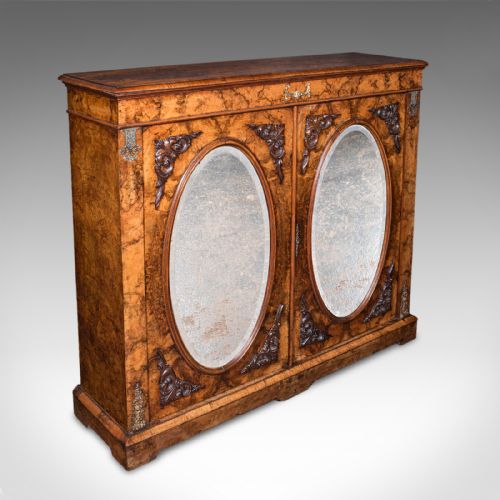
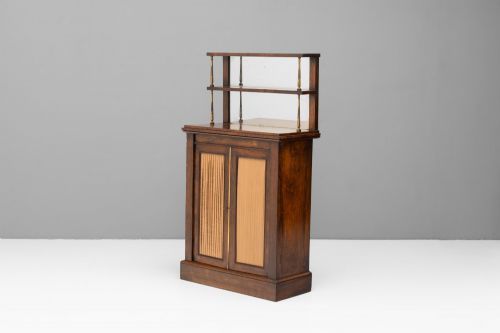


Regency Mirror Cabinet
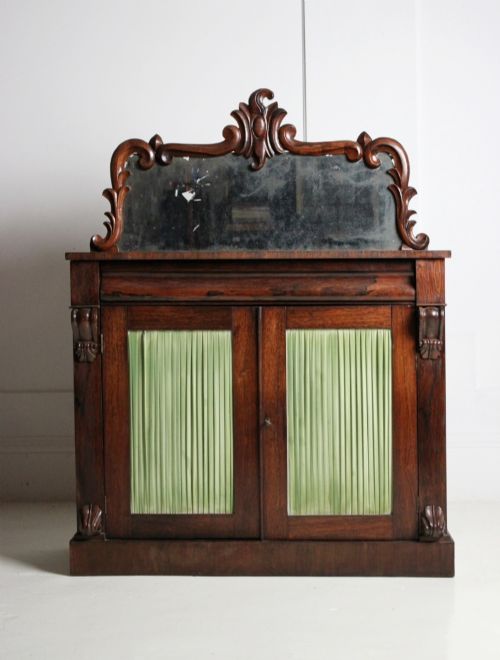
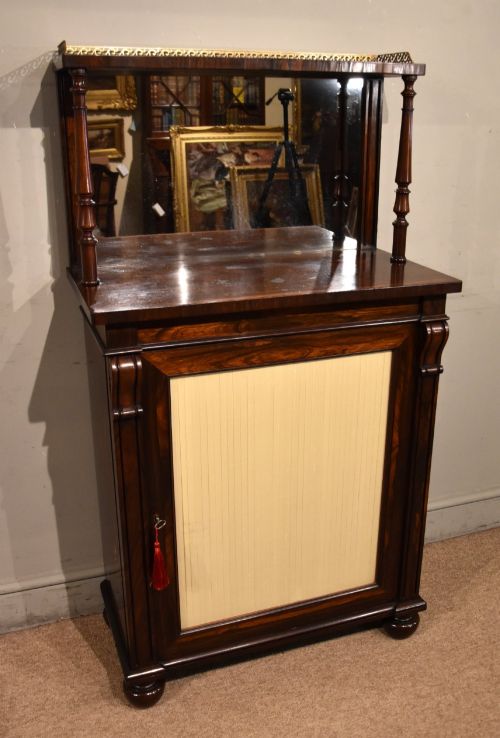
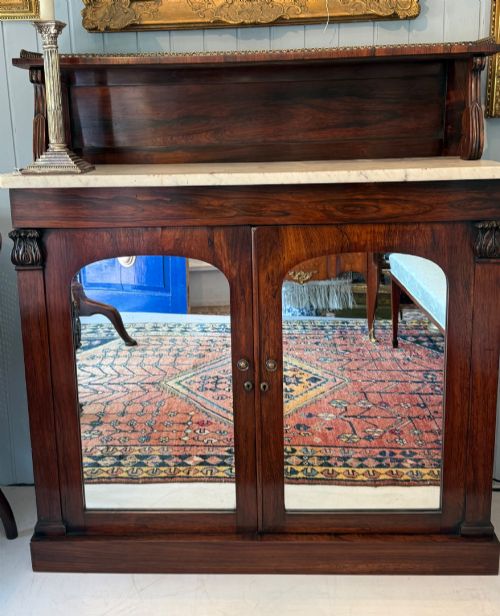
Regency mirror cabinet pieces are timber side cabinets and chiffoniers fitted with reflective glass, sought after for period interiors.
Regency Mirror Cabinet
When you search for a regency mirror cabinet, you are looking at nineteenth-century case furniture designed for storage and display in domestic rooms. The selection on this page centres primarily on rosewood and mahogany chiffoniers, side cabinets, and bookcases spanning the Georgian, Regency, William IV, and Victorian periods.
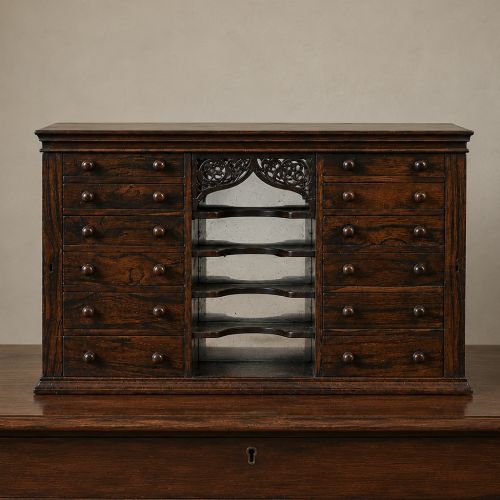
The forms range from compact collector's cabinets and open bookcases to breakfront sideboards and mirrored pieces, occasionally incorporating marble tops or associated wall mirrors. Makers such as Gillows and Town and Emanuel appear alongside examples from the Egyptian revival, Rococo revival, and George IV eras.
How they were made
Makers utilised solid timbers and fine veneers like rosewood, mahogany, and satinwood, often embellishing the carcass with brass inlay and mirrored glass panels. Marble tops appear on specific chiffoniers, while interior linings utilise secondary woods such as mahogany.
Joinery techniques reflect nineteenth-century cabinet-making standards, combining structural framing with decorative mounts and fabric accents where appropriate for bookcases and display cabinets.
Form variations include open bookcases, Wellington chests, credenzas, and wall-hanging cabinets featuring marble and mirror glass.
What varies in quality
The tier of a piece depends on the choice of timber figurations, the precision of brass inlay work, and the structural integrity of the carcase. Pieces attributed to documented workshops like Gillows demonstrate superior craftsmanship in secondary framing and carving.
Proportion and the handling of Revival styles, such as Egyptian or Rococo elements, dictate distinction across the range, distinguishing standard utility furniture from sophisticated drawing-room pieces.
Gillows·Town and Emanuel
The Regency Mirror Cabinet Glossary
- Chiffonier
- A low cabinet with shelves or drawers, frequently topped with a superstructure or mirror back during the Regency period. It evolved from sideboards to serve dining and morning rooms.
- Breakfront
- A piece of furniture where the central section projects forward from the flanking wings. This architectural arrangement creates depth and visual rhythm in large side cabinets.
- Collector's Cabinet
- A specialised case fitted with numerous small drawers for housing natural history specimens or coins. These items demand precise internal joinery.
- Pier Glass
- A large mirror designed to hang on the wall between windows, often paired beneath with a matching console or cabinet.
Regency Mirror Cabinet: Frequently Asked Questions
What rooms suit a regency mirror cabinet?
These cabinets suit drawing rooms, hallways, and dining spaces where low storage and reflective glass enhance natural light. Their proportions work well beneath wall art or paintings.
They function effectively as serving surfaces or display areas for decorative objects, maintaining historical character in period homes.
How do I identify a Regency period piece?
Look for characteristic timber choices like figured rosewood and mahogany, often accented with brass inlay or mounted mirrors. Proportions tend to follow neoclassical lines or early revival styles.
Construction details, such as secondary softwood linings and hand-cut dovetails, help separate nineteenth-century work from later reproductions.
Were mirrors original to these cabinets?
Many chiffoniers and side cabinets incorporated mirror glass within doors or back panels during the nineteenth century. Surviving examples often pair cabinets with associated wall mirrors.
Archival records show mirror-backed bookcases and pier cabinets appearing frequently from the Regency era onwards.