



Regency Miniature Drawers
Regency miniature drawers are small-scale pieces crafted to demonstrate skill or furnish gentlemen's travel chests, prized today for their exquisite proportions and cabinet-making detail.
Regency Miniature Drawers
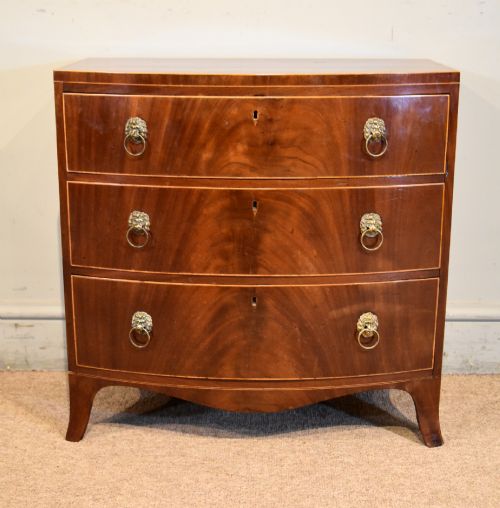
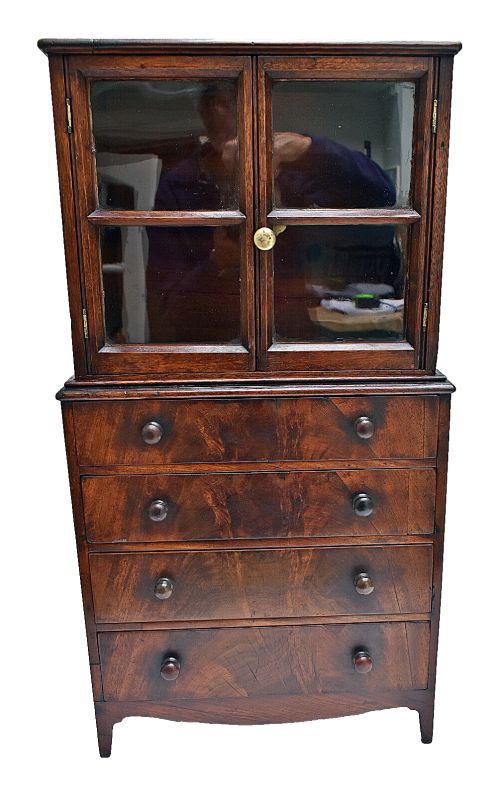
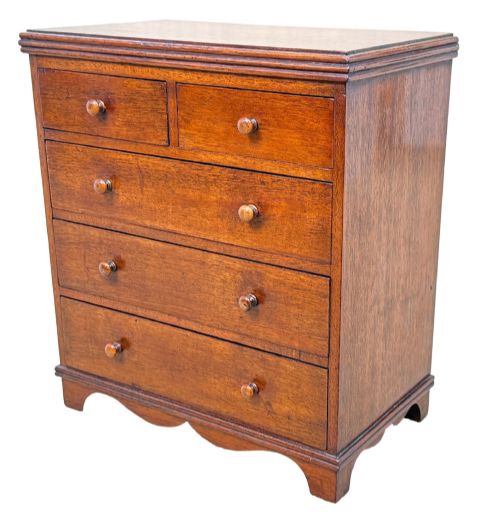
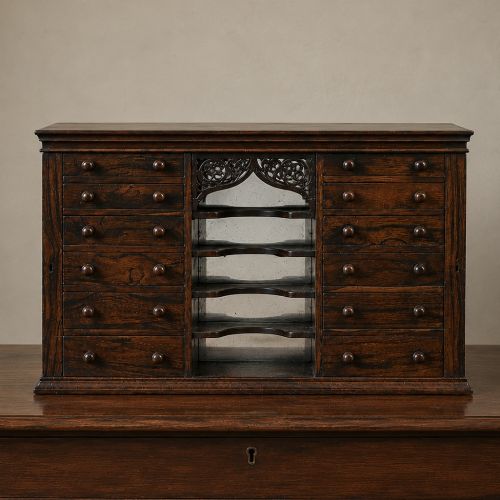
Regency miniature drawers appear across this selection as miniature chests of drawers, bowfront chests, and table cabinets originating in the Georgian and Regency periods. These small-scale pieces mirror the full-sized furniture of their era, taking the form of apprentice pieces and collectors' cabinets designed for compact display.
The dominant forms on this page include mahogany bowfront chests and rosewood collectors' cabinets dating from the early nineteenth century. Makers constructed these items to replicate every feature of domestic case furniture, down to working locks and tiny keys.
Materials and construction methods
Cabinet-makers utilised dense hardwoods such as mahogany, rosewood, burr oak, and burr yew, often selecting figured veneers to create striking grain patterns across small drawer fronts. Secondary timbers and delicate boxwood stringing provide structural stability and linear contrast to the primary surfaces.
Joinery techniques mirror domestic furniture of the period, employing hand-cut dovetails for the miniature drawer carcases and solid timber linings. Brass drawer pulls, bone escutcheons, and glass panels complete the construction of glazed top sections and Wellington chests.
Regency Miniature Drawers Retail Price Guide 2026
Typical asking prices for regency miniature drawers among the pieces listed under this phrase on Sellingantiques today, from the lower quarter to the upper quarter. They describe what is for sale here now, not the wider market.
Several miniature chests include tiny working keys, proving that eighteenth-century apprentices took desktop security just as seriously as their master craftsmen.
Judging quality and proportion
Quality rests upon the fidelity of the miniature scale and the precision of the cabinet-making, where finer pieces maintain exact architectural proportions rather than looking clumsy or hastily assembled. The choice of timber grain across small drawer fronts dictates visual balance.
Subtleties in secondary detailing distinguish the work, such as the crispness of boxwood stringing, the integration of working locks with matching keys, and the preservation of original polished surfaces without modern intervention.
The Regency Miniature Drawers Glossary
- Apprentice piece
- A small item of furniture made by a craftsman to demonstrate mastery of trade skills before gaining guild admission.
- Bowfront
- A furniture front that curves outward in a convex shape, frequently seen on miniature chests from the Regency period.
- Stringing
- Thin inlay of a contrasting wood used to create decorative borders around drawer fronts and tabletops.
- Wellington chest
- A tall, narrow chest of drawers secured by a locking side stile that fastens over the drawer edges.
Regency Miniature Drawers: Frequently Asked Questions
What were miniature drawers used for?
Cabinet-makers produced these small pieces as apprentice showpieces to demonstrate proficiency in joinery and design to prospective employers.
Collectors also utilised them to store small valuables, coins, or specimens, fitting them easily onto writing tables and sideboards.
How do I date a Regency miniature chest?
Dating relies on identifying timber species like rosewood or mahogany alongside construction traits such as dovetail fineness and brass hardware styles.
Comparing the proportions and decorative motifs to full-sized furniture of the Georgian and Regency periods confirms the era.
Are miniature drawers fragile?
Solid hardwood construction makes these pieces durable, though fine veneers and tiny brass fittings require careful handling during placement.
Keeping them away from direct heat sources prevents timber shrinkage and protects fragile boxwood stringing from lifting.
What woods were used in these pieces?
Craftsmen favored rich hardwoods including mahogany, rosewood, burr oak, and burr yew for their attractive grain and stability.
Lighter woods like boxwood provided contrasting inlay lines, while bone and brass added functional detail to drawer fronts.