





Regency Marble Gueridon
A regency marble gueridon brings neoclassical gravity to a room through circular stone tops and sculptural timber supports.
Regency Marble Gueridon
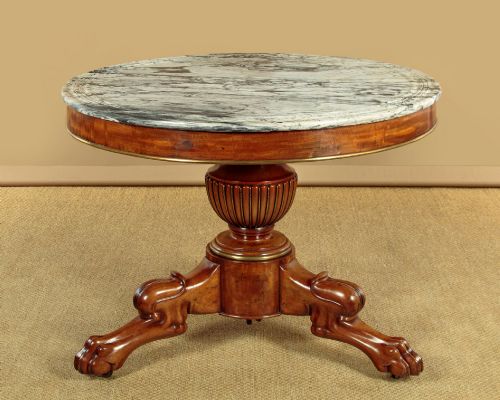
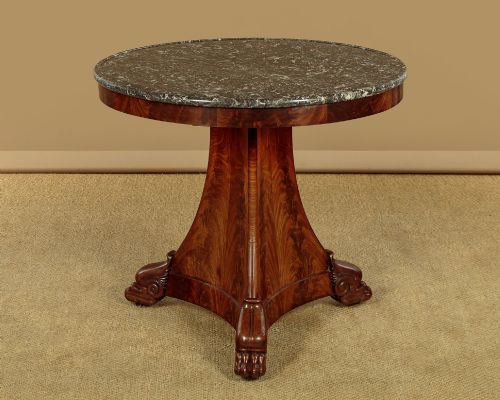
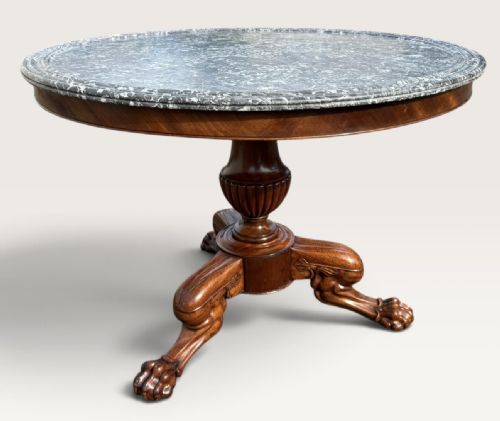
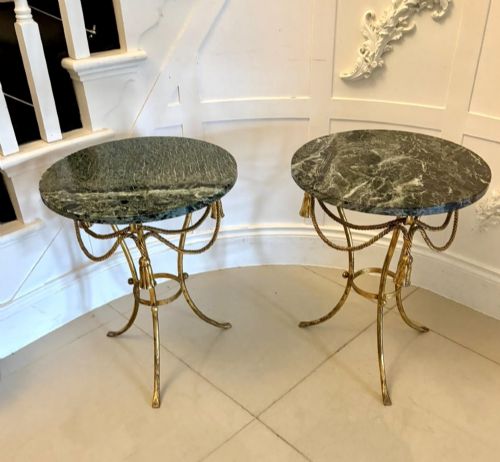
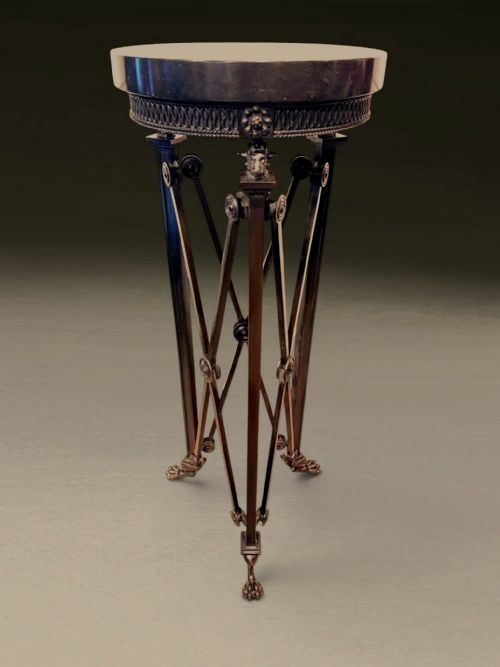
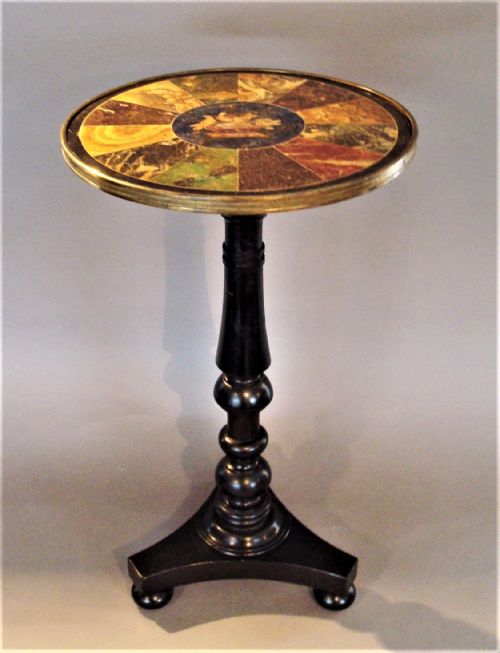
A regency marble gueridon functions as a centre table, lamp table, or occasional table, designed with a prominent circular stone top. These pieces draw on classical forms, appearing in configurations such as tripod stands and pedestal bases.
Most examples found here date from the nineteenth century, including specific Regency pieces alongside later revivals from the early twentieth century. Buyers encounter forms ranging from compact plant stands to substantial centre tables suited for a country house.
Makers and designers of these tables utilised stylistic influences spanning traditional Regency, French Empire, and Hollywood Regency. This variety allows collectors to choose between strict classical interpretations and more ornate revival pieces.
Materials and construction
Construction relies heavily on timbers such as mahogany and flame mahogany, providing robust structural framing for heavy stone tops. These wooden elements are frequently enhanced with brass mounts, ormolu, and gilt metal details.
Table surfaces feature genuine marble or verde marble, offering a cool, durable finish that contrasts with the dark grain of the timber. Some pieces incorporate simulated marble finishes, reflecting the decorative ambitions of the period.
Regency Marble Gueridon Retail Price Guide 2026
Typical asking prices for regency marble gueridon among the pieces listed under this phrase on Sellingantiques today, from the lower quarter to the upper quarter. They describe what is for sale here now, not the wider market.
One exceptional listing includes a bronze stand attributed to Thomas Hope.
Judging quality and proportion
Quality rests in the harmony between the weight of the marble top and the stability of the supporting base. Superior pieces maintain balanced proportions without appearing clumsy, particularly in tripod and pedestal configurations.
The refinement of the cast metal mounts and the selection of timber veneers determine the distinction between standard production and exceptional work. Finer examples display careful attention to the grain of flame mahogany and crisp detailing in the bronze or gilt elements.
The Regency Marble Gueridon Glossary
- Gueridon
- A small circular table, typically supported by a central pillar or three legs, originating in seventeenth-century France. These pieces serve primarily as accent tables or plant stands.
- Ormolu
- Gilded bronze applications used as decorative mounts on furniture, highly fashionable during the Regency and Empire periods. The technique involves applying a gold amalgam to heated bronze.
- Verde marble
- A dark green ornamental stone often mottled with white veins, utilised extensively for classical tabletops. It provides a striking contrast to polished mahogany bases.
- Tripod table
- A freestanding table supported by three legs radiating from a central column, ensuring stability on uneven floors. This form is common among nineteenth-century occasional and lamp tables.
Regency Marble Gueridon: Frequently Asked Questions
What is a gueridon table used for?
These tables function primarily as decorative centre pieces or occasional surfaces for lamps and objects. Their compact circular format allows them to sit comfortably in hallways, drawing rooms, or beside seating.
Historically, similar small stands held lighting or supported decorative displays in grand interiors. Today, they serve a similar purpose in modern rooms requiring a classical focal point.
How do I identify a Regency piece?
Regency furniture typically displays restrained classical proportions, inspired by ancient Greek and Roman design. Look for architectural elements, dark mahogany timbers, and restrained brass or bronze mounts.
Revival pieces from later decades often imitate these characteristics but may utilise different construction methods or lighter secondary woods. Examining the joinery and the wear on the marble helps clarify the age of the piece.
Are marble tops original to the tables?
Marble tops on nineteenth-century tables were generally fitted to the wooden frame during initial manufacture to ensure a precise resting place. Heavy stone slabs add significant weight, which helps anchor the pedestal or tripod base securely.
Replacement tops occur due to historic damage, though matching stone types usually preserves the integrity of the piece. Inspecting the underside reveals how the marble rests and secures within the wooden rim.
How do I care for marble and mahogany?
Marble requires gentle cleaning with a damp cloth and neutral soap, avoiding acidic substances that etch polished stone surfaces. Regular dusting protects the porous finish from staining over time.
Mahogany benefits from occasional waxing to nourish the timber and maintain its deep lustre. Keeping the furniture away from direct heat sources prevents the wood from drying and splitting.