


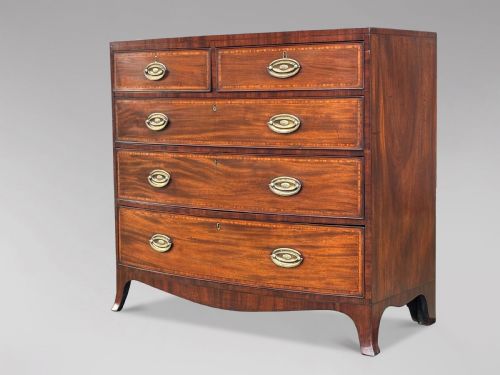

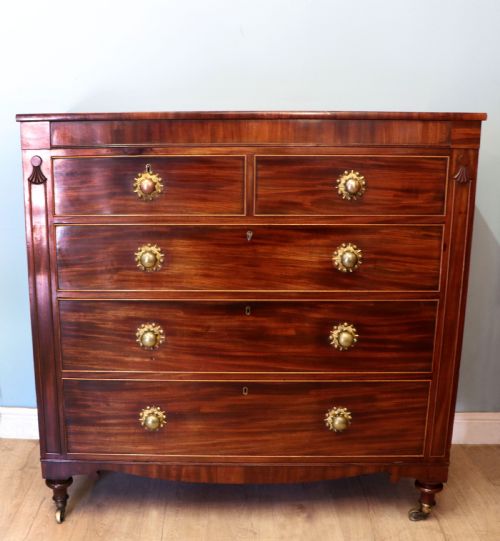


Regency Mahogany Tall Chest
A regency mahogany tall chest offers soaring vertical storage, bringing rich timber grain and classic proportion to a bedroom.
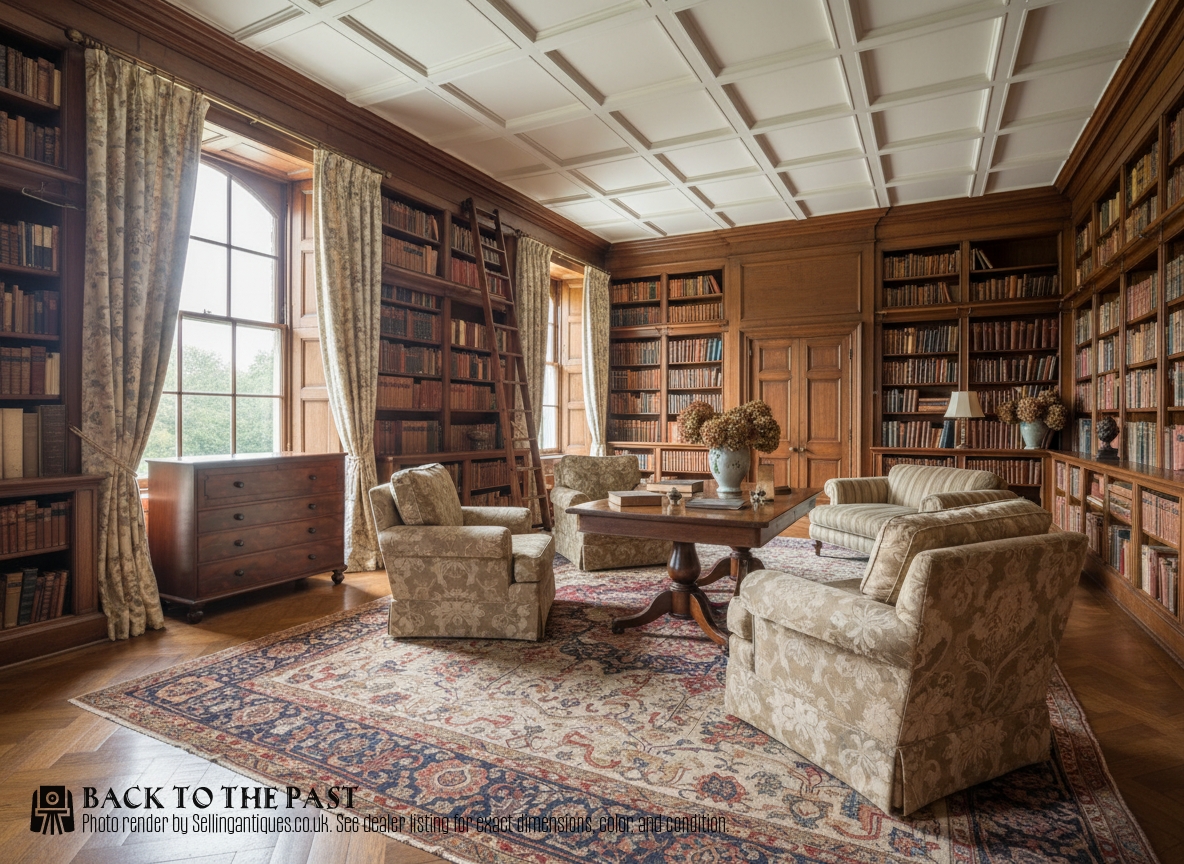
Regency Mahogany Tall Chest
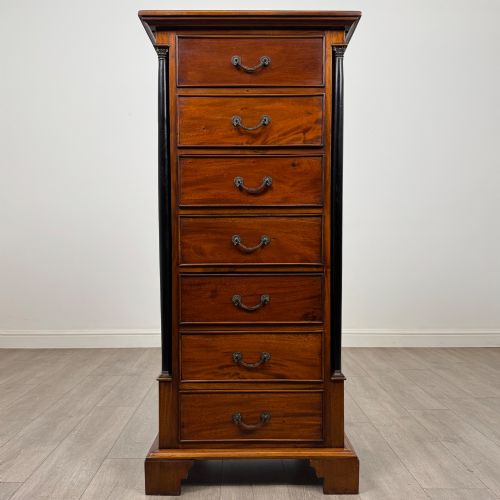
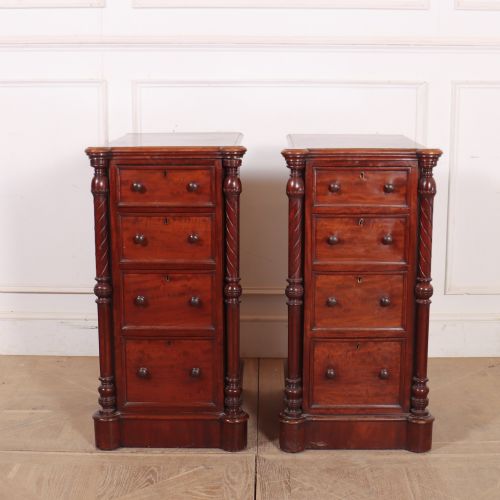
A regency mahogany tall chest provides tall vertical proportions designed to hold substantial linen and clothing without claiming excessive floor space in a bedroom. These pieces frequently manifest as tallboys, chest on chest forms, or narrow multi-drawer formats from the nineteenth century and later revival periods.
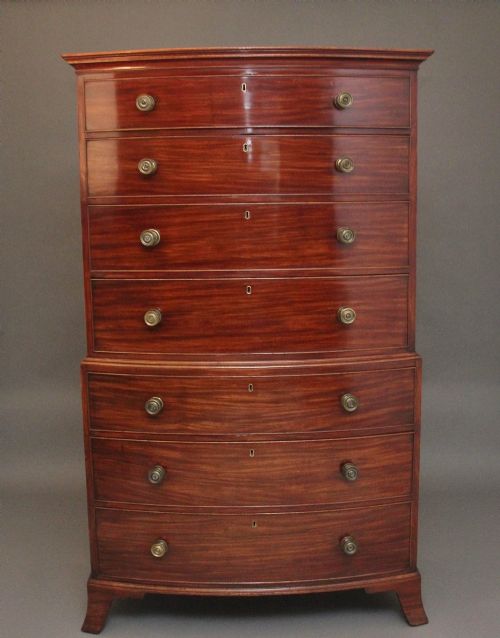
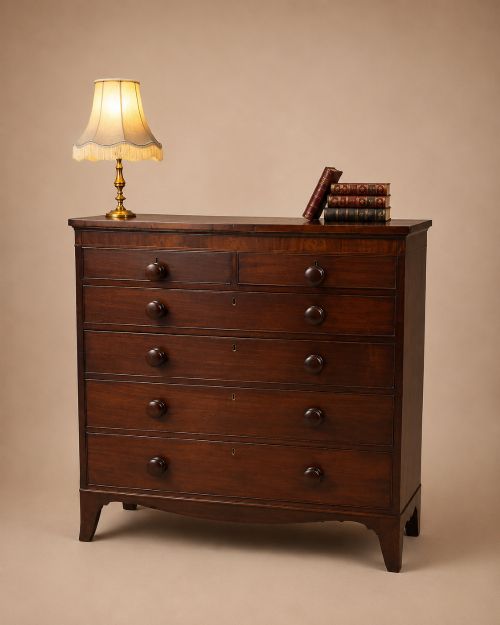
The primary forms appearing here span classical upright carcases from the regency and georgian eras alongside later edwardian interpretations. Buyers encounter standard rectangular configurations alongside bow front variations and taller stacked chest on chest constructions.
Originating largely from British workshops, these tall chests utilise the dense timber reserves favoured by period cabinet makers. Scottish and English regional variations introduce subtle shifts in drawer arrangement and cornice moulding.
How they were made
Makers built the primary carcases using solid mahogany, oak, and pine, selecting sturdy secondary woods for drawer linings and internal framing. Flame mahogany veneer often faces the primary drawer fronts to create striking figure patterns across the tall facade.
Surface ornamentation relies on satinwood inlay, ebonised wood details, and cast brass hardware rather than heavy carving. Cabinet makers matched the grain carefully across stacked drawer tiers to maintain a continuous visual flow from top to bottom.
Listings feature mahogany, oak, pine, and exotic woods like goncalo alves across nineteenth-century and edwardian periods.
What varies in quality
The sophistication of the timber figure dictates much of the visual tier, with richly figured flame mahogany commanding higher aesthetic regard than plain stock. Crisp execution of satinwood inlay and well-preserved brass drawer pulls separate superior examples from simpler utilitarian pieces.
Structural integrity reveals itself in the dovetail joinery of the drawers and the smooth operation of each tier within the tall carcase. Original backboards and undisturbed interior drawer dividers indicate careful preservation over centuries of domestic use.
The Regency Mahogany Tall Chest Glossary
- Tallboy
- A tall chest of drawers, often constructed as a chest on chest where a smaller upper section rests upon a larger base.
- Flame mahogany
- A veneer cut from timber where the branch meets the main trunk, producing a distinctive flickering flame pattern across the wood.
- Secretaire
- A cabinet or chest containing a fitted writing drawer with a drop-front writing surface and small pigeonholes.
- Bow front
- A convex curved front facade that swells outward in the centre, common in finer nineteenth century chest designs.
- Satinwood inlay
- Contrasting light yellowish wood inserted into recessed channels within the darker mahogany surface to form decorative borders.
Regency Mahogany Tall Chest: Frequently Asked Questions
Where should I place a tall chest?
These vertical pieces suit bedrooms and dressing rooms where floor space is limited but storage capacity is necessary. Their height draws the eye upward, making them functional anchors for high-ceilinged rooms.
Ensure adequate clearance for opening drawers fully, particularly with deeper bow front designs or stacked chest on chest variants.
How do I clean mahogany wood?
Dust the surfaces regularly with a soft, dry cloth to prevent particulate buildup on the delicate veneer and polish. Avoid modern silicone sprays that can penetrate old finishes and attract further dust.
Apply a traditional beeswax occasionally to nourish the dry timber and maintain a soft natural sheen.
What is a chest on chest?
A chest on chest consists of an upper tall chest stacked directly onto a slightly deeper lower chest of drawers. This configuration maximises vertical storage while allowing the heavy furniture to be separated into two manageable parts for transport.
Cabinet makers frequently integrated decorative cornices along the top edge where the two sections meet.
How do I date a mahogany chest?
Examine the secondary woods inside the drawers, such as oak or pine, alongside the hand-cut dovetail joints. Earlier pieces from the georgian and regency eras feature irregular handmade joinery and hand-planed backboards.
Later edwardian revivals often display machine precision and lighter internal timber framing.