

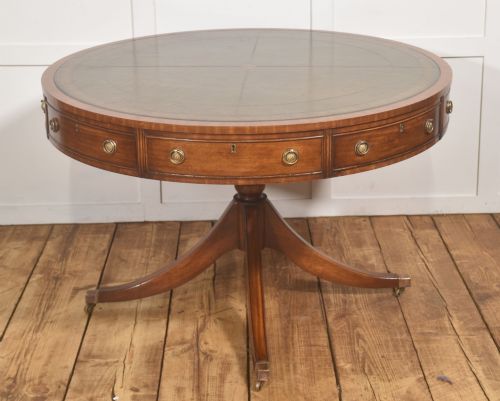
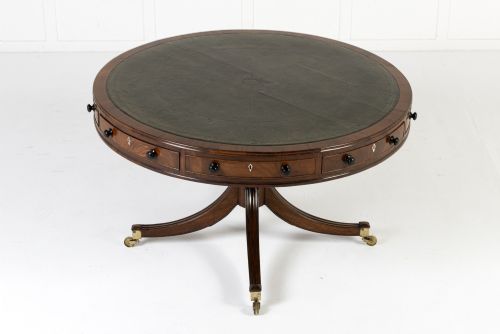
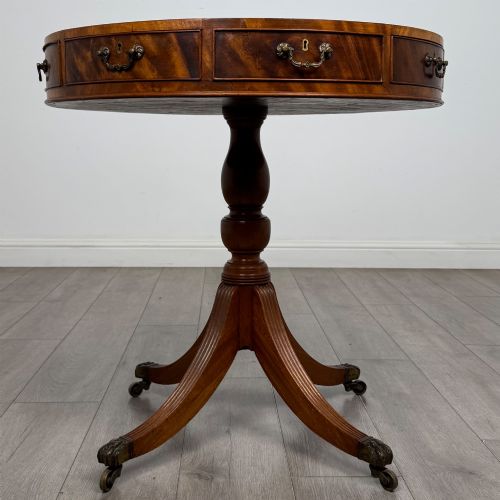
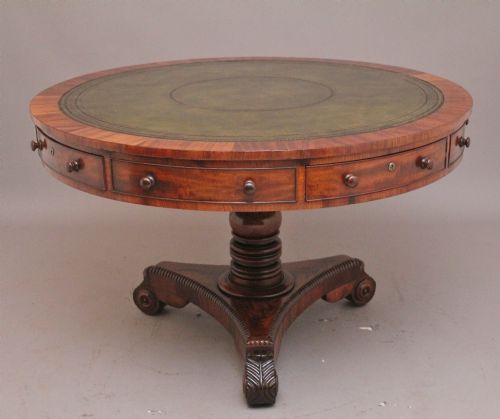
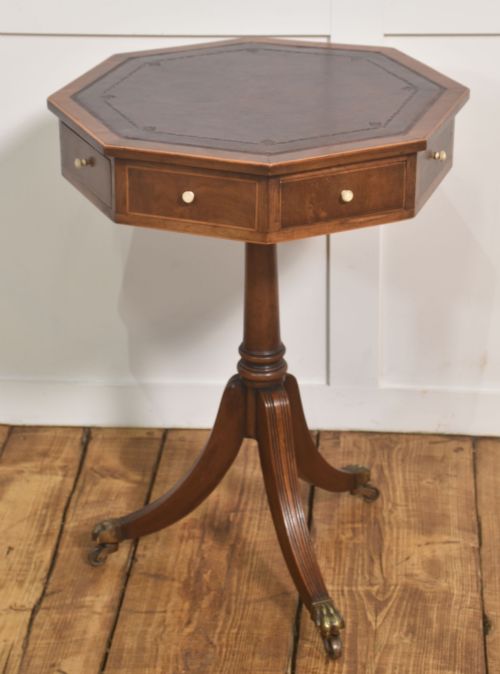
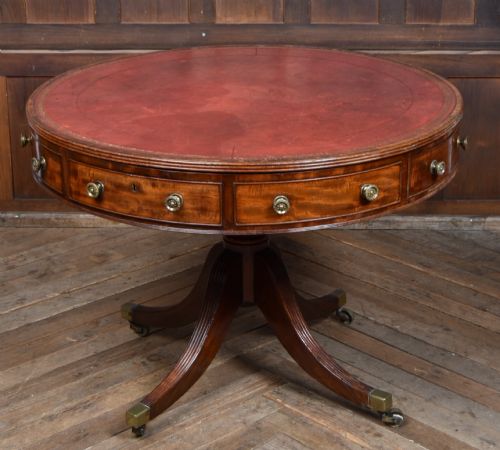


Regency Mahogany Rent Table
A regency mahogany rent table is a rotating circular piece built for managing estates, prized for its rotating top and deep drawers.
Regency Mahogany Rent Table
When you search for a regency mahogany rent table, you encounter circular library and drum tables designed with revolving tops. These pieces originate primarily from the Georgian, Regency, and William IV periods, constructed to stand centrally in a room.
The version you are most likely to meet on this page is the drum table, often referred to in the evidence as a library table, centre table, or occasional table. They appear in standard round formats alongside occasional oval variations.
Makers built these tables for practical estate administration, incorporating fitted drawers labelled for filing rents and papers. Over time, their distinctive rotating tops made them sought-after centrepieces for studies and libraries.
How they were made
Cabinet makers utilised solid mahogany and flame mahogany veneer laid over sturdy secondary timbers to construct the primary carcase. They often selected figured veneers to accentuate the circular grain of the rotating top.
Craftsmen set inset leather writing surfaces into the top, frequently bordered with blind tooling or gilt decoration. They integrated heavy brass handles and locks into the radial drawers, while supporting the central column on substantial pillar and plinth bases.
Regency Mahogany Rent Table Retail Price Guide 2026
Typical asking prices for regency mahogany rent table among the pieces listed under this phrase on Sellingantiques today, from the lower quarter to the upper quarter. They describe what is for sale here now, not the wider market.
Some tables feature secret compartments hidden behind false drawer fronts where stewards once kept spare house keys and petty cash.
What varies in quality
The choice of timber creates the primary distinction between pieces, with matched flame mahogany veneers and dense, heavy mahogany solids marking out finer examples. The crispness of the turning on the central pillar and the fidelity of the rotating mechanism reveal the maker's original investment of time.
Proportion and scale dictate the visual success of the piece, particularly where smaller proportions or unusual oval formats are handled with restraint. The quality of the original leather writing surface and the integration of brass inlay further separate standard production from superior workshops.
The Regency Mahogany Rent Table Glossary
- Rent table
- A large circular table fitted with drawers labelled alphabetically or numerically for collecting estate rents. These pieces typically feature a revolving top to allow access from a stationary seat.
- Drum table
- A circular library table named for its deep, cylindrical top resembling the shape of a drum. They rest on a central pillar supported by a tripod or platform base.
- Flame mahogany
- A veneer cut from the fork of the mahogany tree where the branch meets the trunk, producing a distinctive fire-like pattern. Cabinet makers reserved this timber for prominent surfaces such as table tops.
- Pedestal base
- A central column support resting on legs or a plinth base, allowing the table to stand freely without corner legs. This construction enabled the complete rotation of the drum top.
- Library table
- A large freestanding table designed for reading and writing, often equipped with drawers for stationery and papers. They form a primary category that includes drum and rent formats.
Regency Mahogany Rent Table: Frequently Asked Questions
What is a rent table used for?
A rent table served as an administrative desk for estate managers to collect and record tenant payments. The revolving top allowed the user to sit in one place and access multiple labelled drawers.
Today, these pieces function primarily as centre tables or library tables in studies and living spaces. Their numerous drawers offer practical concealed storage for modern household items.
How do I identify a Regency period table?
Regency tables typically display architectural restraint, classical proportions, and dark dense mahogany timbers. Details such as brass inlay, reeded pillars, and brass paw feet often point to this era.
Comparative pieces from the later revival periods copy these specific motifs but generally lack the crispness of cabinet-making found in genuine early nineteenth-century examples.
Do all rent tables rotate?
Most authentic rent and drum tables feature a central pivot mechanism that allows the entire top to revolve smoothly. This functional design enabled stewards to reach every drawer without moving the chair.
When examining a piece, ensure the internal bearing mechanism moves freely and aligns correctly with the pedestal base.
Where should I place a drum table?
Drum tables suit large central spaces, libraries, or studies where they can be viewed from all sides. Because they are freestanding, they work effectively away from walls.
Allow sufficient clearance around the circumference of the table to permit easy access to the drawers and the rotating top.