



Regency Mahogany Pier Mirror
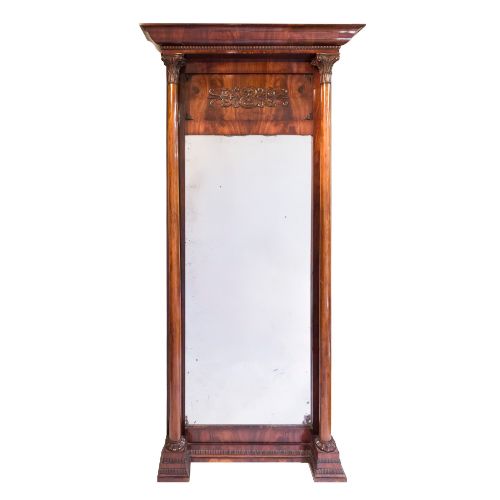
A regency mahogany pier mirror brings architectural gravity and reflective depth to a tall wall space between windows.
Regency Mahogany Pier Mirror
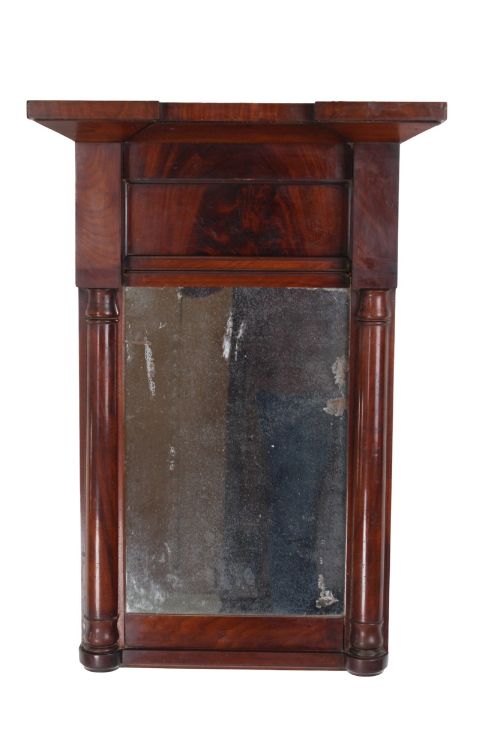
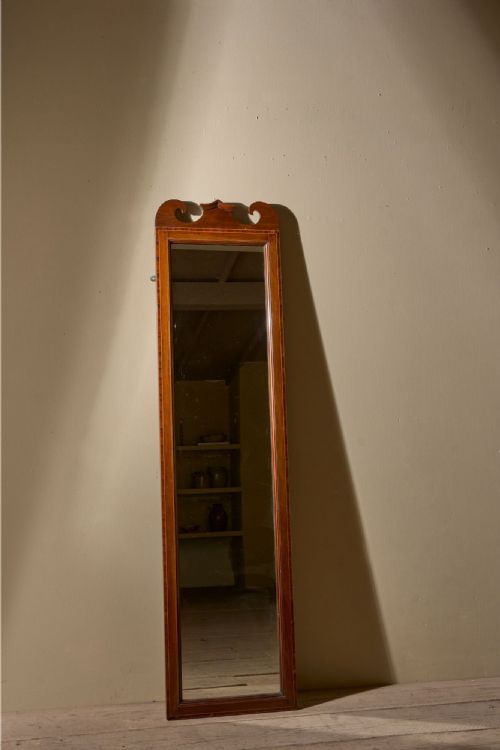
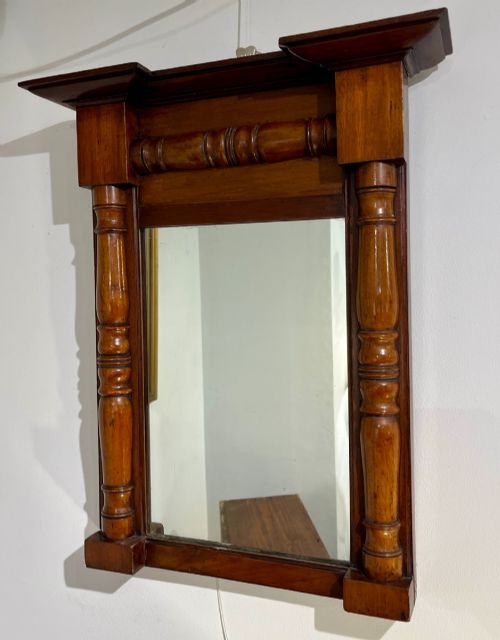
A regency mahogany pier mirror is a vertical wall glass designed specifically to hang on the narrow wall space between windows, known as the pier. The pieces found here span from the early nineteenth century through William IV and Victorian interpretations, with small and large formats appearing alongside console tables and mirror backs.
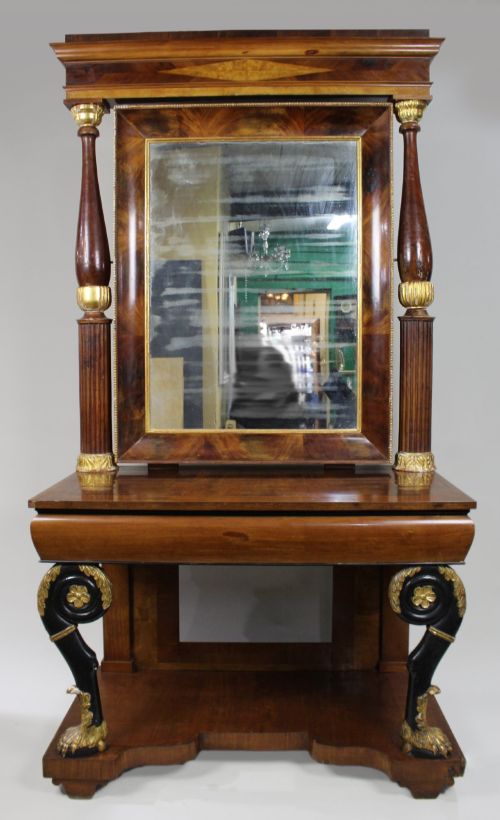
The form relies on architectural lines, often incorporating half columns, gilt wood details, or parcel gilt accents. Many examples pair the vertical mirror plate with flame mahogany veneers, bird's-eye maple, or carved crests featuring motifs like the Ho Ho bird or gilt crowns.
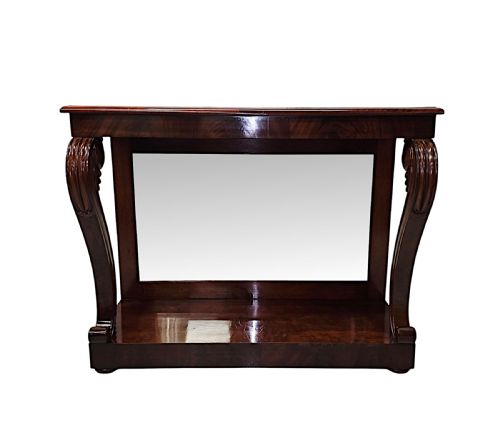
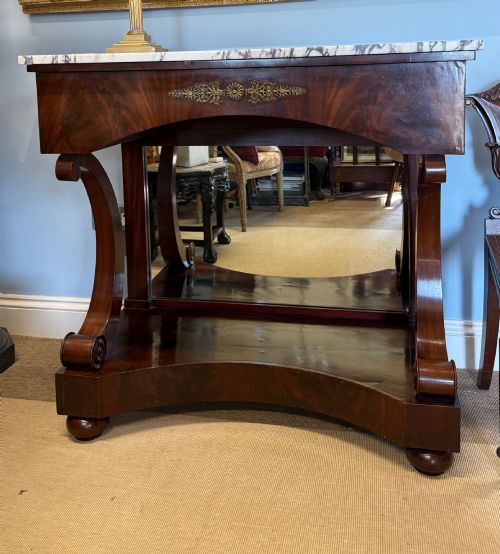
While many listings present standalone wall glasses, others connect directly to console tables or mirror-backed sideboards. The origin stretches across English workshops, Irish cabinets, and continental interpretations including Italian Empire and Biedermeier styles.
How they were made
Cabinet makers utilised dense timber frames, laying down figured flame mahogany veneer over secondary woods to create deep grain movement on the vertical surfaces. Parcel gilt highlights and carved wooden details were frequently applied to enrich the architectural moulding.
Glass plates of the period were secured into the rebates behind wooden backs, often retaining original mercury plate that yields a characteristic speckled reflection. Giltwood elements were water-gilded or oil-gilded over a prepared gesso base, bonding gold leaf to the carved timber ornament.
Several mirrors keep watch over rooms accompanied by carved wooden Ho Ho birds perched regally upon their crests.
What varies in quality
Quality rests in the selection of the timber and the crispness of the architectural carving. Finer pieces display matched flame mahogany veneers and well-proportioned half columns that integrate seamlessly with parcel gilt enrichments.
The presence of original mercury glass plates and intact carved crests, such as birds or crowns, elevates a piece significantly. Construction depth, joint tightness, and the retention of original gilding separate workshop standards from standard commercial output.
Gillingtons of Dublin
The Regency Mahogany Pier Mirror Glossary
- Pier mirror
- A vertical wall glass designed to hang on the wall space between two windows. It frequently matches a console table placed directly beneath it.
- Parcel gilt
- Partially gilded timber where gold leaf is applied only to specific carved details, mouldings, or ornaments against a dark mahogany background.
- Mercury plate
- An older mirror manufacturing technique utilising a tin and mercury amalgam behind the glass. This method produces a warmer, slightly uneven reflective quality compared to modern silver nitrate.
- Flame mahogany veneer
- Thin slices of mahogany cut from the fork of the tree where branches join the trunk. This produces a distinctive, flamy, highly figured grain pattern.
- Console table
- A wall table supported by brackets or front legs, frequently designed to sit beneath a pier mirror. Several examples on this page combine the table and mirror into a single unit.
Regency Mahogany Pier Mirror: Frequently Asked Questions
Where should I hang a pier mirror?
A pier mirror belongs on a narrow stretch of wall, traditionally between two tall windows to bounce natural light back into a principal room. They also suit placement above a console table, sideboard, or mantelpiece where vertical height balances the room.
Ensure the wall construction safely supports the weight of the timber frame and heavy glass plate. Hanging them at eye level allows the architectural details of the frame to be appreciated properly.
How do I identify a Regency period mirror?
Regency mirrors rely on classical architectural inspiration, featuring clean lines, restrained carving, and elements like half-columns, pilasters, and cornice mouldings. The timber is typically dark mahogany, often enhanced with parcel gilt highlights or brass mounts.
Examine the construction of the wooden backboards and the silvering behind the glass. Period pieces often show hand-cut fixings, older screws, and the distinct visual depth of mercury plate.
Did these mirrors always match console tables?
Not all pier mirrors were attached to tables, though many were conceived as unified decorative schemes for formal reception rooms. Standalone wall glasses were common in hallways and parlours.
When a mirror and console table were made together, the design of the wood grain and carved ornament continued fluidly from the base up through the frame.
How do I care for original mercury glass?
Original mercury glass requires gentle handling and should be cleaned using only a dry microfibre cloth or a very mildly damp cloth without harsh chemical solvents. Avoid pressing hard against the glass plate to protect the historic silvering behind.
Keep the mirror away from damp exterior walls and direct, intense sunlight to prevent further oxidation of the antique reflective backing.