



Regency Mahogany Open Armchair
A regency mahogany open armchair brings clean classical lines and rich timber tone to a study or drawing room.
Regency Mahogany Open Armchair
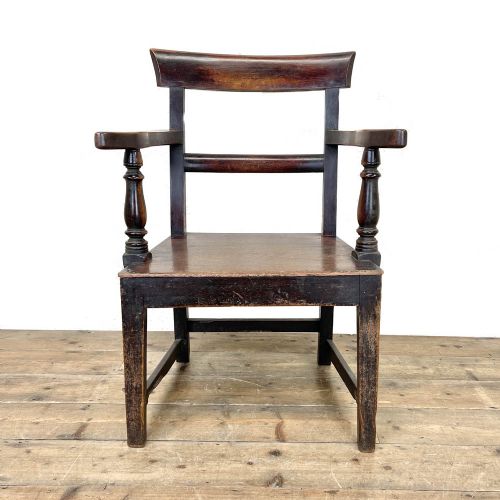
A regency mahogany open armchair sits at the intersection of formal seating and comfortable daily use, appearing in forms such as library chairs, desk chairs, and elbow chairs. These seats emerge predominantly from the nineteenth century, carrying the stylistic hallmarks of the Regency, George III, George IV, and William IV periods alongside later revivals.
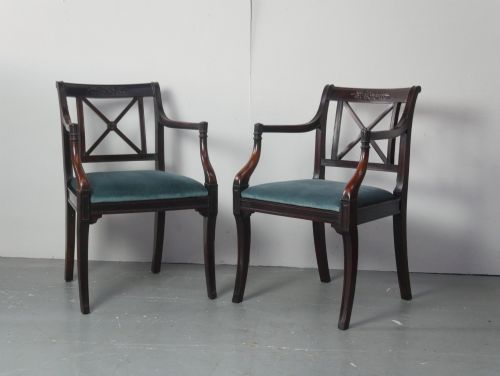
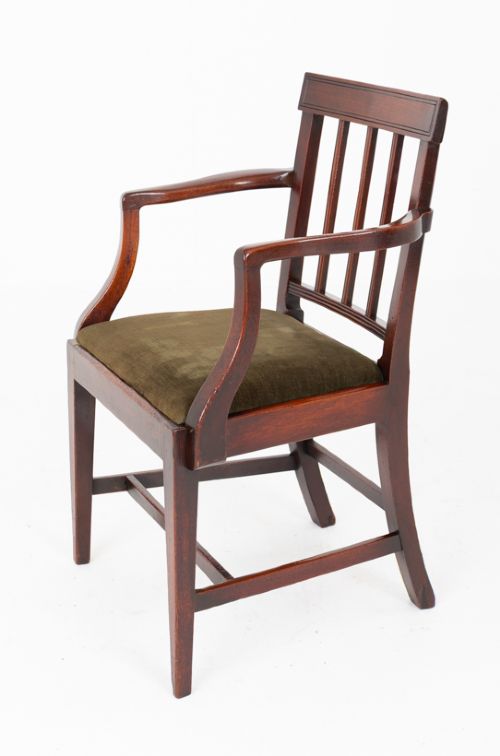
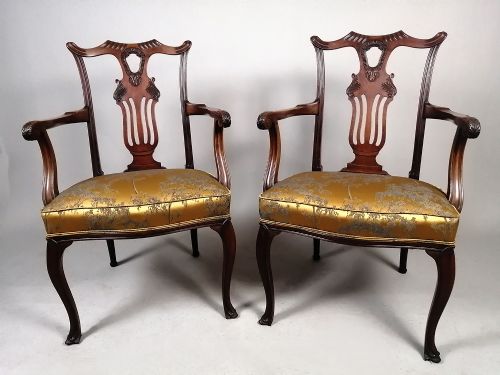
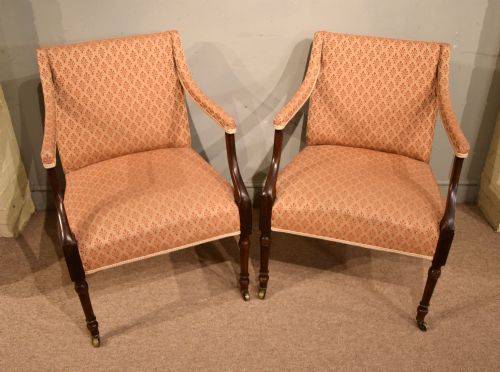
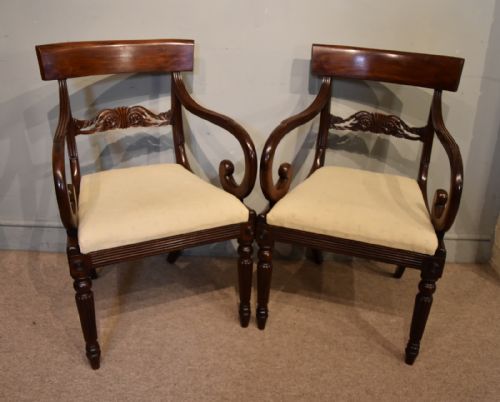
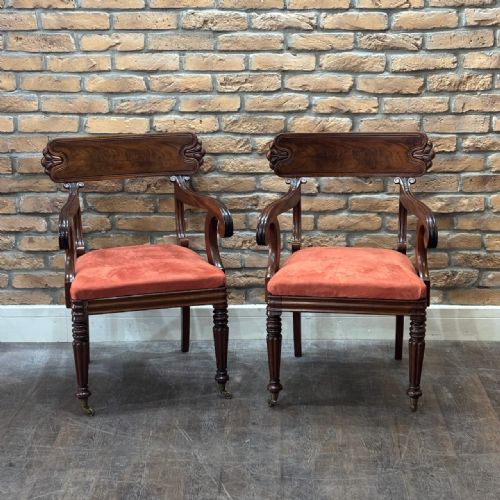
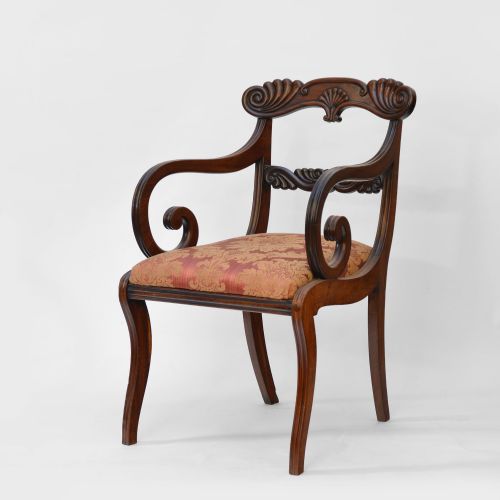
Buyers encounter single chairs and matched pairs designed for dining spaces, studies, and drawing rooms. The physical evidence shows various configurations including sabre legs, lyre backs, and drop-in seats upholstered in leather, velvet, or fabric.
Materials and construction methods
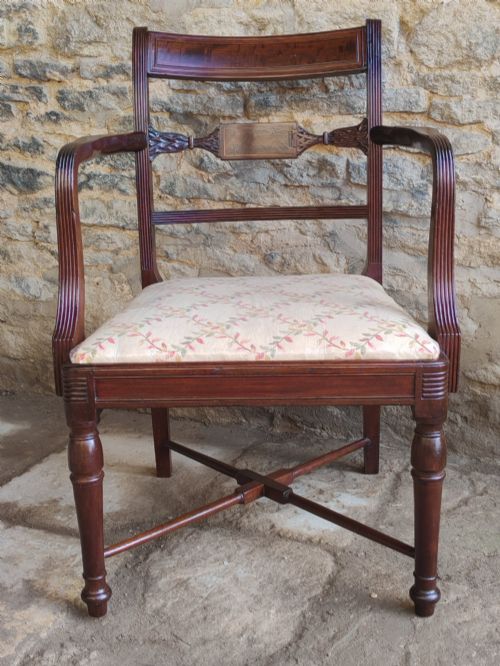
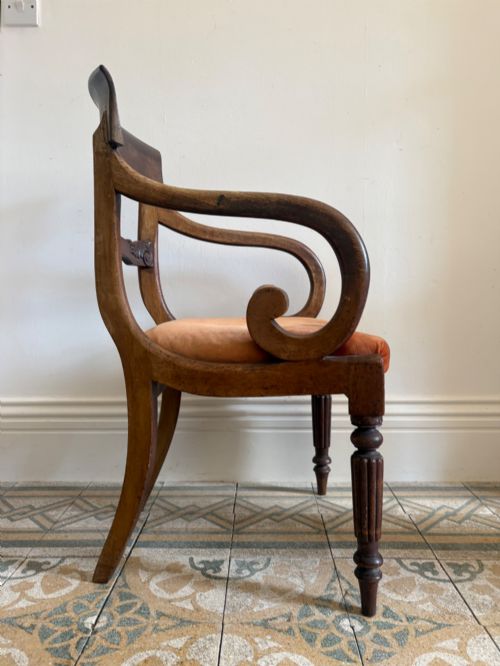
Cabinetmakers built these chairs using dense mahogany timber, sometimes enriched with brass inlay or intricate carved details. Frames often incorporate reeded woodwork, curved elbow rests, and joined construction designed to support daily weight.
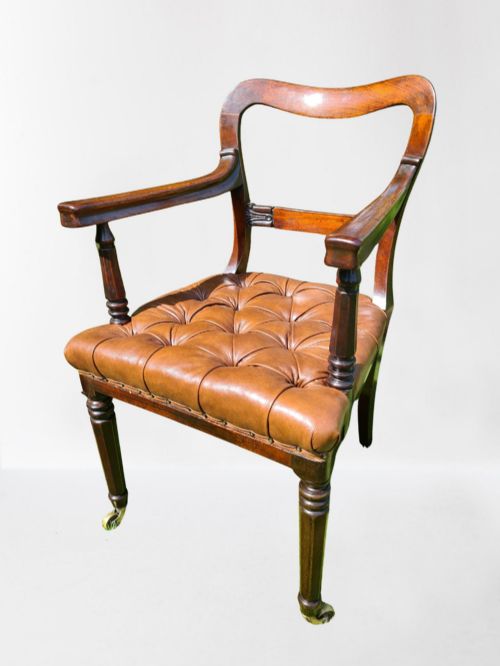
Seating surfaces rely on traditional upholstery methods, utilising drop-in pads, cane webbing, or leather and fabric covers fixed with studs. Structural stability depends on disciplined joinery connecting the backrest, arms, and legs.
Several smaller child-sized editions survive, proving that miniature dignitaries required proper elbow support too.
Distinctions in craftsmanship and condition
Quality rests in the crispness of the timber carving, the choice of well-figured mahogany, and the integrity of the frame construction. Superior examples maintain firm joints and harmonious proportions between the open arms and the supporting legs.
The distinction between standard workshop output and finer pieces lies in the subtlety of the reeding, the precision of brass inlay, and whether the timber retains its original warm surface sheen rather than heavy modern refinishing.
Henry Thomas Peters
The Regency Mahogany Open Armchair Glossary
- Carver chair
- An armchair designed with open sides, historically used at the head of a dining table or as a desk seat.
- Sabre leg
- A curved, outwardly tapering leg that sweeps backward, characteristic of nineteenth-century seating design.
- Reeding
- Parallel semicircular mouldings carved directly into the timber surface to create decorative vertical lines.
- Drop-in seat
- A removable wooden frame upholstered in fabric or leather that drops into the seat rebate of the chair.
Regency Mahogany Open Armchair: Frequently Asked Questions
Where were these chairs used historically?
These chairs served multiple domestic functions across the home, appearing in libraries, studies, bedrooms, and formal drawing rooms. Their open arm design allowed individuals to sit comfortably while wearing voluminous historical garments.
They also functioned as desk chairs or dining carvers depending on their height and structural configuration. Pairs frequently served in grand reception spaces or flanking a fireplace.
How do I distinguish original period pieces from revivals?
Examining the underside of the seat frame and the wear patterns on the timber reveals clues regarding age. Original pieces from the early nineteenth century exhibit hand-cut joinery and natural timber oxidation accumulated over generations.
Revival pieces made around nineteen hundred often display machine-tooled elements and cleaner, less variable wood surfaces. Comparing the construction methods to documented examples helps clarify the manufacturing date.
What upholstery materials are authentic?
Original seating surfaces typically utilised leather, woven cane, horsehair stuffing, or heavy textile covers secured with brass decorative tacks. Surviving examples often show later re-covering that respects the traditional aesthetic.
Drop-in frames made recovering straightforward, meaning many chairs have received new fabric over their lifespan while retaining the historic wooden chassis underneath.
How should I care for a mahogany frame?
Maintaining these wooden frames requires avoiding direct sunlight and stable indoor humidity to prevent timber shrinkage or splitting. Regular dusting with a dry, soft cloth preserves the natural polish of the mahogany.
Wax polishing should be applied sparingly and only when the wood appears dry, ensuring the finish remains breathable and deep in tone.