


Regency Mahogany High Chair
These regency mahogany high chair pieces offer elegant seating for the nursery, combining period timber with sturdy architectural forms that collectors prize.
Regency Mahogany High Chair
A regency mahogany high chair typically takes the form of a child's chair or convertible high chair on a stand, originating from the Regency, Georgian, and William IV periods. These seating pieces combine domestic utility with the formal design vocabulary of the early nineteenth century.
The listings here show various seating forms including children's chairs on stands, dining chairs, and library armchairs, reflecting the broader repertoire of mahogany furniture from the eras spanning Georgian to Victorian times. Buyers encounter both standalone youth chairs and convertible table arrangements designed for young children.
Originating primarily from the early nineteenth century around eighteen hundred to eighteen fifty, these pieces demonstrate how cabinetmakers applied adult furniture styles, such as Regency and William IV proportions, to smaller domestic requirements.
How They Were Made
Makers utilised solid mahogany for the structural frames, turning to brass for castors or fittings where applicable. The timber was selected for its dense grain and rich hue, providing both durability and a formal appearance.
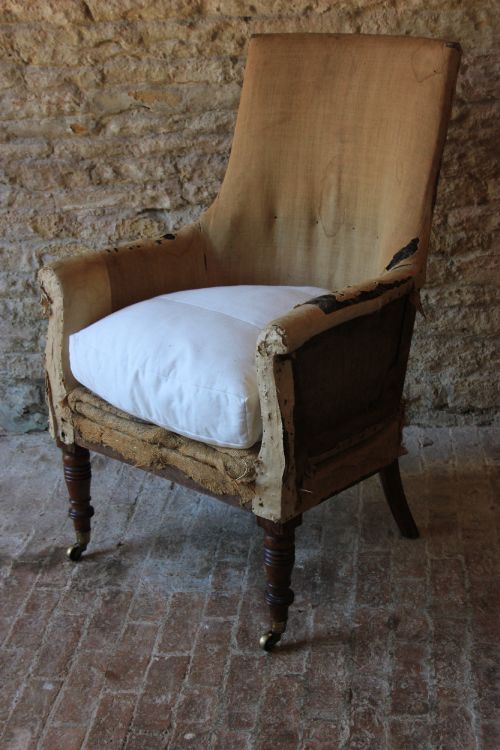
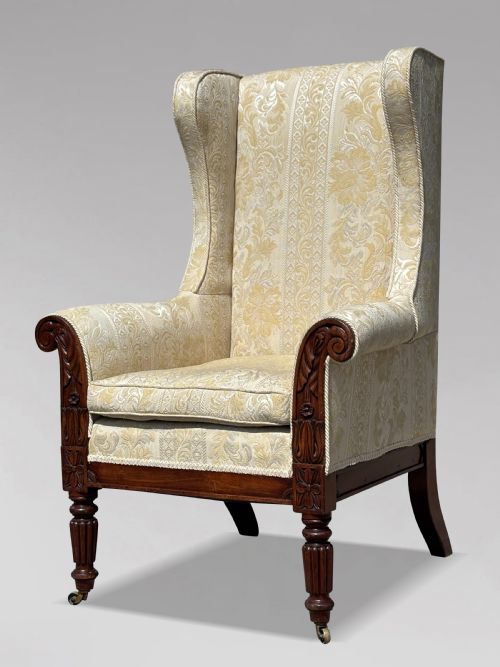
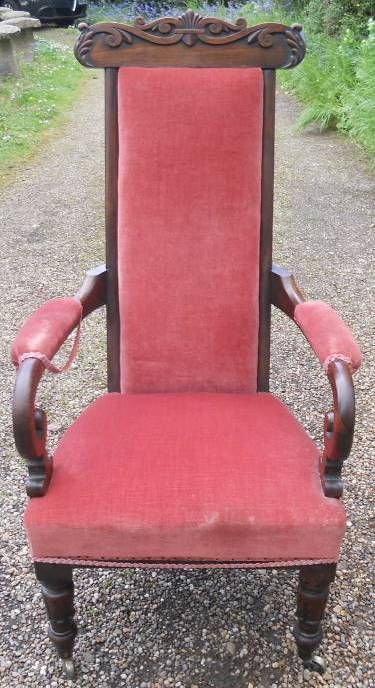
Upholstery materials recorded in the evidence include leather, fabric, hessian, velvet, calico, and damask fabric, padded to provide comfort. Hand carving and precise joinery complete the construction of the frames.
Some youth chairs cleverly convert into tiny dining tables, proving that toddlers in eighteen twenty enjoyed modular design just as much as adults.
What Varies in Quality
The standard of carving and the selection of figured mahogany timber distinguish finer examples from simpler workshop output. Pieces attributed to notable makers display greater refinement in proportions and turning.
Originality of the stands and upholstery schemes heavily influences the standing of a child's chair. Retaining the matching base or early fabric layers elevates the integrity of the piece.
Thomas Chippendale·Gillows of Lancaster·Thomas Clarkson and Sons
The Regency Mahogany High Chair Glossary
- Mahogany
- A durable tropical hardwood prized for its deep reddish-brown colour and fine grain. Cabinetmakers during the Regency period relied on it for structural stability and polished surfaces.
- William IV
- A transitional design period bridging the Regency and early Victorian eras, noted for robust proportions and substantial carved details. Pieces from this time maintain classical dignity while increasing in visual weight.
- High chair
- A raised seating form designed for children at the dining table, sometimes constructed to separate into a low chair and table base. These functional items reflect the domestic arrangements of Georgian and nineteenth-century households.
- Upholstery
- The padded and covered components of a chair, utilising traditional materials like horsehair, webbing, and textiles such as leather or damask. It softens the wooden frame to provide comfortable seating.
Regency Mahogany High Chair: Frequently Asked Questions
What is a regency mahogany high chair?
It is a nineteenth-century child's seat raised on a stand or frame, constructed from mahogany timber during the Regency or Georgian periods.
These pieces adapted adult furniture styles for domestic nursery use, often featuring turned supports and upholstered elements.
How were convertible high chairs used?
They served as elevated seating for infants at the table, with many designs separating into a standalone chair and a low table base.
This dual functionality provided extended utility as the child grew out of the elevated seating phase.
How do I identify Regency period furniture?
Look for classical proportions, mahogany construction, and restrained decorative elements inspired by antiquity. The era spans roughly from eighteen hundred to eighteen thirty.
Details such as reeded legs and brass mounts often indicate the refined taste of the Regency workshop.
What upholstery materials are authentic?
Period pieces frequently utilise leather, horsehair padding, calico, damask, or velvet secured over webbing and hessian foundations. Surviving early textiles offer insight into the original decorative scheme.
Many pieces have been recovered over time to ensure structural integrity and usable condition.