
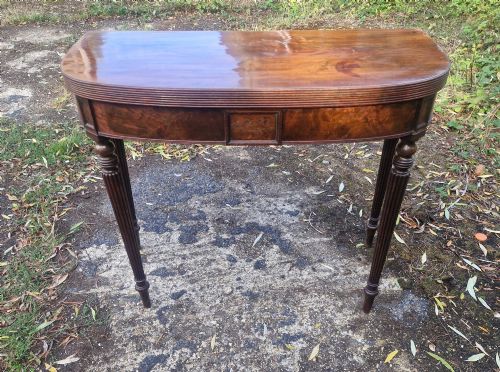

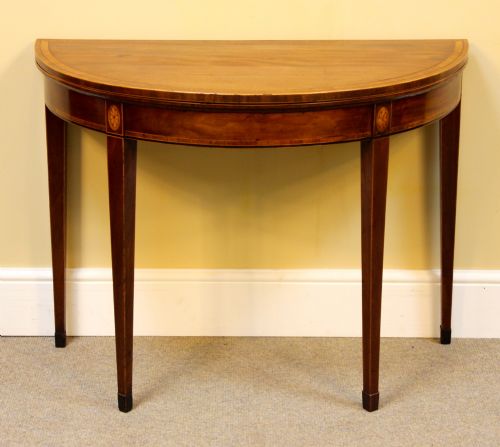
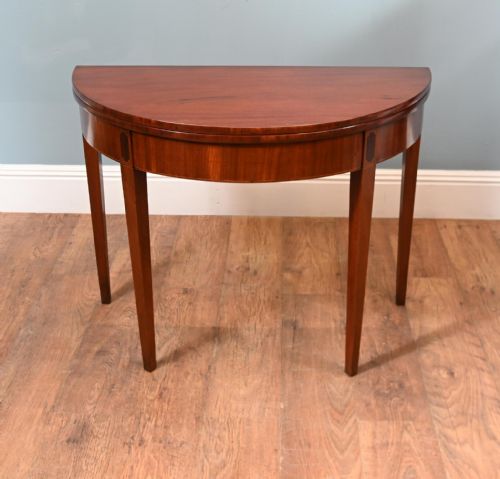


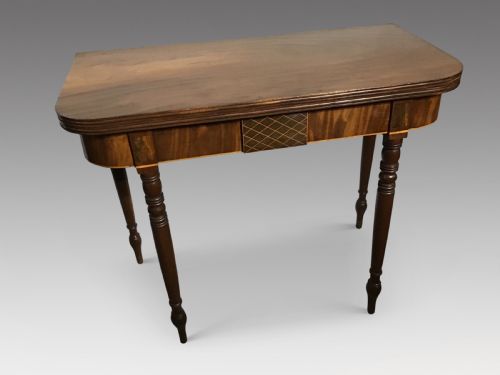
Regency Mahogany Foldover Table
A regency mahogany foldover table brings dual-purpose elegance to a room, shifting effortlessly from a sleek console to a broad surface for cards or tea.
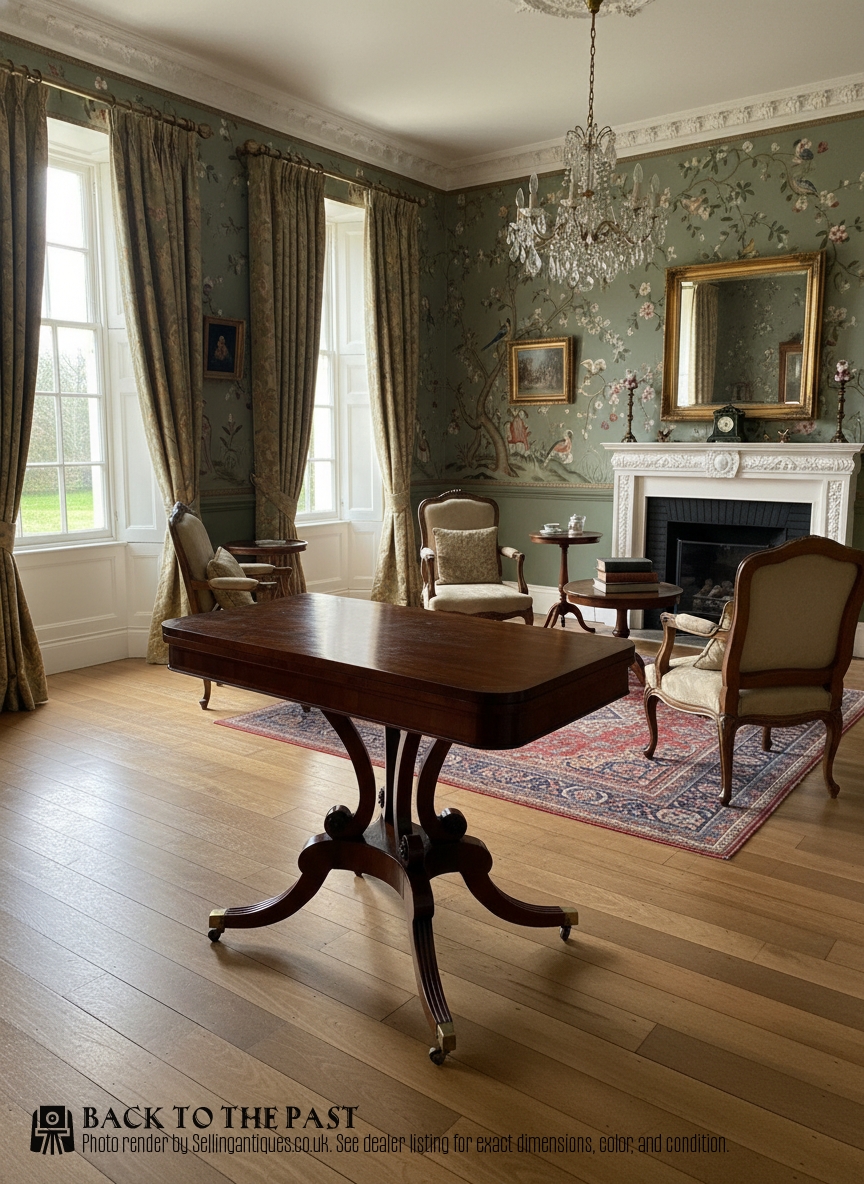
Regency Mahogany Foldover Table
A regency mahogany foldover table usually takes the form of a card table, a tea table, or a combined games surface designed to stand against a wall when closed. The most common format you will meet on this page is the D-shaped or demi-lune top that swings open on a pivot or hinges to reveal a polished timber expanse.
Most examples date from the early nineteenth century and the wider Regency, George IV, and Georgian periods, though later Sheraton Revival interpretations also appear. They serve primarily as occasional furniture, offering a clever space-saving mechanism wrapped in formal cabinet-making.
Materials and construction methods
Makers built these pieces using solid mahogany and carefully selected wood veneers over secondary timbers, often incorporating contrasting boxwood inlay or ebony stringing to define the edges. Rich rosewood and satinwood crossbanding frequently borders the top, adding a decorative contrast to the warm reddish-brown body of the mahogany.
Structural support varies from pillar and lyre pedestals to tables raised on Gillows style legs or simple tapering uprights. Brass details, including inlaid stringing and castors, appear regularly to accent the timber framework and assist movement.
Several tables retain their old green baize, ready for the ghost of a Regency card party.
Distinctions in craftsmanship and materials
The division between standard output and the finest workshop pieces rests on the choice of timber and the precision of the cabinetwork. Superior examples display highly figured flame mahogany veneers and crisp, perfectly aligned stringing that remains flush with the surrounding wood.
Construction integrity in the pivoting mechanism and the stability of the folding leaf dictate the longevity of the table. Subtle details such as finely cast brass mounts and well-proportioned pedestal bases separate basic utility furniture from pieces produced by skilled cabinet makers.
Gillows
The Regency Mahogany Foldover Table Glossary
- Foldover table
- A hinged table top designed to double in surface area when swung open. This mechanism conceals a shallow well or simply creates a stable top for dining or card games.
- Demi-lune
- A half-moon shape characteristic of many early card and tea tables. When closed, the straight edge sits flat against a wall.
- Crossbanding
- A border of veneer laid with the grain running perpendicular to the main surface. It frames the central mahogany panel of the table top.
- Inlay
- Material set into depressions in the wood surface to form decorative patterns. Boxwood and ebony are typical contrasting materials found on these pieces.
- Lyre base
- A central support shaped like the classical musical instrument, often carved from mahogany and mounted on a platform with sabre legs.
Regency Mahogany Foldover Table: Frequently Asked Questions
What is the difference between a card table and a tea table?
Card tables typically feature a green baize or felt interior for playing games, whereas tea tables generally present a plain polished wooden surface inside the folding leaf.
Both use the same basic foldover mechanism, but their interior linings reflect their original domestic functions in the drawing room.
How do I place a foldover table in a modern room?
Position the piece closed against a hallway or living room wall to function as a slim console or side table. The rich mahogany grain and decorative inlay provide a strong visual anchor.
When guests arrive or extra surface area is needed, swing the top open and pull the table into the centre of the room for drinks, cards, or display.
How can I tell a Regency table from a later revival piece?
Examine the construction methods, secondary timbers, and the character of the mahogany veneer. Regency and Georgian pieces display the wear, joinery techniques, and timber selection specific to the early nineteenth century.
Sheraton Revival versions, whilst still antique, typically show twentieth-century manufacturing markers and lighter internal woods.
Why do some tables have a pedestal base while others have four legs?
Tables with four legs often take a D-shape or demi-lune form, relying on a swing leg to support the open leaf. Pedestal examples frequently utilise a central pillar with sabre legs or a platform base.
The choice of base reflects evolving stylistic preferences across the Regency and George IV periods.