


Regency Mahogany Bucket
These regency mahogany bucket pieces are timber vessels for wine, plants or fuel, combining Georgian proportion with fine cabinetmaking for the modern home.
Regency Mahogany Bucket
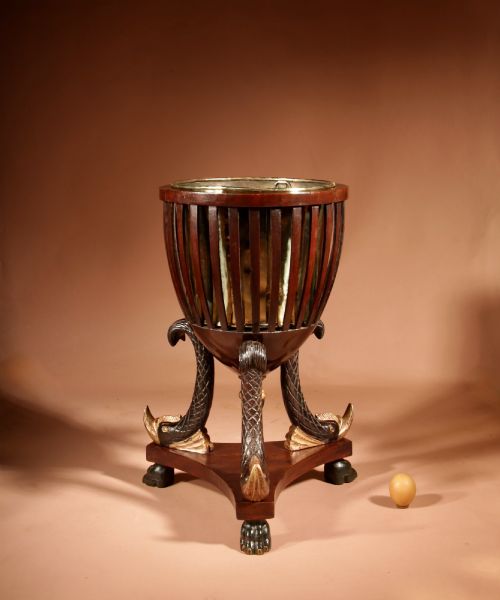
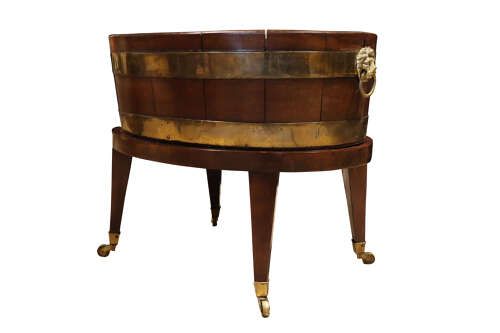
A regency mahogany bucket takes several forms across this selection, functioning primarily as wine coolers, jardinières, peat buckets, and planters. You encounter pieces spanning the Georgian and Regency periods alongside later revivals from the twentieth century.
The dominant design on this page is the wine cooler or planter, frequently shaped with coopered staves and reinforced with brass bands. These vessels bridge utilitarian origins and decorative domestic use.
Origins stretch from English workshops to Dutch Empire and French Empire examples, encompassing oval, round, and elliptical profiles. Walnut, flame mahogany veneer, and ebonised wood appear alongside the primary mahogany material.
Quality factors in cabinetwork and metalwork
The standard of timber selection separates finer pieces from simpler items, particularly where figured flame mahogany veneer or contrasting satinwood inlay is utilised. Crisp joinery in the coopered staves indicates superior workshop execution.
The quality of the brass hardware, including cast mounts, drop handles, and well-fitted liners, marks the distinction between standard production and exceptional examples. The integration of brass binding with the timber body reveals the maker's precision.
Some multi-functional vessels on this page double as knitting baskets and tea stoves alongside their primary role as planters.
The Regency Mahogany Bucket Glossary
- Coopered
- Constructed from curved wooden staves joined edge-to-edge, similar to barrel-making. This technique allowed makers to create sturdy round and oval vessels.
- Jardinière
- An ornamental pot or stand designed to hold growing plants or flowers. These vessels often feature protective interior linings.
- Cellarette
- A lockable container used for storing bottles of wine beneath a sideboard or beside a dining table. They share similar construction methods with wine coolers.
- Ebonised
- Wood treated with a dark stain or finish to resemble ebony. This finish provides high-contrast detail alongside lighter mahogany and satinwood.
Regency Mahogany Bucket: Frequently Asked Questions
What were regency mahogany buckets used for originally?
These vessels served practical functions in period dining rooms and parlours, holding wine bottles with ice, containing peat for fires, or acting as indoor planters.
Over time, their decorative brass banding and rich timber tones made them favoured display objects rather than purely utilitarian items.
How do I tell an original Regency piece from a revival?
Original pieces from the Georgian and Regency eras show period construction methods, timber shrinkage, and hand-cut joinery consistent with eighteenth and early nineteenth-century workshops.
Revival pieces from later decades often display uniform machine milling, modern adhesives, or twentieth-century secondary woods hidden beneath the finish.
Can I use a vintage jardinière for live plants today?
Many examples retain their original metal or zinc liners, which protect the surrounding wood from moisture and soil damage during everyday use.
If a liner is missing or perishing, placing a modern plastic pot inside protects the historic timber while allowing you to house live plants safely.
How do I care for mahogany and brass in a modern home?
Regular dusting with a dry, soft cloth maintains the polished sheen of the mahogany without building up heavy wax residues over the surface.
Keep these vessels away from direct heat sources and strong sunlight to prevent the timber from splitting and the brass from tarnishing unevenly.