
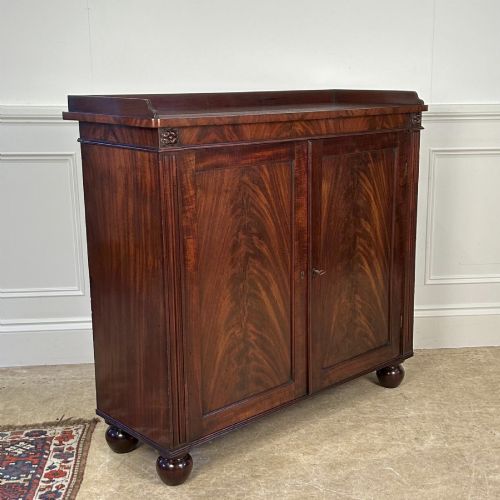
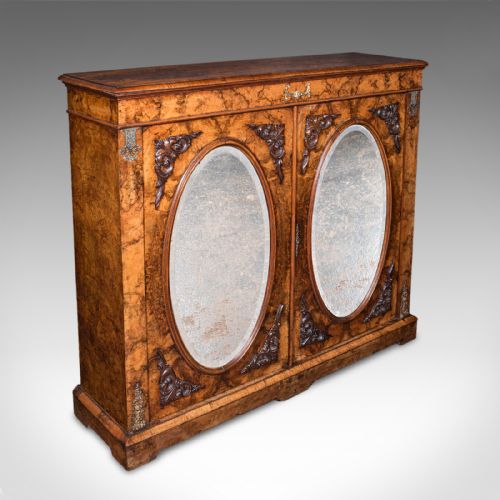
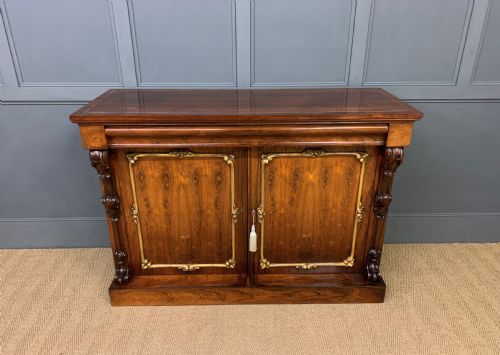
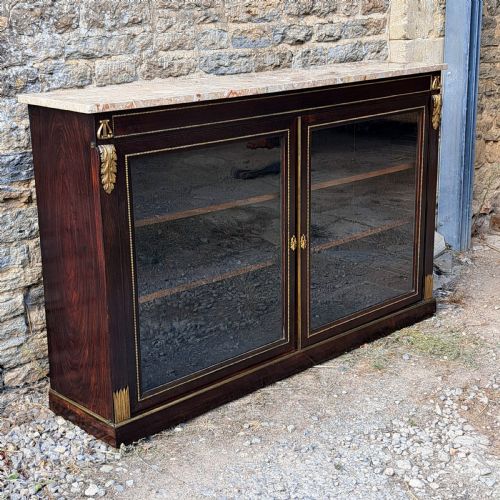
Regency Low Sideboard Cabinet
A regency low sideboard cabinet is a compact, elegant storage piece designed to anchor a formal dining room or parlour.
Regency Low Sideboard Cabinet
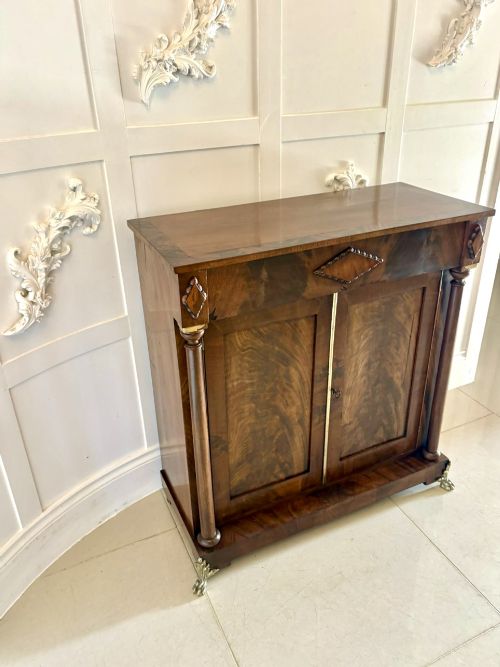
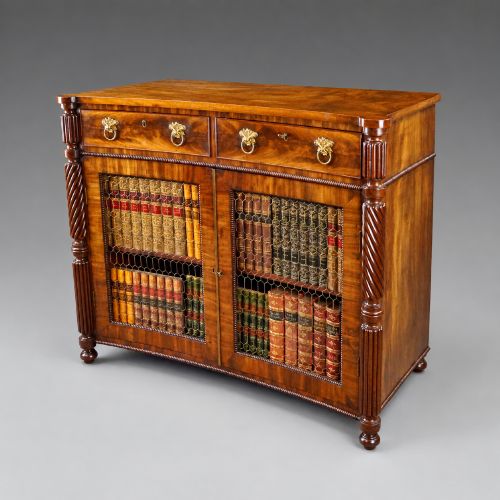
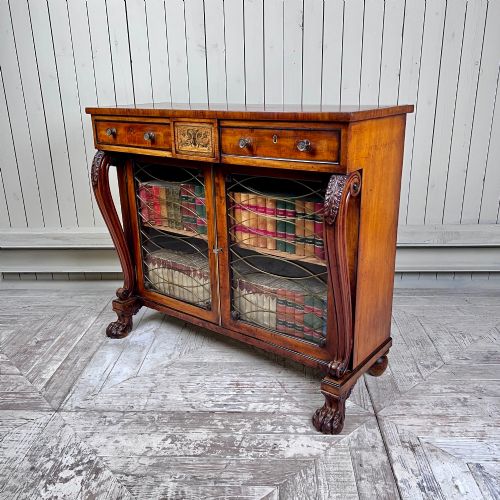
When searching for a regency low sideboard cabinet, buyers encounter low-slung timber storage forms dating principally from the early nineteenth century and the wider Regency period. These pieces function as serving surfaces or display cabinets, keeping dining rooms and reception spaces orderly while displaying choice decorative objects on top.
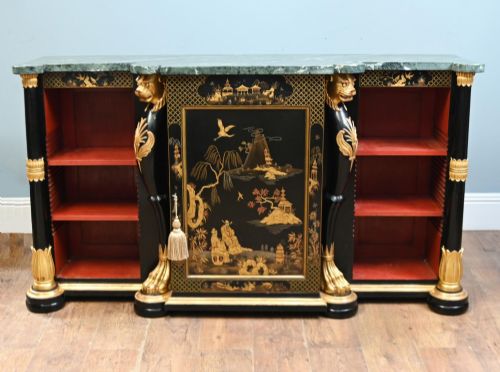
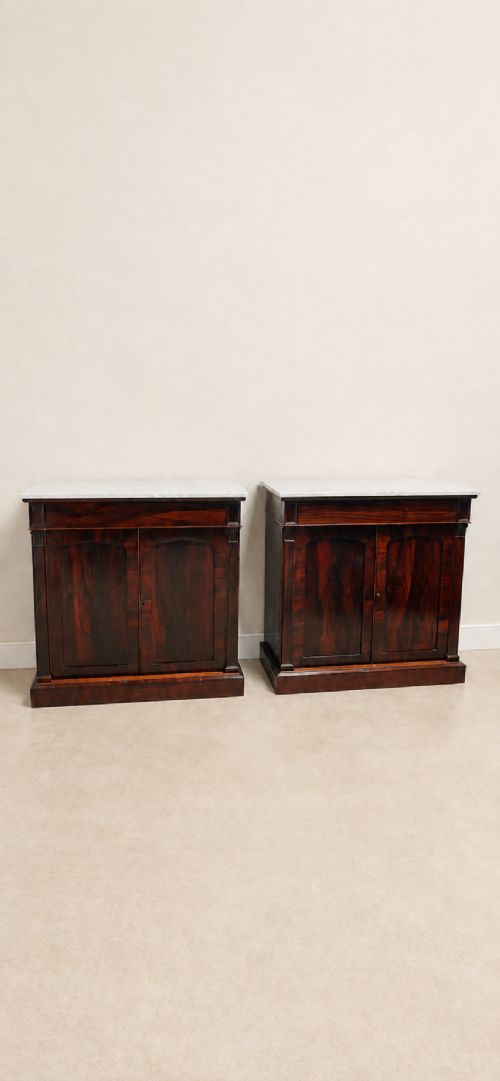
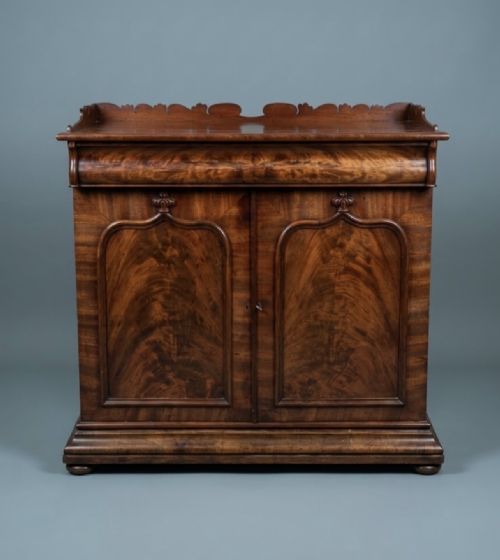
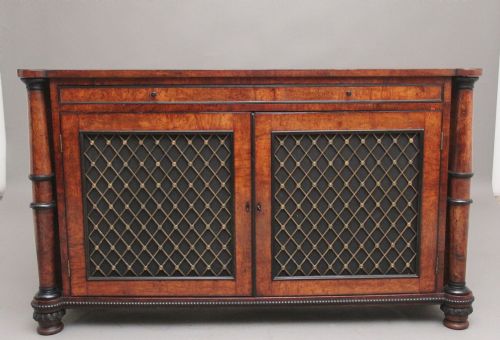
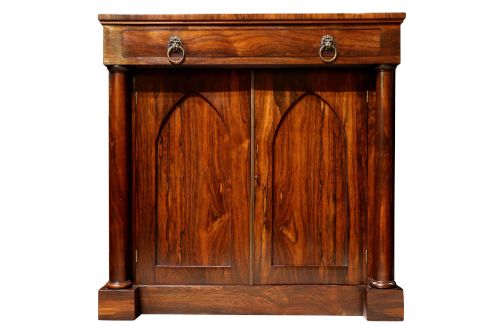
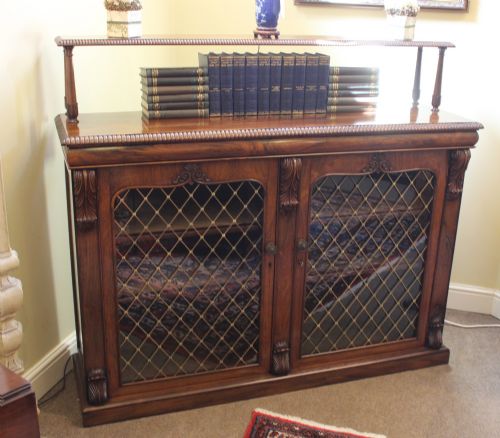
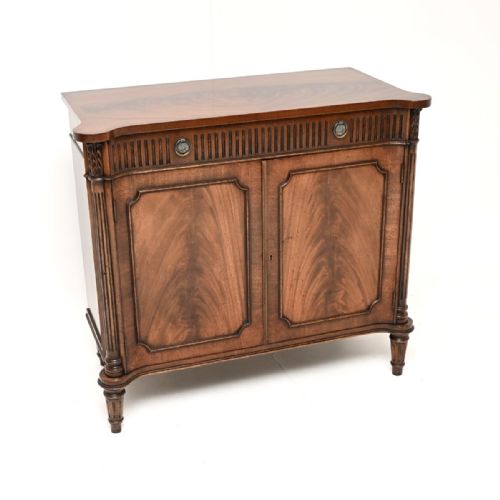
The versions most commonly met on this page span the Regency, William IV, and George IV eras, alongside later nineteenth-century revivals. They appear most frequently in rich dark timbers configured with two doors, sometimes incorporating glazed panels, brass grilles, or open shelving.
Makers of the period adapted traditional carcases into low, horizontal proportions that suited the architecture of Regency interiors. Buyers select them for their restrained classical lines and the warmth of their figured wood grains.
How they were made
Cabinet makers constructed these pieces using dense underlying carcases of mahogany or oak, upon which they laid decorative veneers such as rosewood, flame mahogany, and amboyna. These choice veneers highlight natural wood figuring across large, flat surfaces like door panels and top boards.
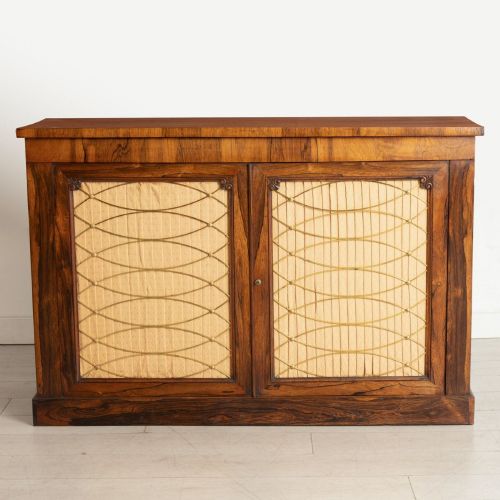
Metalwork played a defining structural and decorative role, with brass inlay, mounts, and grilles integrated into the timber doors and plinths. Ormolu details and pleated fabric or glass panels frequently completed the front elevation.
Joinery techniques relied on precise dovetailing and stable framing to prevent the wide timber boards from warping over time. Timber mouldings and turned supports were applied to frame the doors and lift the cabinet slightly off the floor.
Certain chiffoniers preserve delicate pleated fabric behind brass grilles, hiding secret book collections from curious guests.
What varies in quality
The choice of timber veneer and the skill of its book-matching set the standard for the upper tier of these pieces. Fine grain selection on rosewood or flame mahogany elevates a straightforward carcase into a piece of high design.
The refinement of the brasswork and inlay marks the distinction between standard cabinet work and exceptional workshop production. Crisp casting on ormolu mounts and precise, flush brass stringing indicate superior craftsmanship.
Structural integrity and the retention of original surface patination determine the enduring value of each piece. Cabinets that retain their original glass, fabric panels, and brass grilles maintain greater historical coherence.
Gillows·Harrods
The Regency Low Sideboard Cabinet Glossary
- Chiffonier
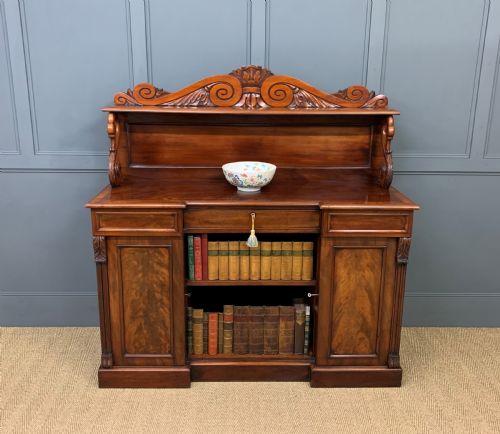
- A compact low sideboard or cabinet, typically featuring enclosed shelving below and often surmounted by a small superstructure or bookcase.
- Ormolu
- Gilded bronze used for decorative mounts and feet on high-status Regency furniture.
- Stringing
- Fine inlay of contrasting timber or brass set into the surface of the wood to outline panels and borders.
- Breakfront
- A piece of furniture whose central section projects forward from the flanking outer sections.
Regency Low Sideboard Cabinet: Frequently Asked Questions
Where were these cabinets placed?
These cabinets stood principally against the dining room wall to hold silver, linen, and glassware. They also found a place in the morning room or parlour for books and small personal items.
The low height allowed the surface to display decorative ceramics, bronzes, or candelabras without blocking wall art or windows.
How do I care for rosewood veneer?
Rosewood requires stable indoor humidity and protection from direct sunlight to prevent the natural oils from drying and the timber from fading. Dusting with a dry, soft cloth keeps the polished surface clean.
A light application of traditional beeswax polish preserves the depth and sheen of the nineteenth-century finish without building up residue.
Are these pieces strictly from the Regency period?
Many examples date from the Regency era between eighteen hundred and eighteen thirty, while others belong to the subsequent William IV and Victorian periods. Later nineteenth-century revivals also emulate the same low, classical proportions.
Examining the secondary timbers, construction methods, and hardware helps distinguish an original early piece from a later nineteenth-century interpretation.
Can these cabinets hold modern media equipment?
The interior depth and adjustable shelving of many low cabinets accommodate books, collections, and occasionally smaller media items. Careful measurement of the internal cabinet depth ensures compatibility with stored items.
Because historical backboards often lack cable management holes, some owners arrange interior wiring discreetly through existing panel gaps without altering the timber.