
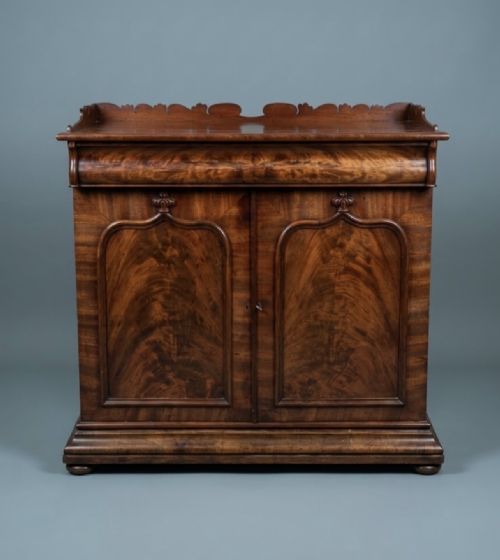
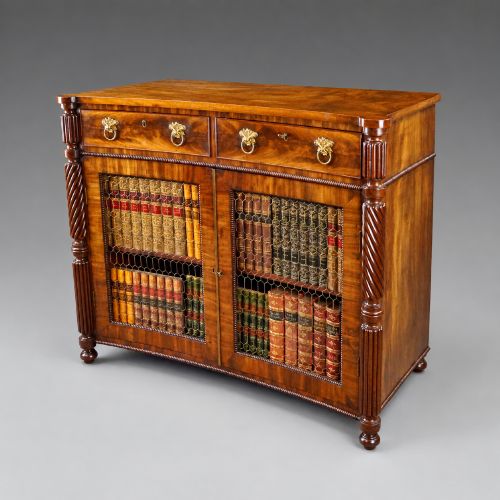
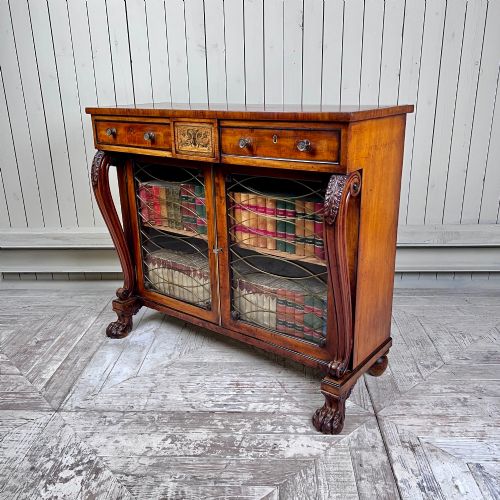
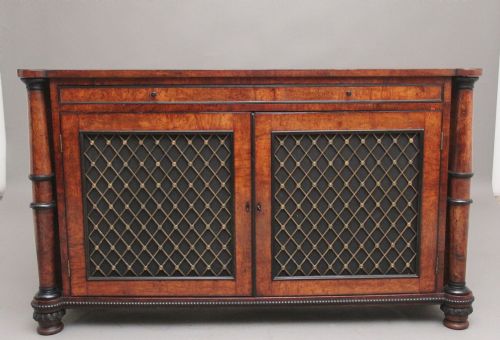

Regency Low Chiffonier
A regency low chiffonier brings compact elegance and practical shelving to a room, offering refined storage with distinct period character.
Regency Low Chiffonier
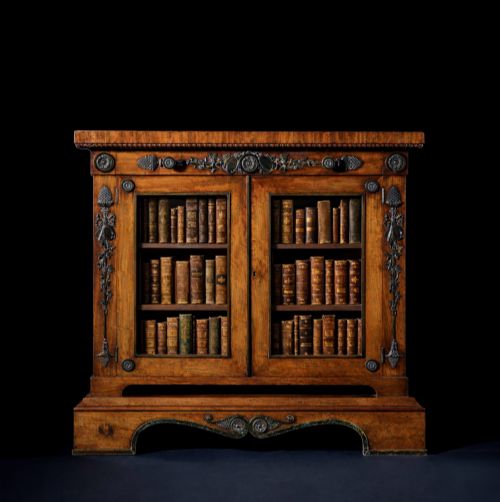
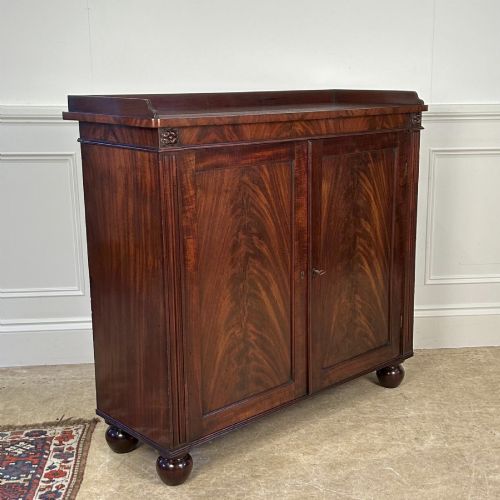
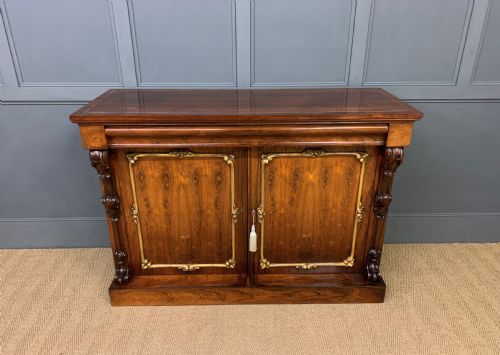
A regency low chiffonier is a compact storage piece designed for the parlour or drawing room, typically combining a low cabinet base with open shelves or a closed upper section. These pieces often appear under related forms such as side cabinets, dwarf bookcases, and low cupboards dating from the early nineteenth century and the wider Regency period.
The versions met on this page rely heavily on dense tropical timbers and neat proportions suited to smaller spaces. Alongside genuine Regency examples, the selection includes later nineteenth-century interpretations and twentieth-century revivals sharing similar low profiles.
Materials and construction
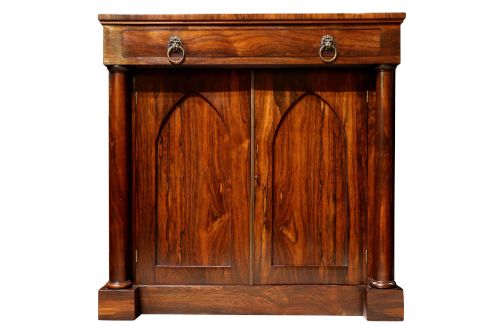
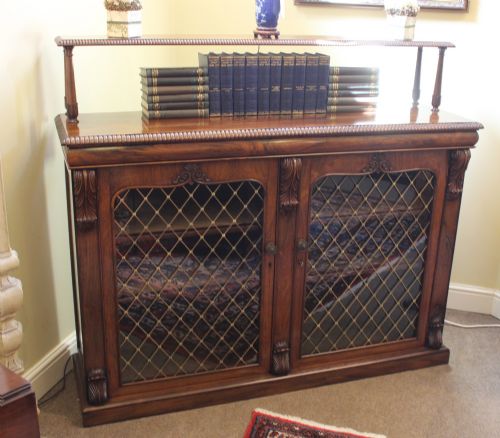
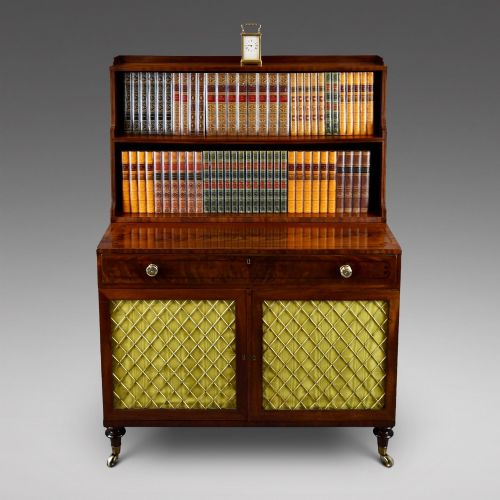
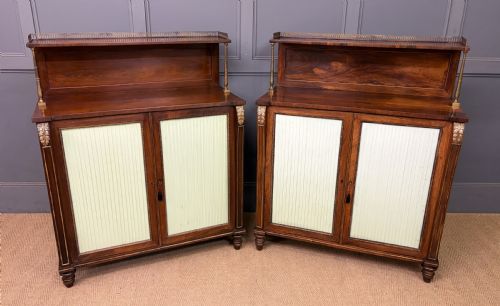
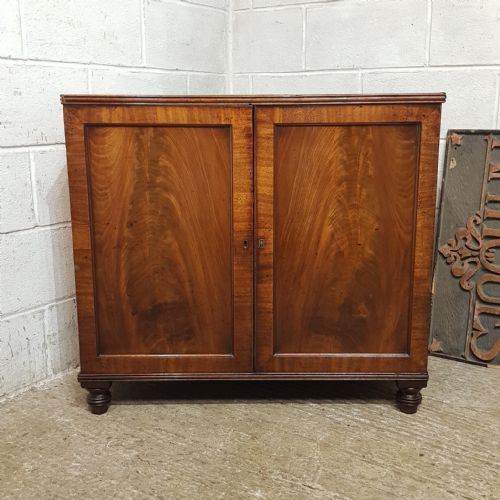
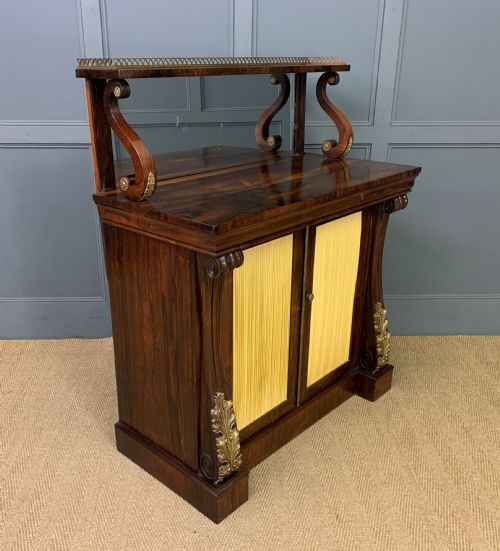
Cabinet makers utilised dense hardwoods such as mahogany and rosewood, frequently applying flame mahogany veneer or exotic timbers like amboyna, pollard oak, and goncalo alves across the exterior surfaces. Construction often incorporated fine brass inlay, brass grilles, and bronze mounts to accent the rectilinear framework.
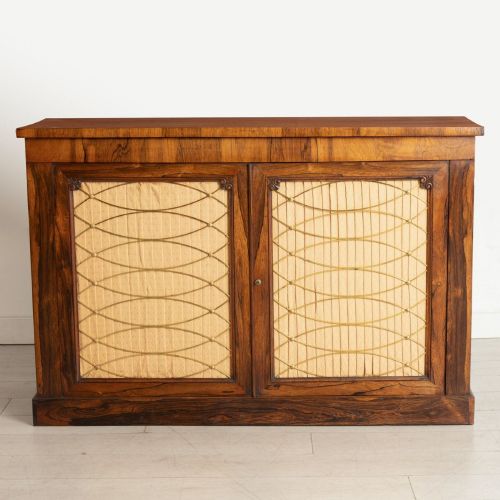
Internal elements utilised secondary softwoods or mahogany linings, while delicate details such as pleated silk panels behind glazed or open doors provided softness to the formal design. Structural joinery prioritized stability in low, wide proportions, supporting marble tops or wooden upper tiers.
Pleated silk panels behind brass grilles kept drafts away from delicate volumes while hiding clutter.
What separates fine examples
Quality rests primarily in the selection of timber veneers and the precision of the brass inlay work rather than mere age. The richness of the grain in flame mahogany or rosewood defines the visual impact of the cabinet face.
Refinement shows in the crispness of turned columns, the tightness of mitred joints, and the retention of original brass grilles or pleated chiffon panels. Pieces demonstrating careful attribution to known workshops display superior joinery and balanced proportions.
Gillows
The Regency Low Chiffonier Glossary
- Chiffonier
- A low cabinet with drawers and shelves, originally used for holding tableware or books in the nineteenth-century parlour.
- Flame mahogany
- A veneer cut from the fork of the mahogany tree to produce a distinctive, flamy or undulating grain pattern.
- Brass grille
- A fine openwork screen of woven brass wire fitted into cabinet doors to allow ventilation while keeping contents secure.
- Breakfront
- A cabinet design where the central section projects forward from the flanking wings, creating visual depth.
Regency Low Chiffonier: Frequently Asked Questions
What is the difference between a chiffonier and a side cabinet?
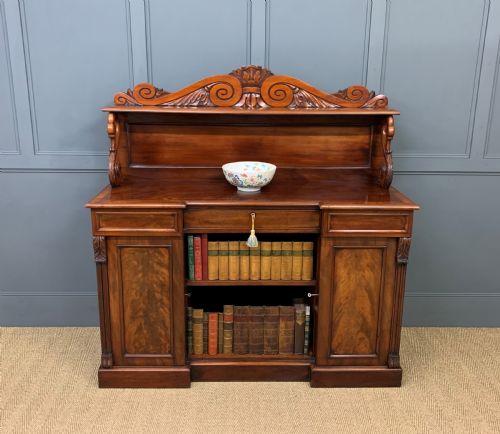
A chiffonier typically incorporates a raised shelf superstructure or a low enclosed cupboard specifically designed for storing small household items. Side cabinets encompass a broader category of low storage furniture without necessarily featuring the raised tiers associated with chiffoniers.
Both forms share similar low proportions and were utilised in nineteenth-century reception rooms for display and storage.
How do I distinguish a genuine Regency piece from later revivals?
Genuine Regency pieces exhibit construction methods, timber selections, and hardware characteristic of the early nineteenth century. Secondary woods, hand-cut dovetails, and patination patterns help confirm the period.
Later nineteenth-century and twentieth-century revivals often display standardised machine-cut elements and different internal construction details.
Were these cabinets used in the dining room or parlour?
These low cabinets primarily served the parlour, drawing room, or library as elegant receptacles for books, papers, and decorative objects. Their modest height ensured they did not obstruct wall art or windows.
Dining rooms occasionally utilised larger sideboards, whereas the low chiffonier suited refined social spaces.
What maintenance do rosewood and mahogany surfaces require?
These timber surfaces benefit from occasional dusting with a dry, soft cloth and minimal exposure to direct sunlight or sudden humidity changes. Natural wax finishes help nourish the grain and preserve the depth of the wood.
Avoid commercial silicone sprays and excessive moisture, which can damage historic veneers and delicate brass inlays.