

Regency Leather Writing Desk
A regency leather writing desk brings classical proportion and fitted workspaces into a room, combining tactile hide surfaces with rich timber frames.
Regency Leather Writing Desk
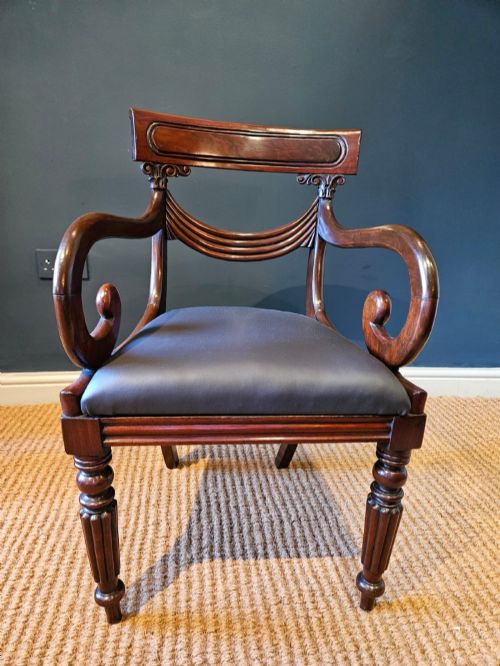
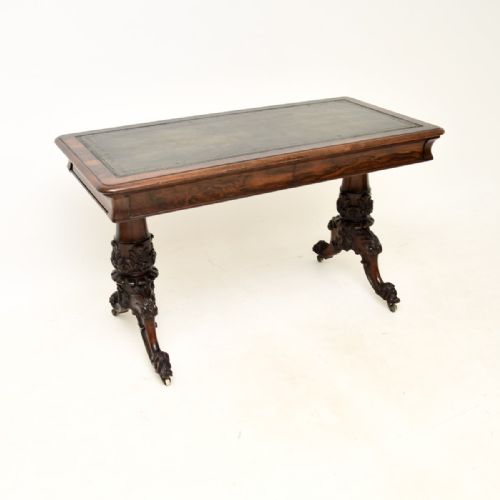
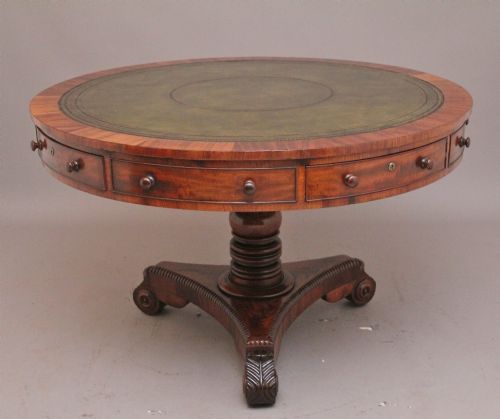
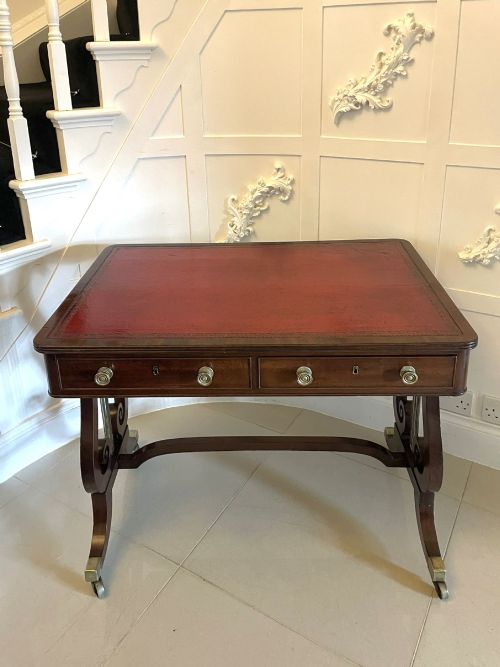
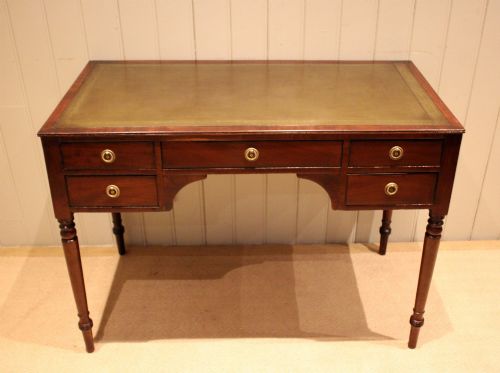
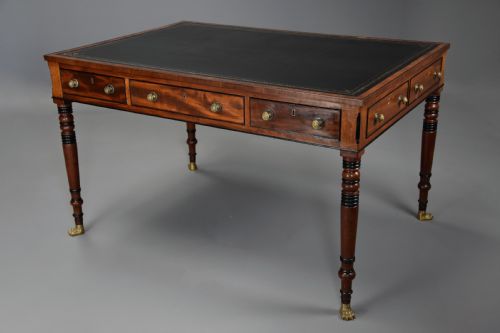
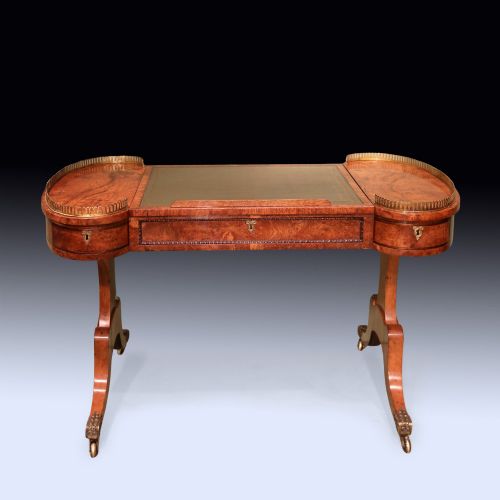
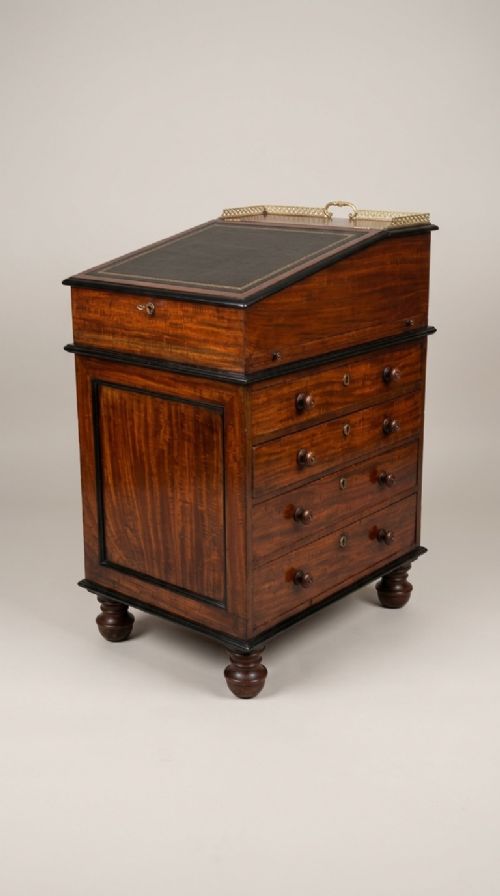
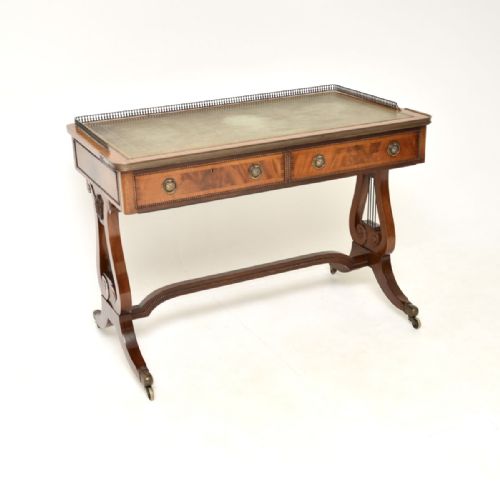
When you search for a regency leather writing desk, you look at pieces built primarily during the nineteenth century, including the Regency, George IV, and William IV periods, alongside later revival pieces. The forms on this page span freestanding writing tables, library tables, drum tables, davenports, and writing cabinets.
Mahogany and rosewood dominate the material record, frequently paired with inset leather working surfaces and brass details. You will encounter compact Davenport desks as well as large partners tables designed for central room placement.
Materials and construction
Cabinetmakers utilised solid and veneered timbers including mahogany, rosewood, burr oak, and satinwood over sturdy carcases. Grain selection governed the visual impact, with flame veneers and rich patinas appearing across the top surfaces and drawer fronts.
Writing surfaces incorporated tooled leather inserts, surrounded by timber borders and sometimes edged with brass mouldings. Drawers utilised traditional dovetail joints, while rotating mechanisms and drum configurations relied on robust internal pivots and hardware.
Listings include nineteenth-century pieces alongside later twentieth-century interpretations in mahogany, rosewood, and oak.
Separating the ordinary from the exceptional
The distinction between standard workshop output and top-tier pieces rests on timber selection and attribution. Items bearing maker signatures or distinct stylistic traits command attention through superior proportion, refined carving, and well-chosen mahogany or rosewood veneers.
Hardware execution and secondary wood choices also separate grades. Finely cast brass mounts, well-executed cockbeading around drawers, and secondary timbers like oak indicate careful construction by skilled hands.
Gillows·James Mein of Kelso·S and H Jewell
The Regency Leather Writing Desk Glossary
- Davenport
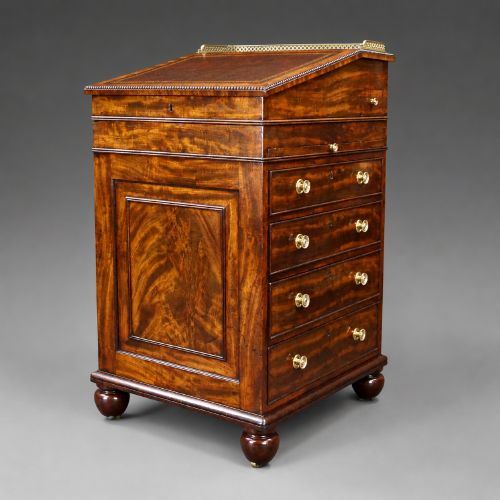
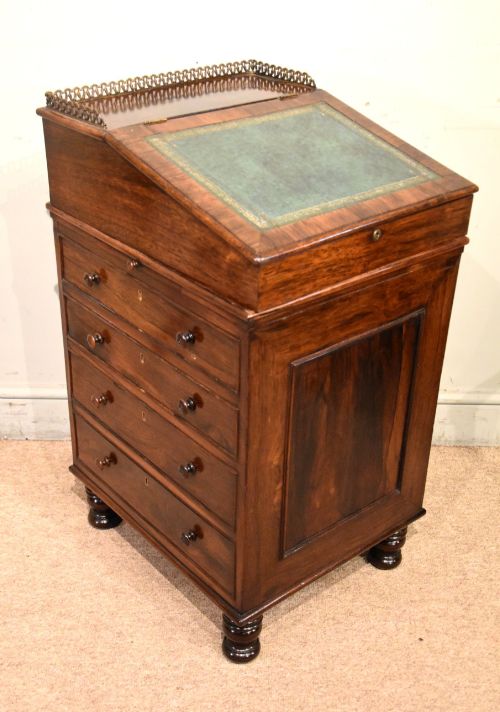
- A compact desk featuring a sloping, leather-lined writing lid above a pedestal of side drawers. This form provides a fitted workspace with a small footprint.
- Drum table
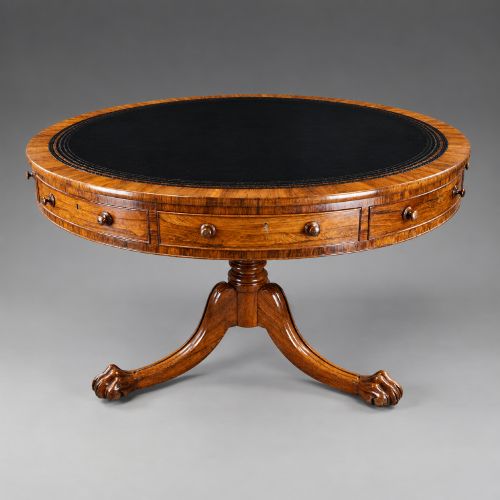
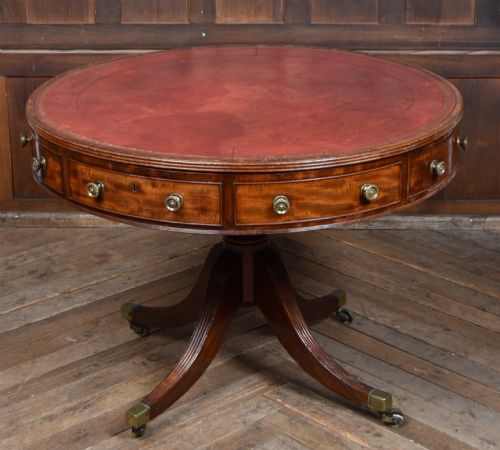
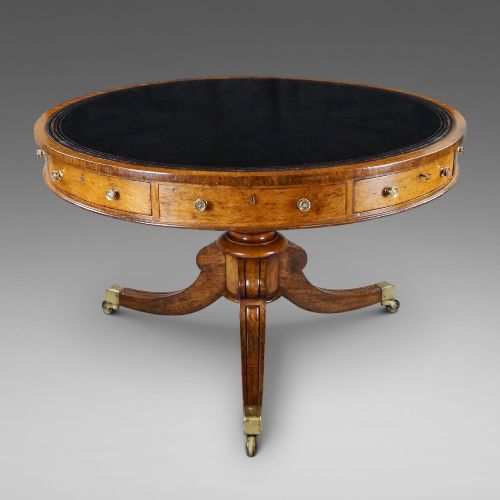
- A circular library table with a revolving top and alternating real and dummy drawers around the perimeter. These pieces stand on central pillar supports with radiating legs.
- Partners table
- A large writing desk built with drawers on both long sides to accommodate two users facing each other. They typically feature spacious leather inserts.
- Secretaire
- A cabinet or desk incorporating a drop-front writing drawer that conceals small pigeonholes and internal compartments. This form hides correspondence materials behind a unified exterior.
Regency Leather Writing Desk: Frequently Asked Questions
How do I use a drum table?
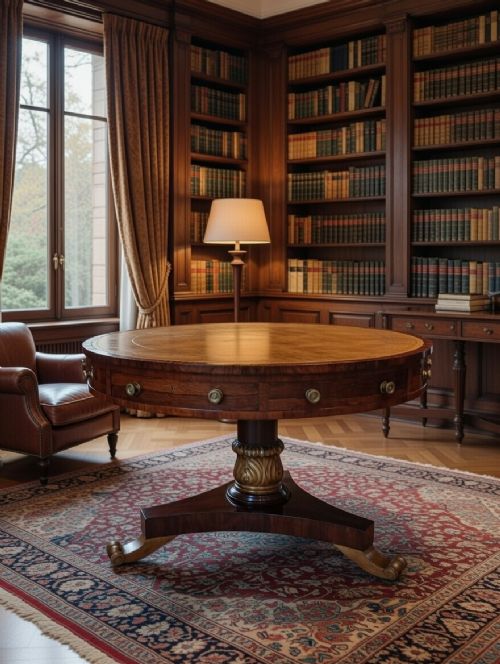
A drum table works well freestanding in the centre of a room or library, providing a sturdy circular surface for books and papers. The rotating top allows easy access to contents from any seating position around the piece.
Many examples include drawers for storage, making them practical for daily organisation while maintaining a formal architectural presence.
Where should I place a davenport?
A davenport suits compact rooms or corners where a full-sized desk would overwhelm the floor plan. Its sloping lid offers a comfortable writing angle for correspondence.
The pedestal drawers keep stationery close at hand while preserving clean exterior lines when closed.
What is a partners desk?
A partners desk accommodates two people working opposite each other with duplicated drawer arrangements on both sides. These large tables require central room placement to allow access from all angles.
They function as grand study centrepieces with expansive leather working surfaces.