




Regency Leather Armchair
When you search for a regency leather armchair, you are looking for a substantial seat designed for a library, study, or desk.
Regency Leather Armchair
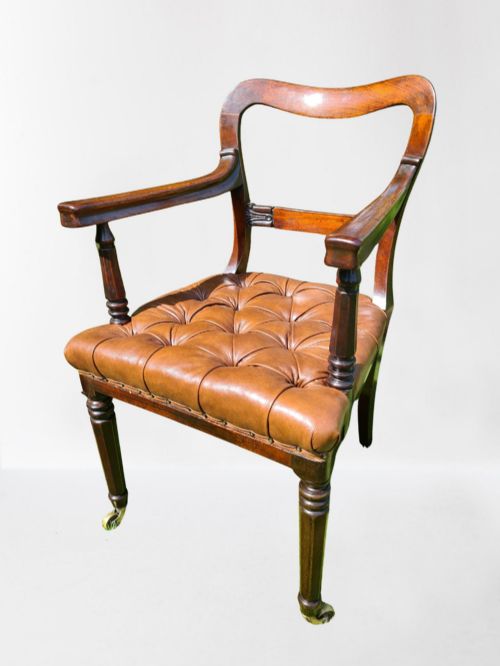
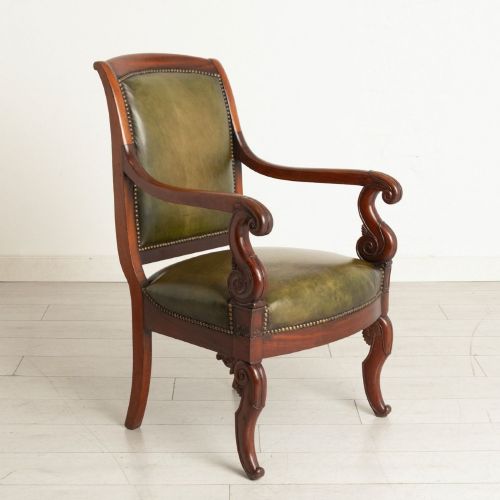
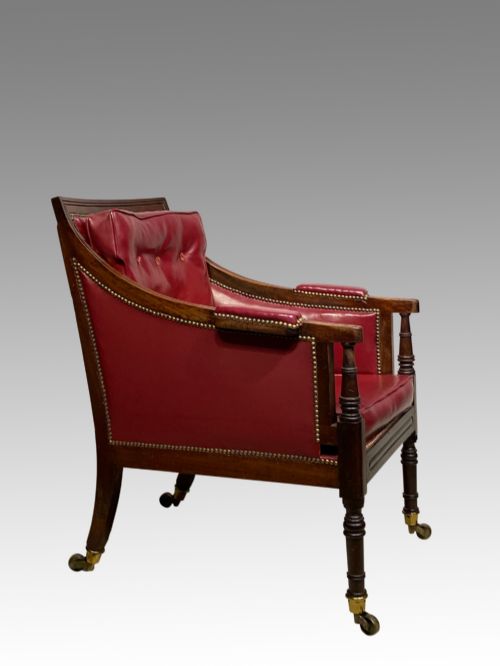
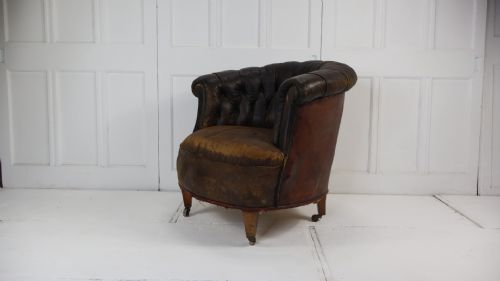
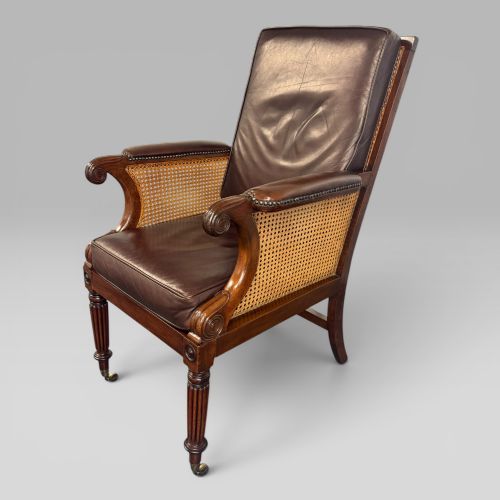
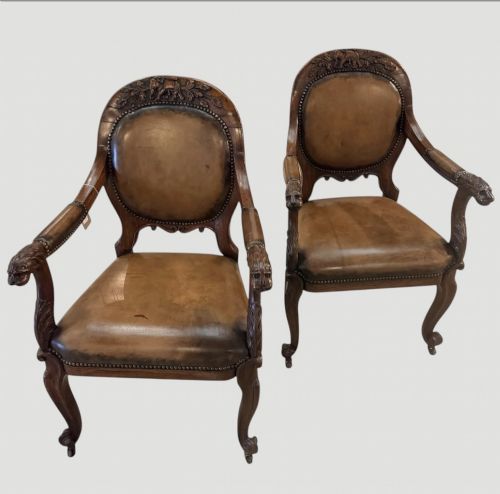
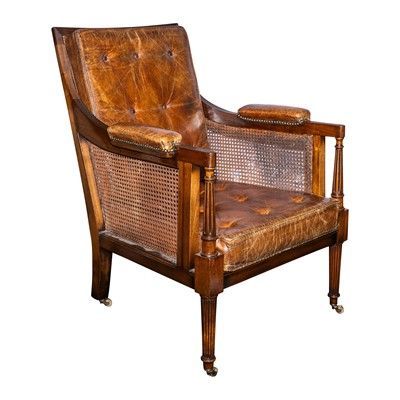
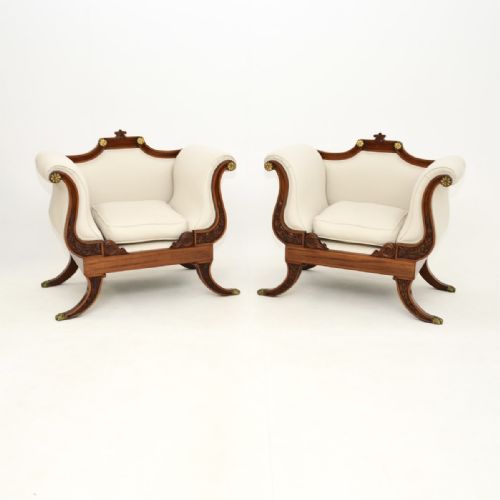
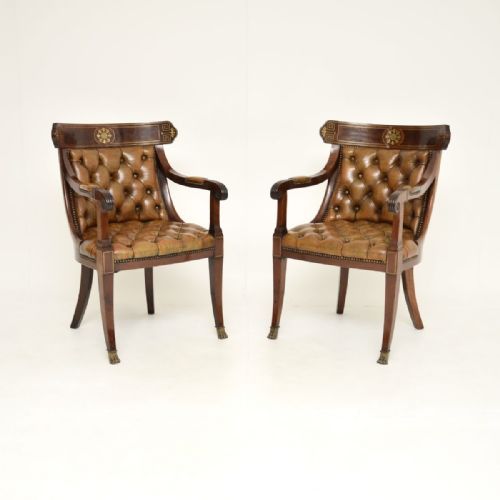
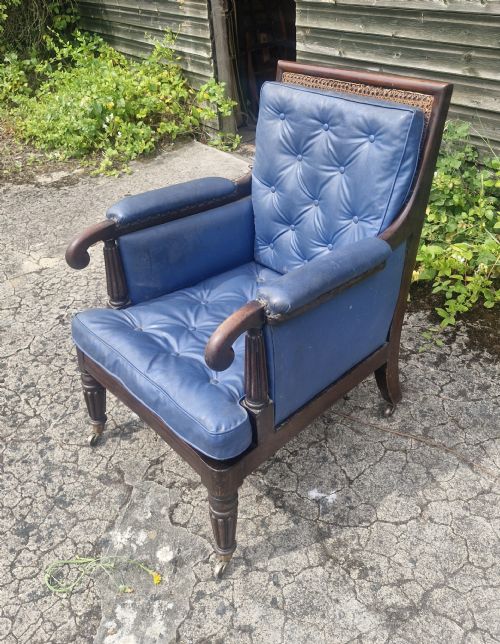
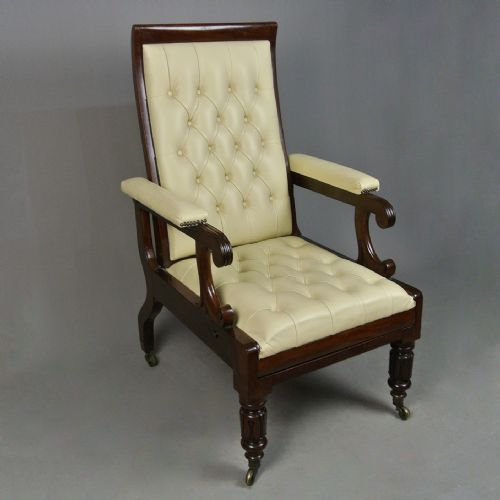
A regency leather armchair is typically a heavy, timber-framed seat built for the study or library, often upholstered in rich leather and designed for long hours at a desk or reading table. The most frequent versions appearing here are mahogany library chairs and bergères, frequently featuring scrolling arms, brass inlay, or caning alongside leather pads and cushions.
Many examples date from the Regency period itself or the subsequent William IV and George IV eras, while others emerge from later nineteenth-century revivals. Forms range from simple desk chairs and carver chairs to complex metamorphic library steps and mechanical reclining chairs bearing patent mechanisms.
Origins span English workshops, Anglo-Indian commissions, and notable cabinet-makers, with many pieces displaying the characteristic restraint, classical proportions, and rich dark timbers of the early nineteenth century. Buyers seek these chairs for their strong architectural presence and functional comfort in traditional or modern interiors.
How they were made
The primary frame construction relies on solid mahogany or rosewood, chosen for its strength and deep grain, often enhanced with brass stringing, inlay, or turned wooden legs. Joinery is traditionally robust, employing pegged mortise and tenon joints to support the weight of heavy use in a gentleman's library.
Upholstery centres on supple leather - frequently in green, brown, or red - secured with individual brass studs and paired with stuffed horsehair stuffing or loose feather cushions. Where bergère designs are concerned, woven rattan cane forms the back and sides, sometimes complemented by removable leather squab cushions for added comfort.
Regency Leather Armchair Retail Price Guide 2026
Typical asking prices for regency leather armchair among the pieces listed under this phrase on Sellingantiques today, from the lower quarter to the upper quarter. They describe what is for sale here now, not the wider market.
Some chairs double as library steps, proving that nineteenth-century readers appreciated furniture that could reach high shelves while keeping them seated.
What varies in quality
Quality rests significantly in the choice of timber and the crispness of the carving, where well-figured mahogany or rosewood and sharply defined scroll arms distinguish superior commissions from simpler commercial alternatives. The integration of specialised functions, such as patent reclining mechanisms or metamorphic folding steps, also elevates a piece considerably.
The integrity of the frame and the retention of original surface patination dictate much of the value, alongside the presence of traditional materials like hand-tooled leather and intact caning. Maker attribution, particularly to distinguished firms like Gillows or patent holders like Daws, marks the highest tier of craftsmanship.
Gillows·Robert Daws·George Bullock
The Regency Leather Armchair Glossary
- Bergere
- An enclosed armchair with a wooden frame where the sides and back are typically filled with woven cane. These chairs frequently feature loose leather or fabric seat cushions.
- Carver chair
- A sturdy wooden armchair designed to match a set of dining chairs, usually placed at the head of the table. They often feature upholstered leather seats and open armrests.
- Metamorphic
- Describing furniture designed to transform into another object, such as a library armchair that unfolds into a set of steps. These inventive pieces showcase high nineteenth-century engineering.
- Patination
- The deep, lustrous surface sheen and colour acquired by wood and leather over decades of handling and exposure. Untouched surfaces retain a rich tactile quality valued by collectors.
- Barback
- A dining chair featuring a horizontal carved crossbar across the backrest, characteristic of the William IV and late Regency periods. They provide sturdy back support and clean architectural lines.
Regency Leather Armchair: Frequently Asked Questions
What is a regency leather armchair?
A regency leather armchair is a nineteenth-century seat built with a hardwood frame and upholstered leather elements, traditionally used in libraries, studies, and grand offices.
These pieces combine durable timber construction with practical comfort, featuring padded seats, armrests, and occasionally mechanical reclining adjustments or cane panels.
How do I spot a genuine regency piece?
Genuine pieces from the era display period-appropriate timbers like dense mahogany or rosewood, traditional joinery methods, and aged patination on the wood and leather.
Look for classical proportions, hand-turned legs, and construction details that reflect early nineteenth-century cabinet-making standards rather than twentieth-century reproduction techniques.
Where were these chairs used originally?
These armchairs were commissioned for the private libraries, reading rooms, and executive offices of grand English townhouses and country estates.
They served as comfortable seats for reading weighty tomes, writing letters at large partners desks, or relaxing beside the fireplace.
How do I care for antique leather?
Antique leather requires gentle cleaning and regular conditioning with appropriate balms to prevent the natural hide from drying out and cracking over time.
Keep these chairs away from direct sunlight and strong heat sources to preserve the supple texture and historical colour of the leather.