

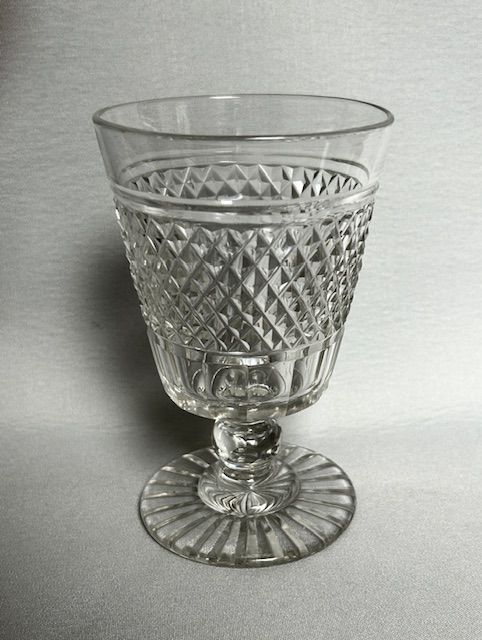


Regency Lead Crystal Rummer
These regency lead crystal rummer pieces are heavy drinking vessels from the Georgian era, prized for their deep cut facets and capacious bowls.
Regency Lead Crystal Rummer
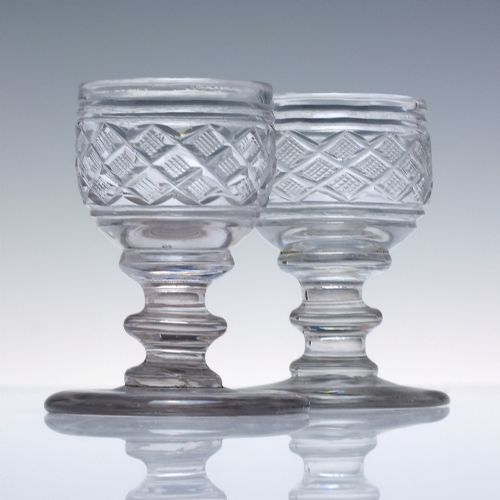
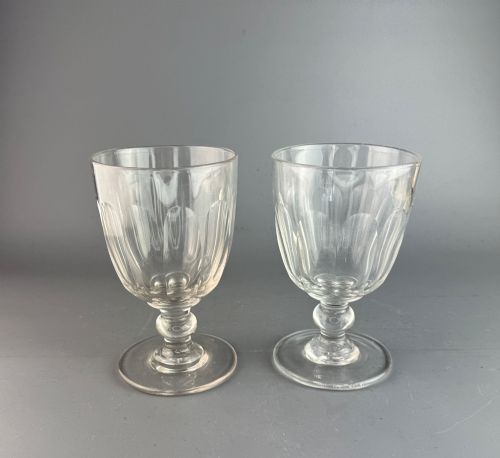
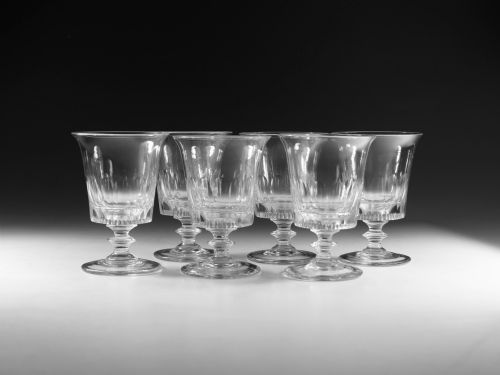
When you search for regency lead crystal rummer, you find sturdy drinking glasses designed for spirits, ale, and wine during the Georgian and Regency periods. The forms on this page include large table rummers, pairs of dram glasses, and sets originating from English workshops around eighteen hundred to eighteen thirty.
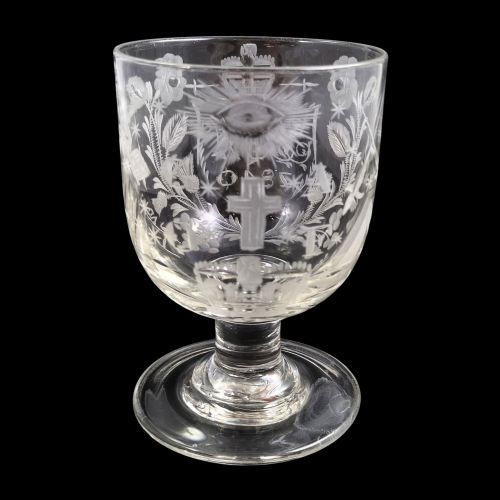
You are most likely to meet clear lead glass examples featuring engraved hops and barley motifs or hobnail cut decoration. Some pieces display square lemon squeezer feet or armorial engravings, showing the varied uses and commission styles of the nineteenth century.
How they were made
These items utilise heavy lead crystal or flint glass, which provides the distinctive weight and refractive clarity characteristic of the period. Artisans formed the thick walls and sturdy bases by hand before applying deep wheel cutting and detailed engraving.
Decoration required steady hands to wheel-cut geometric hobnail patterns or engrave delicate botanical scenes like hops and barley directly onto the clear or coloured glass surfaces.
Listings feature Georgian and Victorian periods, utilising clear lead glass, coloured glass, and flint glass across various drinkware forms.
What varies in quality
Quality in a regency lead crystal rummer rests upon the depth and precision of the cutting, alongside the clarity of the metal itself. Superior examples show crisp, clean facets that catch the light brilliantly without distracting surface ripples.
The complexity of the engraving also separates standard drinking vessels from exceptional display pieces, particularly where heraldic armorials or specialised Masonic motifs are executed with fine detail.
The Regency Lead Crystal Rummer Glossary
- Rummer
- A large, heavy drinking glass popular in the eighteenth and nineteenth centuries for serving ale, wine, or spirits. They typically feature a short stem and a capacious bowl.
- Flint glass
- An early term for heavy, brilliant lead glass developed in England. This material allows for deep cutting and polishing.
- Lemon squeezer base
- A square, pressed glass foot with sloping sides resembling a kitchen lemon squeezer. It is frequently found on Regency and Georgian table glass.
- Hobnail cut
- A raised, multi-faceted geometric pattern resembling the hobnails on traditional boot soles. It creates a tactile texture on the exterior of the glass.
Regency Lead Crystal Rummer: Frequently Asked Questions
What were rummers used for?
These large vessels served robust drinks like ale, rum punches, and heavy wines during social gatherings in the home or tavern.
Their substantial weight and size made them practical for communal toasts and hearty dining tables.
Are these glasses safe to use?
While historic lead crystal is structurally sound for display, modern use requires caution due to potential lead content leaching into acidic contents over time.
Most collectors prefer to display or occasionally use them gently rather than subject them to daily dining routines.
Why do some feet look square?
The square lemon squeezer foot was formed in a mould to provide extra stability for large, top-heavy drinking vessels during the Regency period.
This distinct architectural base is a hallmark of high-quality English glass from around eighteen hundred to eighteen thirty.