


Regency Cut Glass Goblet
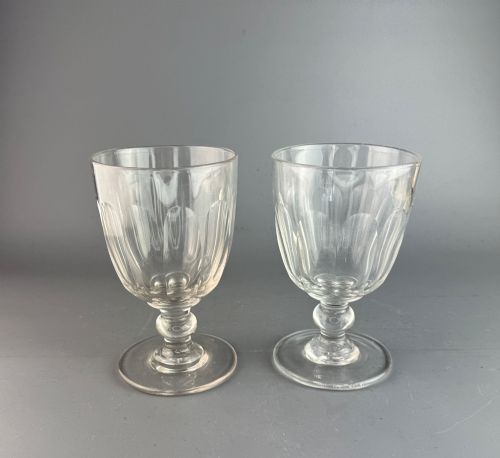
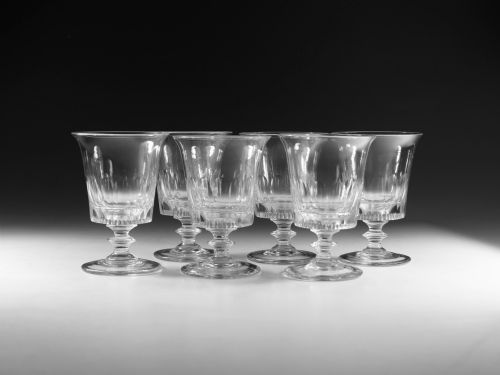
Regency cut glass goblet pieces are heavy drinking vessels defined by deep wheel cuts, created for toasts and formal dinners during the Georgian and Regency eras.
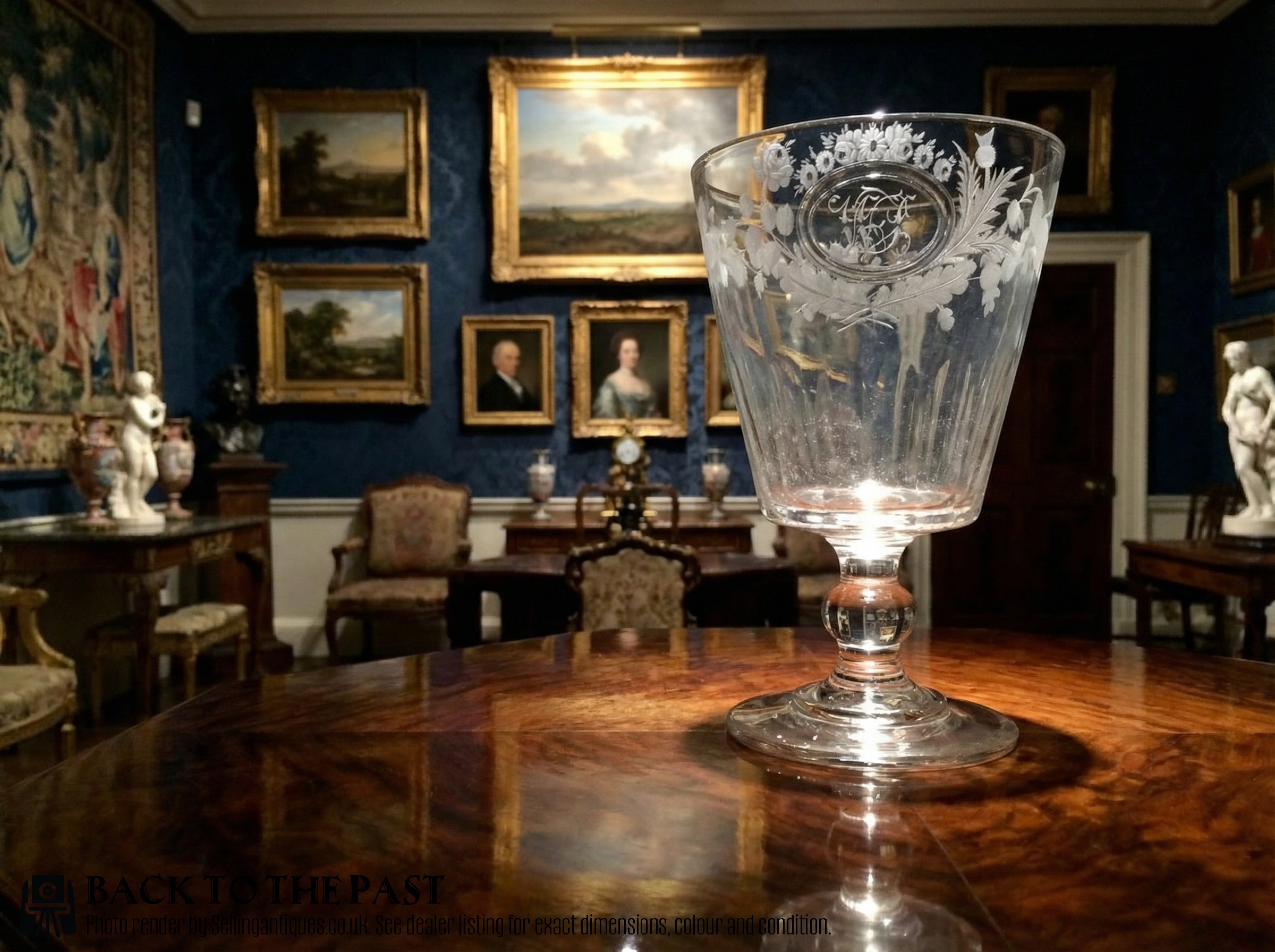
Regency Cut Glass Goblet
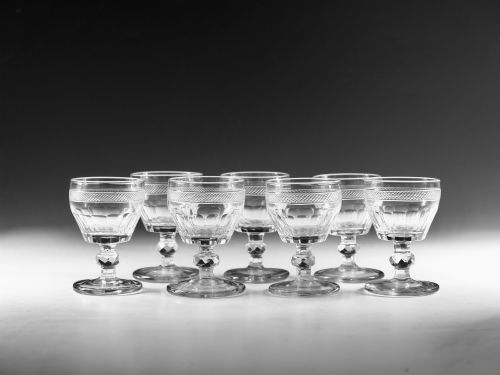
When you search for a regency cut glass goblet, you encounter heavy drinking vessels shaped as rummers, champagne glasses, and port glasses from the Georgian, Regency, and Victorian periods. The selection on this page leans heavily toward rummers and port glasses formed from clear glass and lead crystal.
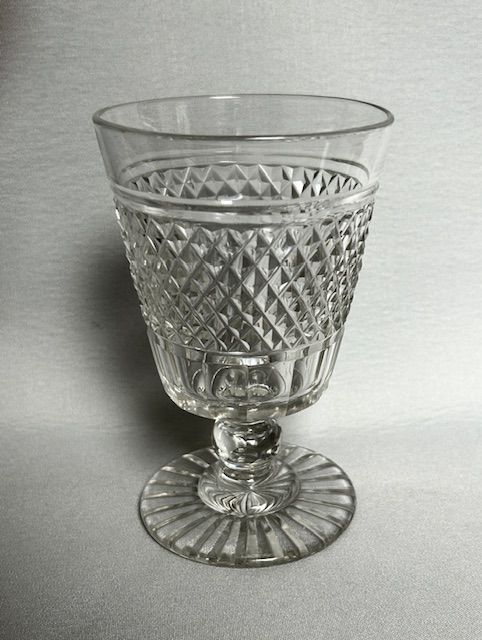
Makers shaped these drinking vessels with distinct forms, including bucket profiles, pan bowls, and square lemon squeezer feet. Originating in England and Ireland, these pieces served functional roles at the dining table before evolving into decorative bowls and display items.
The objects span from roughly 1800 through the nineteenth century, uniting practical table use with decorative brilliance. Collectors find variations in scale, from small port glasses to large table rummers and pairs of substantial bowls.
How they were made
Craftsmen utilised lead crystal and clear glass, blowing the hot metal into shape before applying cold-working techniques. The characteristic weight of these vessels derives from the heavy lead content used by glasshouses.
Artisans applied wheel cutting to create hobnail patterns, flutes, and flat panels across the surface of the bowl. Engraving was occasionally added alongside the deep cuts to adorn the upper sections of the vessel.
Footed vessels with square bases earned the cheerful nickname lemon squeezer feet because they closely resembled the kitchen juicing tool.
What varies in quality
The distinction between ordinary and superior pieces rests upon the crispness of the wheel cutting and the clarity of the metal. Sharp, deep facets catch the light directly, whereas worn or shallow cutting lacks visual impact.
Proportion and stability determine the success of the form, particularly in pieces with square lemon squeezer bases. Heavy, substantial bowls with well-balanced stems demonstrate superior manufacturing standards.
The Regency Cut Glass Goblet Glossary
- Rummer
- A large drinking glass popular in the eighteenth and nineteenth centuries, typically featuring a short stem and a capacious bowl. These vessels handled heavy use at the dining table.
- Lemon squeezer foot
- A square, pressed glass base with sharp corners designed to resemble a kitchen lemon squeezer. This heavy foot provides stability for tall or wide bowls.
- Hobnail cut
- A raised, faceted pattern resembling the hobnails on rustic boots, cut into the glass using a rotating wheel. This technique creates a tactile, light-catching texture.
- Pan bowl
- A straight-sided or gently curving glass bowl form common on early nineteenth-century drinking vessels. It offers a broad surface for decorative cutting.
- Lead crystal
- Glass containing a significant proportion of lead oxide, which increases the weight, brilliance, and refractive index of the material. This composition allows for deeper and sharper facet cutting.
Regency Cut Glass Goblet: Frequently Asked Questions
What is a rummer glass?
A rummer is a robust drinking vessel with a short stem and a large bowl designed for ale, wine, or punch during the Georgian and Regency periods.
These glasses were built with thick walls to withstand heavy use at communal tables and formal dinners.
How do I date these glasses?
Dating relies on stylistic clues such as the presence of square lemon squeezer feet, bucket bowl profiles, and the specific depth of the wheel cutting.
Comparative study of Georgian, Regency, and Victorian pieces helps establish the likely decade of manufacture based on weight and form.
Were these used for wine?
While larger examples served for ale or punch, smaller variants functioned specifically as port glasses, sherry glasses, and champagne glasses.
Different capacities dictated whether a vessel was filled for a toast or used throughout a formal meal.
Why are some feet square?
Square lemon squeezer feet were moulded or pressed into a distinctive shape with sharp corners, mimicking kitchen utensils of the period.
This form provided a broad, heavy base that anchored tall or substantial bowls securely to the dining table.