



Regency Inlaid Side Cabinet
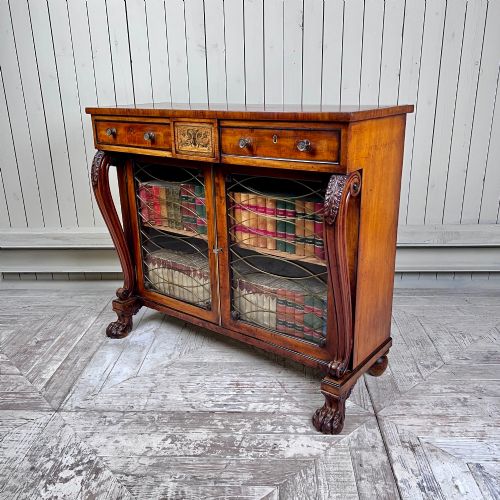
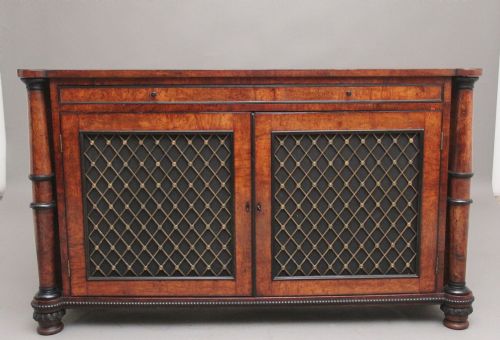
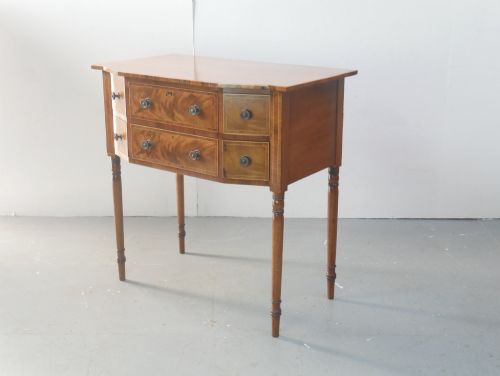
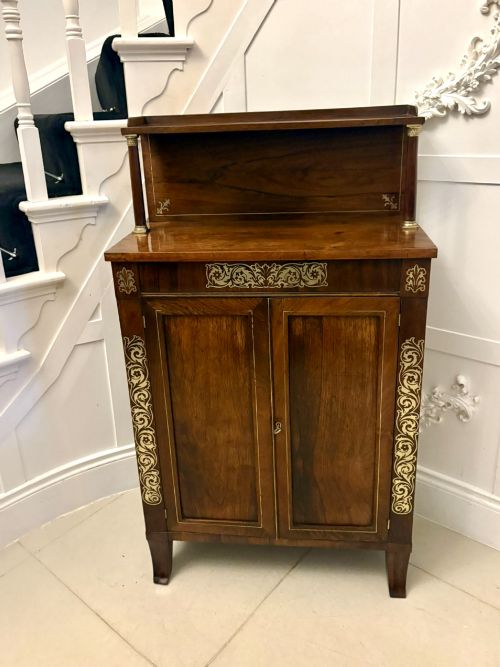
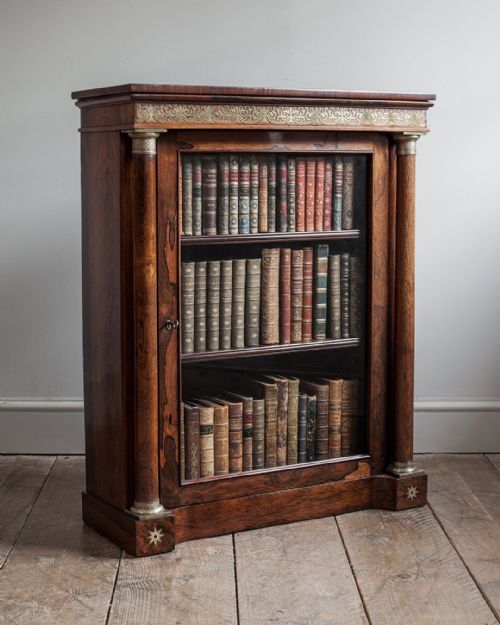
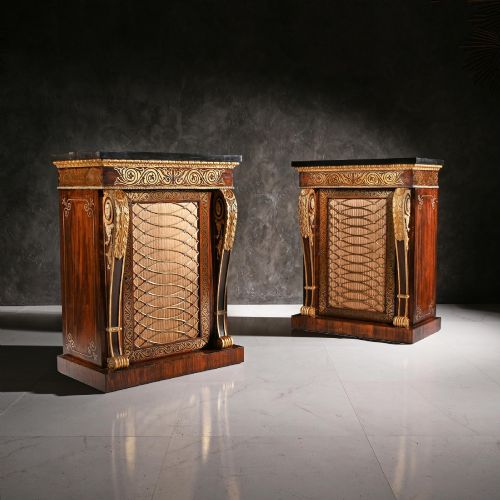
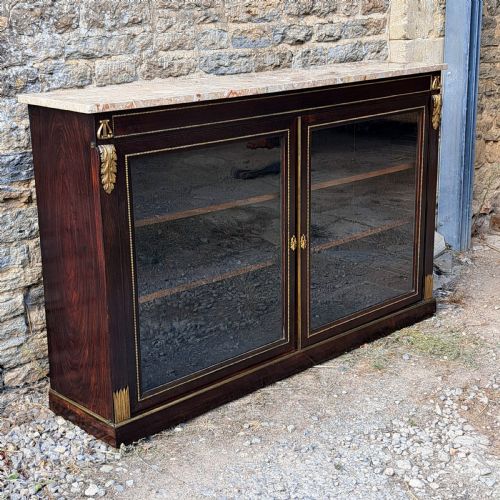
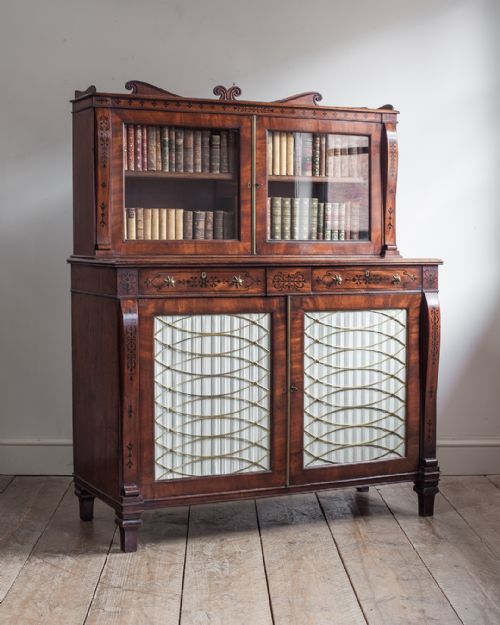
These pieces are a regency inlaid side cabinet, built for display and storage in formal rooms with striking timber figures and metal lines.
Regency Inlaid Side Cabinet
A regency inlaid side cabinet brings together low cupboards, tiered shelving, and glazed or brass-grille doors intended for elegant storage. The pieces meeting this search phrase originate primarily from the Regency and early nineteenth century, alongside later nineteenth-century interpretations.
Makers fashioned these works in mahogany and rosewood, often pairing the timber with brass stringing and contrasting dark woods. Cabinets range from compact pier units to larger chiffoniers and breakfront sideboards designed for formal entertaining rooms.
Materials and Technique
Cabinetmakers selected dense tropical hardwoods such as rosewood, mahogany, and amboyna, laying decorative veneers over sturdy pine or oak carcases. They applied contrasting stringing in boxwood and ebony to outline drawers, doors, and pilasters.
Brass inlay forms delicate scrollwork and geometric motifs across the timber surfaces, secured carefully into hand-cut channels. Metal grilles, glass panes, and marble tops frequently complete the upper sections.
The listings show a strong preference for rosewood carcases paired with detailed brass stringing and boxwood borders.
Standards of Execution
Quality rests upon the precision of the timber grain and the crispness of the brass and boxwood marquetry. Finer examples display meticulous matching of veneer figures across the entire front elevation rather than random patching.
The sophistication of internal fittings, solid secondary timbers, and original mounts distinguish standard production from exceptional workshop commissions. Structural integrity in the joints and original patination determine the enduring character of each survivor.
Louis Constantin Le Gaigneur·John McClean·Pitcher
The Regency Inlaid Side Cabinet Glossary
- Chiffonier
- A low cabinet featuring enclosed shelving below and often a raised superstructure with shelves above. This form gained popularity during the Regency period for holding books and china.
- Pier cabinet
- A narrow piece designed specifically to stand against the wall space between windows. These slim cupboards often incorporate glazed doors and brass mounts.
- Brass stringing
- Thin strips of brass inlaid into channels cut into the wood surface to create geometric borders and linear patterns. This technique defines much of the Regency decorative vocabulary.
- Marquetry
- Elaborate patterns formed by fitting together contrasting veneers of various timbers. Artisans used this method to create floral or abstract motifs on cabinet doors.
Regency Inlaid Side Cabinet: Frequently Asked Questions
How do you identify a chiffonier?
A chiffonier combines a low enclosed cupboard base with a tiered open superstructure supported by small columns or pillars.
This specific form provided convenient access to daily tableware and reading materials within entertaining rooms.
What woods dominate these pieces?
Rosewood and mahogany form the primary structural and decorative timbers for the vast majority of these cabinets.
Cabinetmakers accented these dark woods with lighter boxwood lines and rich ebony borders.
How do you spot brass inlay work?
Fine lines of polished brass run flush across the door panels, friezes, and stiles of the timber carcase.
This metallic decoration outlines architectural panels and creates intricate scroll motifs characteristic of the period.