

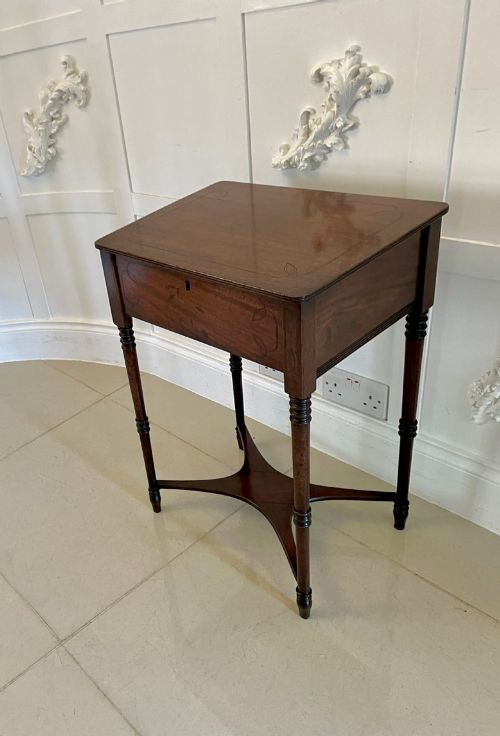
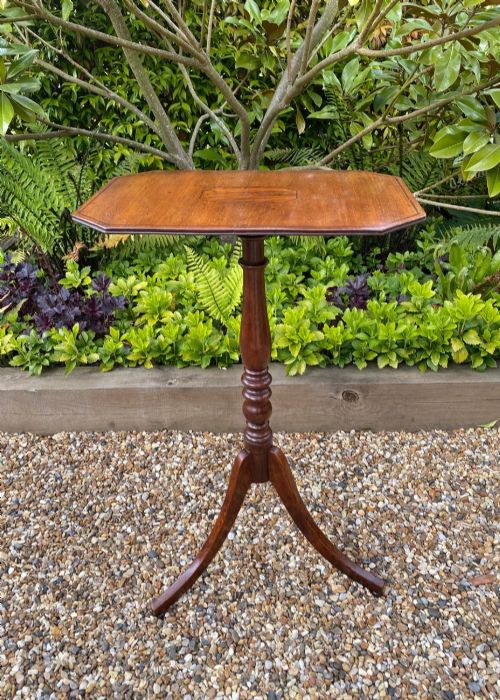
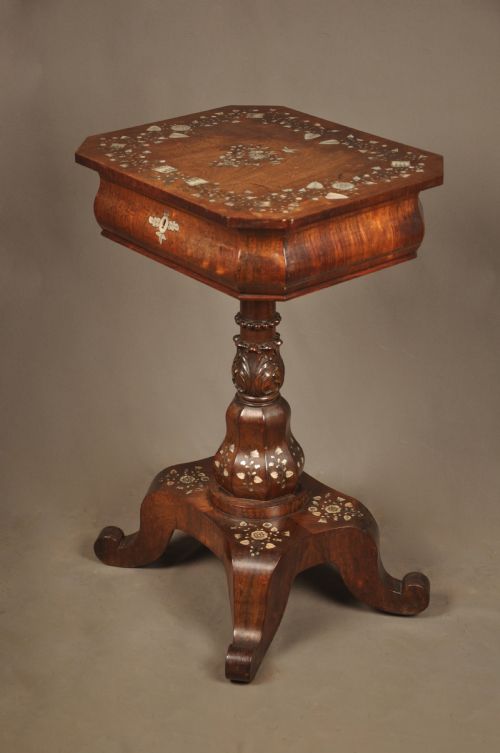
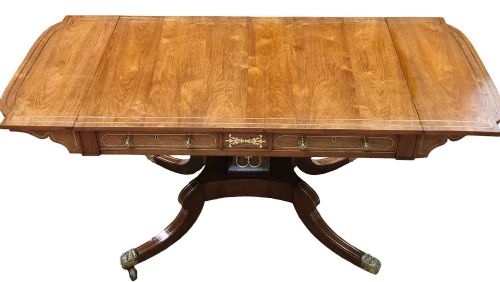
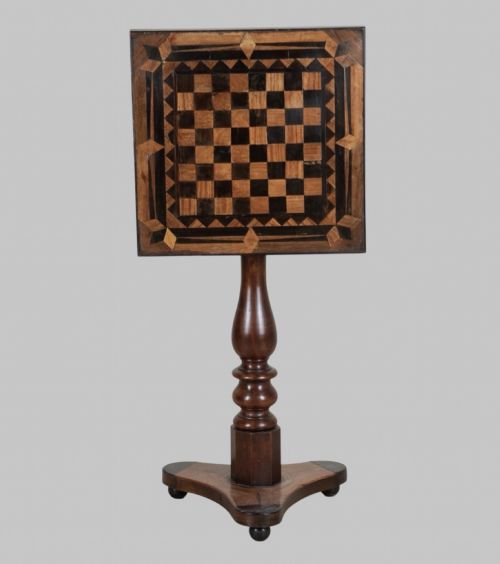
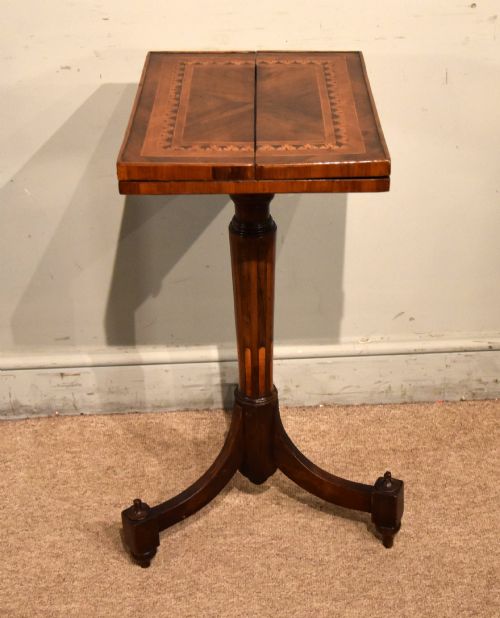
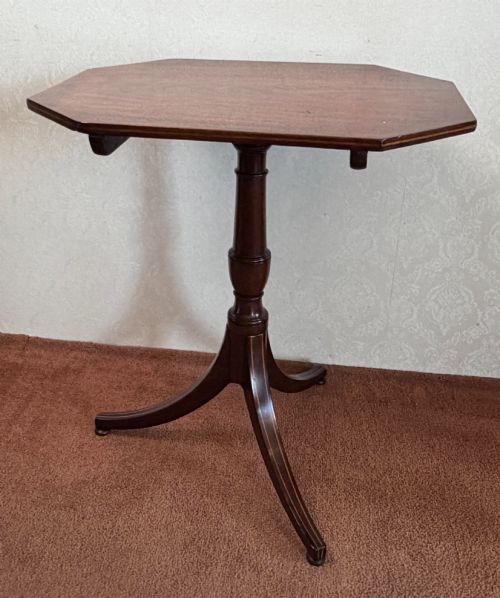
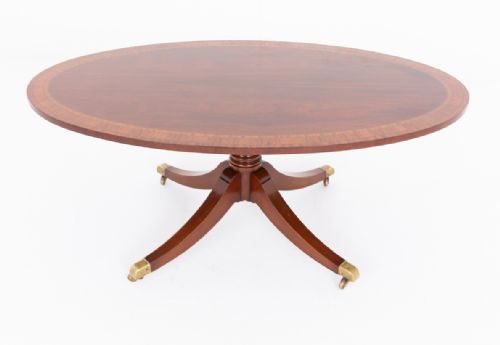
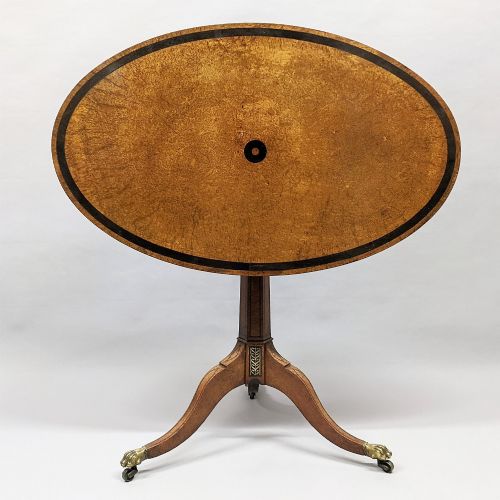
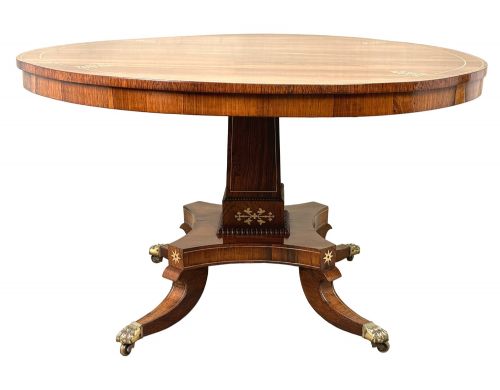
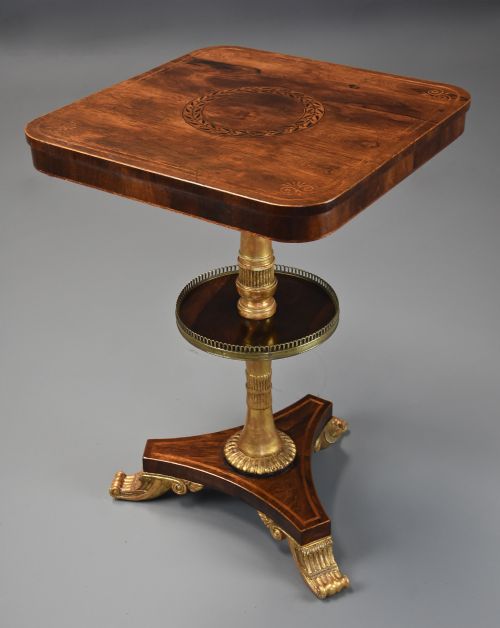
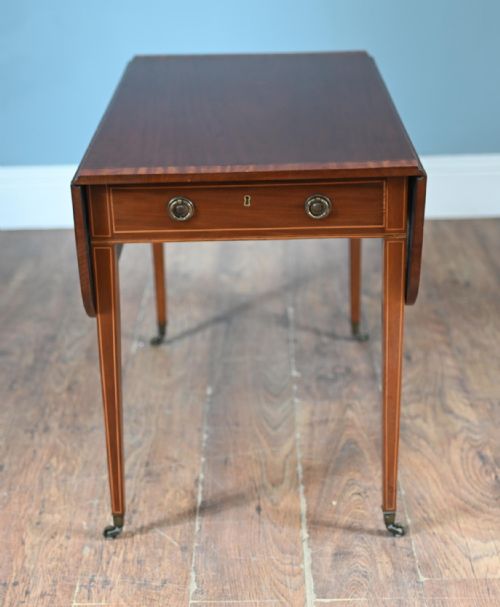
Regency Inlaid Occasional Table
A regency inlaid occasional table brings refined small-scale surface space and contrasting timber detail to a room.
Regency Inlaid Occasional Table
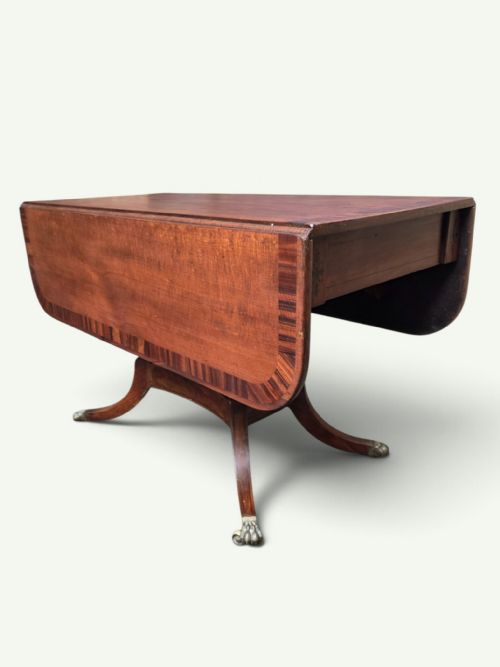
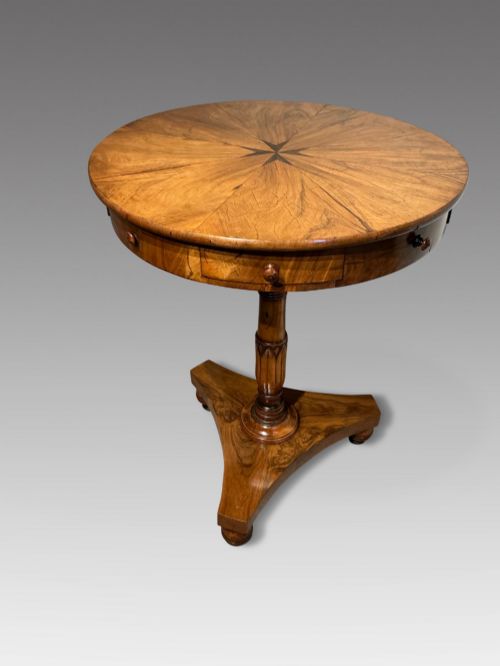
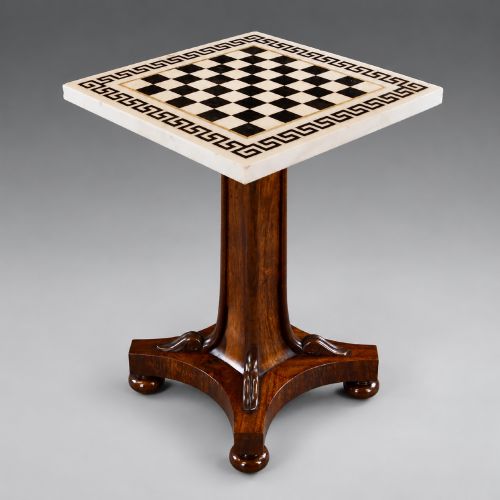
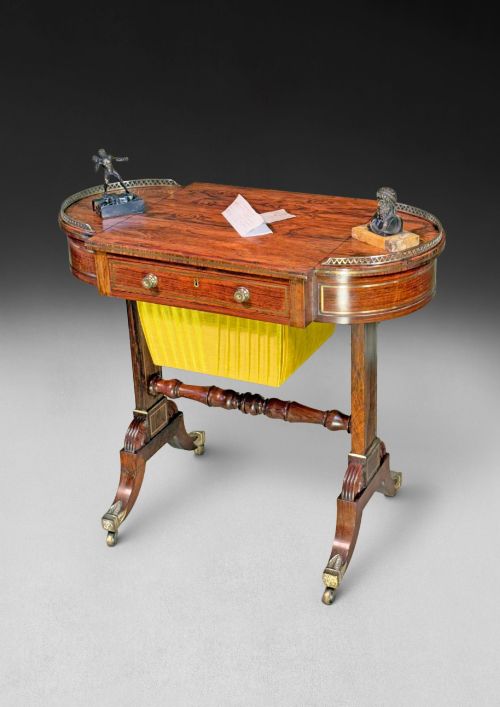
A regency inlaid occasional table encompasses diverse small tables designed for specific domestic tasks, including games, sewing, and tea. The pieces listed span formats such as pembroke tables, nests of tables, drum tables, and sofa tables.
The material record shows a concentration of rosewood and mahogany structures enhanced with contrasting wood inlay, brass stringing, and marble tops. These variations range from compact lamp tables to multi-tiered work tables.
Most examples originate from the Regency and nineteenth-century periods, alongside later revivals stretching into the twentieth century. Buyers encounter both freestanding centre tables and drop-leaf variations designed to adapt to interior space.
Materials and construction
Cabinet makers utilised dense native and exotic timbers such as mahogany and rosewood as primary carcasses, often incorporating satinwood, boxwood, and ebony for decorative veneers. Wood inlay and brass stringing create geometric and linear borders across table tops and legs.
Complex builds incorporate functional elements like drop leaves, concealed drawers, and tilt-top mechanisms fitted to pedestals or tripod bases. Specialist surfaces feature fitted compartments for games or work, alongside heavy specimen marble inserts.
Regency Inlaid Occasional Table Retail Price Guide 2026
Typical asking prices for regency inlaid occasional table among the pieces listed under this phrase on Sellingantiques today, from the lower quarter to the upper quarter. They describe what is for sale here now, not the wider market.
Certain patience tables include secret compartments designed specifically for solitary card game storage.
Distinctions in standard
The refinement of timber selection and inlay precision dictate the standard of execution, where tightly figured rosewood or satinwood veneers paired with crisp brass stringing denote superior craftsmanship. The intricacy of internal joinery, such as fitted drawers and stable pivoting mechanisms, separates standard production from exceptional work.
Proportion and structural harmony play a defining role, distinguishing well-balanced tripod bases and neat quartetto nests from heavier, less resolved proportions.
The Regency Inlaid Occasional Table Glossary
- Pembroke table
- A small table with hinged drop leaves on two opposing sides. These tables often include a single drawer and were easily moved around a room.
- Quartetto
- A matched set of four nesting tables that graduate in size to fit neatly beneath one another. They appear frequently in rosewood and satinwood during the nineteenth century.
- Brass stringing
- Inlays of narrow brass strips set flush into channels cut into the timber surface. This technique outlines drawers, borders, and table tops.
- Tilt-top table
- A table featuring a mechanism that allows the top to rotate and pivot vertically against the pedestal base. This design enabled compact storage when not in use.
Regency Inlaid Occasional Table: Frequently Asked Questions
What is a pembroke table used for?
A pembroke table provides adaptable surface area through hinged drop leaves that lift when extra space is required. Historically, these pieces served multiple functions including small dining, writing, and general parlour use.
Their compact footprint allowed them to sit against a wall when folded and move easily to the centre of a room when in use.
How do nesting tables work?
Nesting tables comprise a graduated set of four pieces, historically termed a quartetto, designed to slide progressively beneath the largest top. This arrangement offered multiple independent surfaces for tea or games without occupying permanent floor space.
Craftsmen built these sets using lightweight frames in woods such as rosewood and satinwood for easy lifting.
How do you identify a work table?
A work table contains internal compartments, trays, or an attached fabric bag designed to hold sewing and needlework materials. These pieces typically include a small drawer and a slender pedestal or leg structure.
They gained popularity during the nineteenth century as essential furnishings for domestic craft activities.