
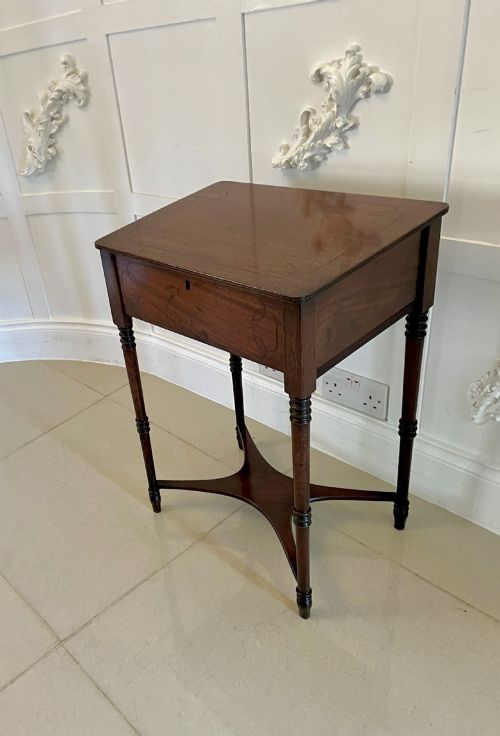


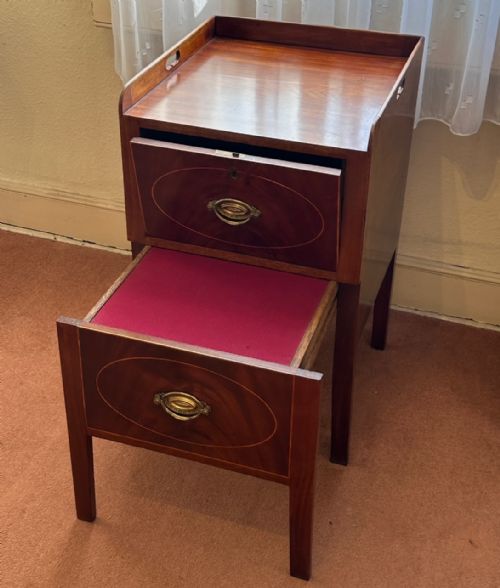


Regency Inlaid Nightstand
These pieces of regency inlaid nightstand furniture offer neat storage and warm timber tones for the bedroom.
Regency Inlaid Nightstand
A regency inlaid nightstand provides compact bedside storage and display surface, appearing in forms such as bedside cabinets, pot commodes, and pedestal cabinets. These items originate predominantly from the nineteenth century, including the Regency and Georgian periods.
Buyers will encounter various configurations on this page, ranging from concave fronted commodes to lamp tables and night cabinets. The selection includes paired items alongside single tables, constructed for domestic bedchambers.
The aesthetic draws heavily on the Regency, Georgian, Victorian, and Sheraton Revival styles, reflecting the formal yet practical domestic requirements of the period.
How they were made
Cabinet makers utilised dense primary timbers including mahogany, rosewood, and burr wood, often selected for strong grain patterns like flame figures. These surfaces received contrasting details through boxwood inlay, satinwood inlay, and ebony line work.
Hardware and structural accents incorporate brass, adding metallic contrast to the timber constructions. Joinery techniques created stable forms for daily bedside use, such as pull-out steps and multi-drawer carcases.
Surface decoration across the inventory relies on contrasting details in boxwood inlay, satinwood inlay, and ebony.
What varies in quality
The standard of a regency inlaid nightstand rests upon the precision of its decorative wood inlay and the selection of figured timber veneers. Crisp lines in the ebony or boxwood contrast sharply with finer cabinet work than blurred or faded marquetry.
Construction choices dictate longevity, distinguishing standard utilitarian pieces from high-status items equipped with functional additions like pull-out steps or solid brass handles. The coherence of the proportions and the richness of the polished mahogany or rosewood set the upper tier apart.
The Regency Inlaid Nightstand Glossary
- Inlay
- A technique where contrasting woods such as boxwood, satinwood, or ebony are embedded into the primary timber surface to create decorative patterns. This method defines the surface detail on many period cabinets.
- Commode
- A low cabinet or chest of drawers, often adapted in the Georgian and Regency periods to enclose a chamber pot. These pieces frequently feature curved or bow fronts.
- Pembroke table
- A small side table with hinged drop leaves on two opposing sides. They were widely used as versatile occasional furniture in nineteenth-century interiors.
- Pedestal cabinet
- A standalone cupboard built around a central column or enclosed base. These items provide compact vertical storage beside a bed.
- Flame mahogany
- A veneer cut from the fork of the mahogany tree, showing a distinctive flickering flame-like grain pattern. Cabinet makers prized this wood for high-end drawer fronts and table tops.
Regency Inlaid Nightstand: Frequently Asked Questions
What is a regency inlaid nightstand used for?
These pieces provide bedside storage and a surface for lighting or personal items. They typically offer enclosed cupboards or small drawers to keep the bedchamber tidy.
Historically, similar cabinets also functioned as night commodes to house chamber pots before modern plumbing. Today they serve standard bedside or lamp table duties in traditional and modern homes.
How do I spot a true Regency piece?
Authentic Regency items date from the early nineteenth century and often feature classical architectural motifs. Look for dark timber like mahogany or rosewood paired with fine ebony or brass stringing.
Construction methods also help indicate age, showing hand-cut dovetails and traditional timber fixings rather than modern metal screws. Proportions remain balanced and geometric, reflecting the neoclassical taste of the era.
Can I use these tables in a modern bedroom?
These cabinets suit modern interiors well due to their compact footprints and warm timber tones. They mix easily with contemporary minimalist furniture to add historic character and texture.
The enclosed storage proves practical for hiding modern bedside clutter like chargers and books while maintaining a clean surface.
What is the difference between a commode and a nightstand?
A commode in this context usually refers to a low cabinet that originally enclosed a chamber pot, often featuring a panelled door or dummy drawers. A nightstand is a broader term for any small table or cabinet kept beside a bed.
Both forms offer useful concealed storage, though commodes often present a more substantial concave or bow-fronted shape.