


Regency Inlaid Library Table
A regency inlaid library table offers refined proportions and contrasting veneers suited to central placement in a room.
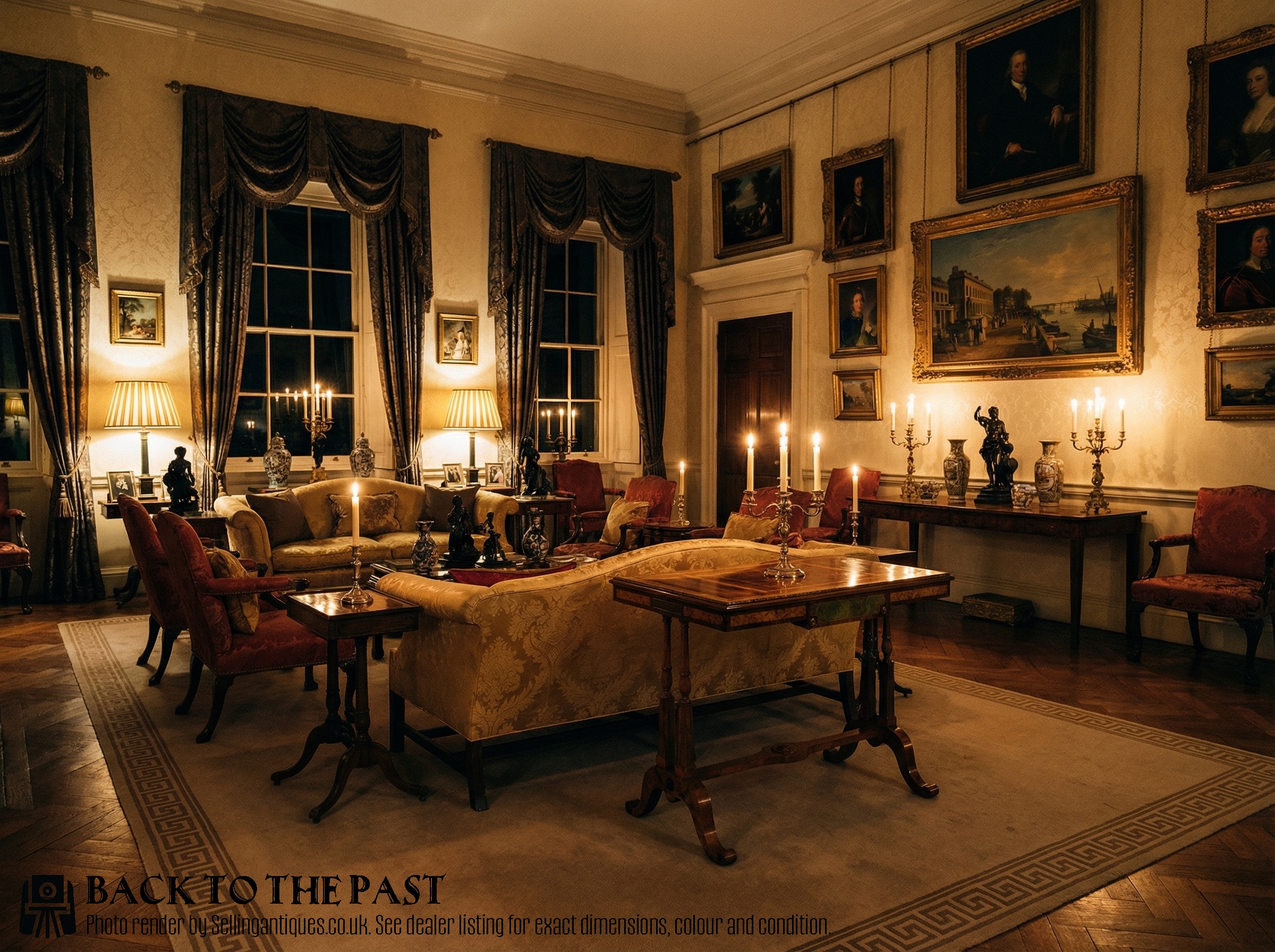
Regency Inlaid Library Table
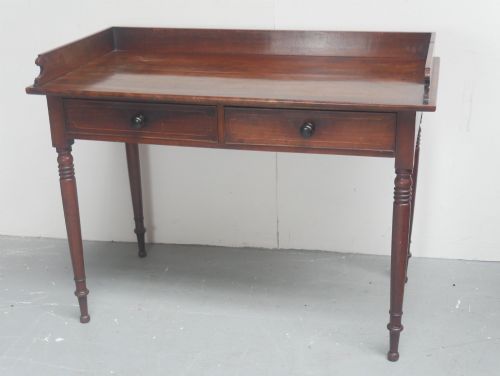
A regency inlaid library table is a substantial writing or freestanding centre table originating primarily from the late eighteenth and early nineteenth centuries. These pieces appear in forms such as sofa tables, drum tables, and rectangular writing tables designed for domestic studies and libraries.
The versions most commonly met on this page belong to the Regency, George III, and wider nineteenth-century periods, constructed from dense native and exotic timbers. They serve as functional work surfaces that display decorative cabinetmaking through contrasting borders and geometric stringing.
Makers of these tables utilised freestanding designs with finished backs, allowing them to sit away from walls in the middle of a room. The integration of drawers, leather writing surfaces, and pedestal supports defines the functional character of the type.
Materials and Construction
Cabinetmakers built these tables using primary structural timbers like mahogany and rosewood, accented with lighter contrasting woods such as satinwood and ebony for inlay and crossbanding. Flame and figured veneers were chosen to create lively grain patterns across wide tabletops.
Inlay work frequently incorporates cut brass lines and arabesque motifs set flush into the timber surface, sometimes paired with brass mounts or castors. Secondary woods like oak provide internal framing for drawers and structural supports beneath the show surfaces.
Mahogany and rosewood dominate the primary woods, accompanied by brass, satinwood, ebony, and leather inserts.
Judging Quality
The distinction between ordinary and superior pieces rests on the crispness of the cabinetwork and the selection of timber figure. Finer examples display precise brass inlay without gaps, balanced flame mahogany or rosewood veneers, and well-proportioned turned or pedestal bases.
Internal construction, including dovetailed drawer boxes and original brass hardware, separates workshop pieces from later reproductions. The harmony of proportions and the quality of secondary timbers underneath reveal the original maker's hand.
Gillows·Marsh and Tatham·Bush of London·Plumbly and Tupman
The Regency Inlaid Library Table Glossary
- Crossbanding
- A border of veneer running perpendicular to the grain of the main surface. It frames the central panel and highlights the edge of the tabletop.
- Stringing
- Thin inlaid lines of contrasting wood or brass set into channels in the timber. This technique outlines drawers and table edges with geometric precision.
- Sofa table
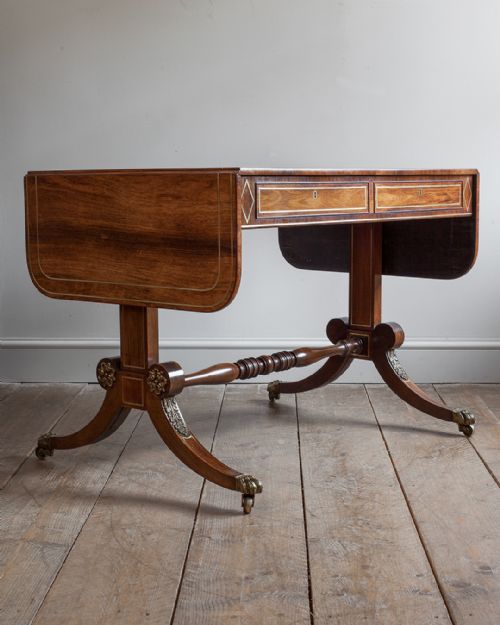
- A rectangular table with drop leaves on either end, originally designed to sit in front of a sofa. They typically feature two small drawers and trestle or pedestal supports.
- Drum table
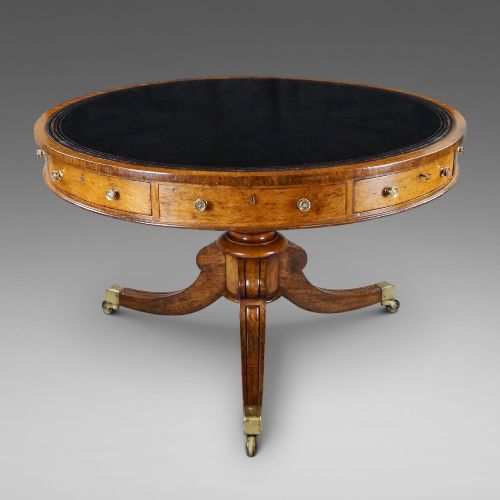
- A circular library table with a deep frieze containing drawers, mounted on a central pillar and tripod or plinth base. The top is frequently inset with leather.
- Marquetry
- Elaborate patterns formed by fitting together pieces of various coloured veneers into a wood ground. It creates pictorial or ornamental designs across tabletops.
Regency Inlaid Library Table: Frequently Asked Questions
Where should I place a library table?
These tables are designed to stand free in the middle of a room rather than against a wall. Their finished backs and detailed pedestals allow them to act as central visual anchors.
Position one behind a sofa or in the centre of a study to utilise the writing surface from multiple angles.
How do I care for the leather top?
Leather writing surfaces benefit from occasional gentle cleaning and conditioning to prevent drying and cracking. Avoid using harsh chemical cleaners or excess water near the surrounding wood veneer.
Keep the leather away from direct sunlight to preserve its colour and suppleness over time.
What is the difference between a writing table and a library table?
Library tables tend to be larger, heavier freestanding pieces intended for general use and book storage in large rooms. Writing tables often focus specifically on a comfortable surface for correspondence.
Both types frequently feature inset leather panels and functional drawers beneath the top.
How do I identify Regency style?
Regency design draws heavily on classical Greek and Roman motifs, featuring clean architectural lines, rosewood or mahogany veneers, and brass inlay. The proportions are balanced and ornament is restrained compared to later Victorian furniture.
Look for sabre legs, brass paw castors, and contrasting stringing as key indicators of the period.