




Exotic Wood Inlaid Table
An exotic wood inlaid table brings a room alive with rich grain, intricate marquetry and global history from the eighteenth and nineteenth centuries.
Exotic Wood Inlaid Table
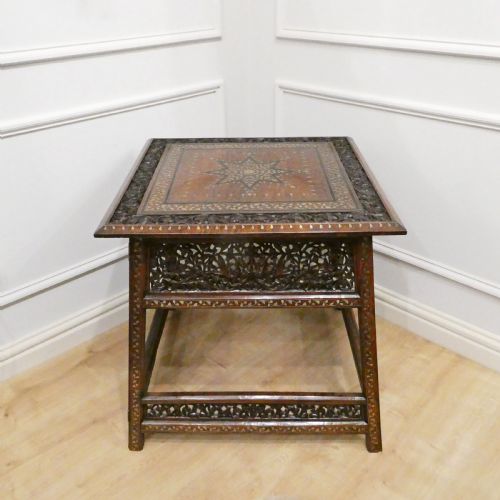
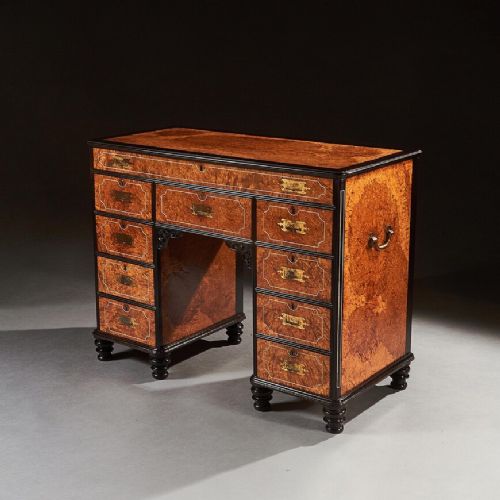
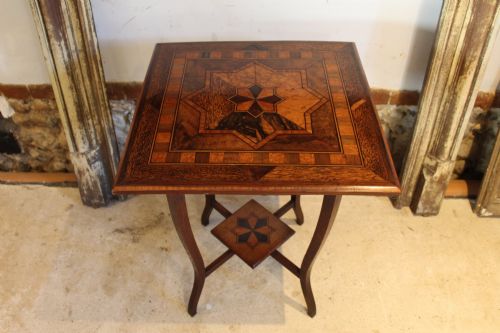
An exotic wood inlaid table represents a diverse group of nineteenth-century and eighteenth-century furnishings, including side tables, occasional tables, desks, work tables, centre tables, and card and games tables. You are most likely to encounter nineteenth-century examples, often reflecting Regency, Victorian, Aesthetic Movement, Anglo-Indian, and Chinese Export styles.
The origins span across global workshops and regions such as Jamaica, Ceylon, China, New Zealand, and Britain. Makers utilised woods from distant colonies alongside traditional European timbers to create patterned surfaces that served both decorative and practical domestic functions.
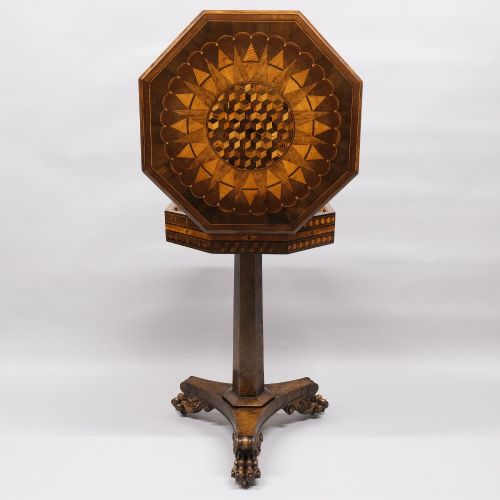
Forms range from compact square side tables and multi-sided occasional pieces to large dining tables and fitted kneehole desks. Each piece displays distinct regional carving, parquetry, or specimen wood marquetry developed during periods of international trade and exploration.
How they were made
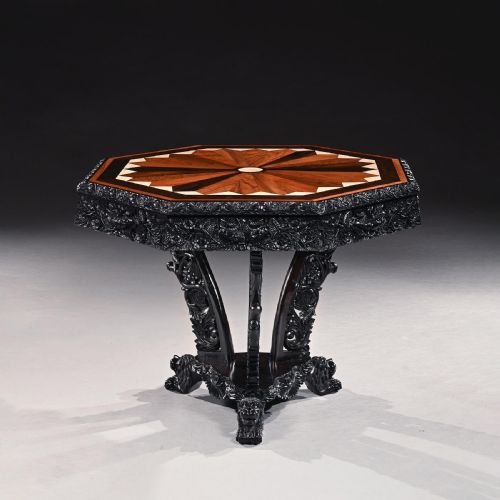
Cabinetmakers constructed these tables using a foundation of dense timbers such as mahogany, walnut, or ebony, onto which intricate patterns of specimen woods, satinwood, and amboyna were applied. Surfaces frequently incorporate brass wire inlay or ormolu mounts to define the geometric and floral borders.
Marquetry and parquetry techniques required precise cutting of diverse exotic timbers to fit flush across tabletops, sometimes forming elaborate pictorial or multi-sided geometric designs. Carved elements on bases and legs, particularly in Anglo-Indian and colonial pieces, relied on hand-chiselled detailing in ebony and other heavy woods.
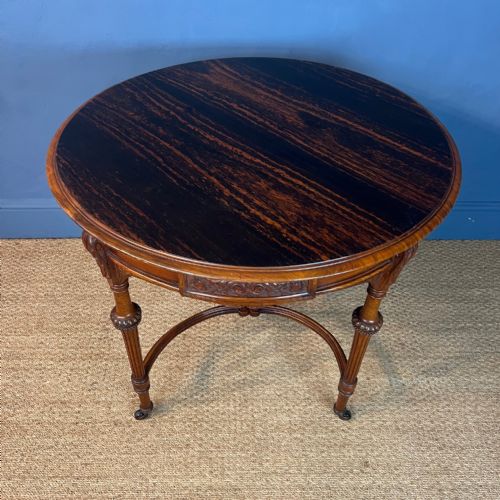
Styles span Anglo-Indian Colonial, Regency, Chinese Export, Victorian, French Louis XVI Style, and the Aesthetic Movement.
What varies in quality
Quality rests upon the precision of the timber matching and the complexity of the inlaid motifs across the top. Tables featuring a wide variety of distinct specimen woods assembled with tight, seamless joints sit at the top of the range.
The integrity of the timber ground and the subtlety of regional carving further distinguish finer examples. Pieces retaining original surface patination and stable construction without major timber shrinkage demonstrate superior craftsmanship.
Ralph Turnbull
The Exotic Wood Inlaid Table Glossary
- Specimen wood
- Timber selected for its unique natural colour, grain, or origin, often combined in tables to display a multitude of different species. These woods came from global trade routes during the eighteenth and nineteenth centuries.
- Marquetry
- The art of applying small pieces of veneer to a structural panel to form decorative patterns or pictures. On these tables, marquetry frequently covers the entire top surface.
- Parquetry
- Geometric mosaic woodwork used for repeating patterns such as cubes or stripes. It forms durable and visually striking surfaces on work tables and games tables.
- Amboyna
- A highly prized, richly figured exotic wood from Southeast Asia with a mottled burl pattern. It is utilised for high-status cabinet work and decorative veneer.
- Ormolu
- Gilded bronze mounts applied to furniture edges and legs. This technique adds metallic contrast to dark exotic timbers like walnut and ebony.
Exotic Wood Inlaid Table: Frequently Asked Questions
How do I care for my table?
Keep the wood away from direct sunlight and sudden temperature changes to prevent timber splitting or fading. Regular dusting with a soft cloth maintains the natural finish.
Avoid harsh chemical polishes that can damage antique veneer and delicate brass or wood inlay over time.
Where were these tables made?
These pieces originated in various global regions including Britain, China, Ceylon, Jamaica, and New Zealand. British workshops often worked alongside colonial centres to produce distinct regional styles.
Local timber availability heavily influenced whether a piece utilised native hardwoods or imported specimen varieties.
How can I tell the period?
Dating relies on stylistic markers such as Regency curves, Victorian proportions, or Aesthetic Movement forms. Construction methods and the specific choice of woods also provide clear chronological clues.
Examining the underside and framing reveals the underlying joinery typical of eighteenth or nineteenth-century cabinetmaking.