


Antique Parquet Side Table
These antique parquet side table pieces bring geometric wood veneers and polished mounts to domestic interiors, offering practical surfaces with distinct historical character.
Antique Parquet Side Table
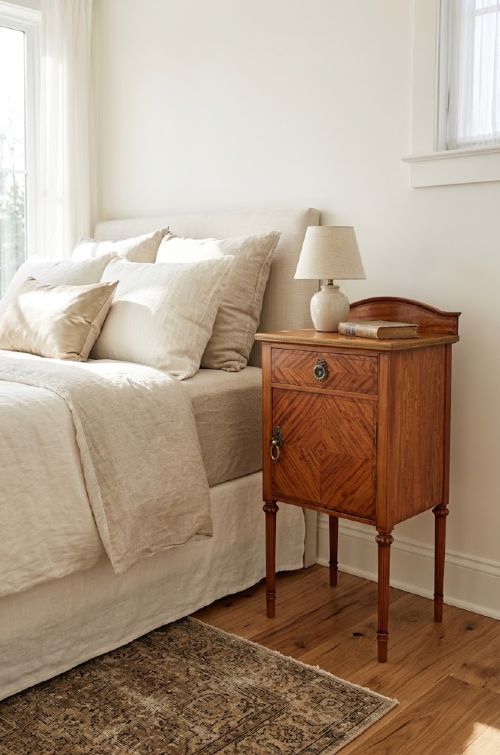
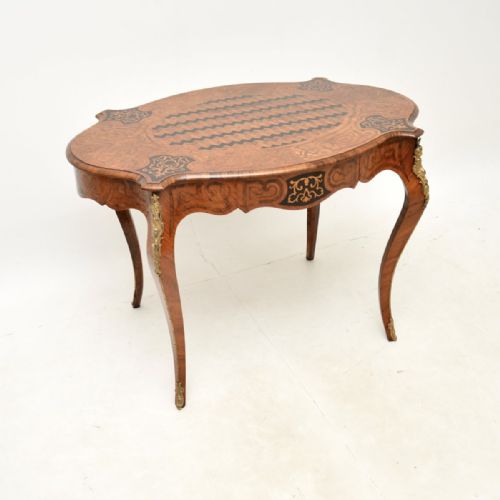
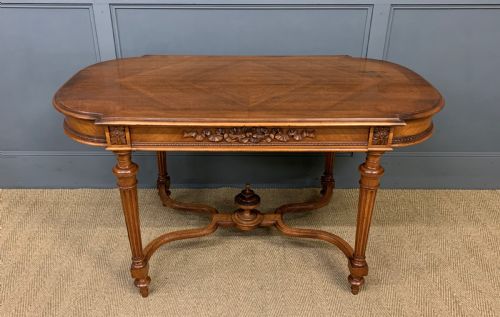
An antique parquet side table presents a geometric veneered wooden surface, often supported by slender legs and detailed with mounts. Buyers searching for an antique parquet side table encounter forms ranging from circular gueridon tables to demi-lune card tables and occasional bedside stands.
The material palette of these tables spans walnut, mahogany, rosewood, kingwood, and satinwood, frequently paired with brass or ormolu highlights. Origins recorded in the evidence lean heavily toward French ateliers working in Louis XV and Louis XVI revival styles, alongside English Edwardian and Georgian examples.
Most pieces date from the nineteenth century, including specific years like eighteen ninety and eighteen sixty, with some eighteenth-century and early twentieth-century variants. They serve flexibly as bedside cupboards, writing desks, or small display surfaces in reception rooms.
How they were made
Cabinetmakers constructed these tables using a solid secondary timber frame overlaid with thin veneers of figured hardwoods such as kingwood, rosewood, walnut, and satinwood. These veneers were meticulously cut and fitted together in geometric parquet patterns across the table tops.
Metal components, particularly brass and ormolu mounts, were cast and chased to embellish corners, legs, and aprons, often securing structural joints while adding decorative contrast to the dark and light wood grains.
Some nineteenth-century tables cleverly disguise themselves as games surfaces, hiding fold-over leaves and secret compartments beneath precise parquet tops.
What varies in quality
The precision of the veneer work dictates the visual sharpness of the geometric parquet pattern, where tight joints and balanced grain direction separate refined examples from simpler construction. The selection of contrasting timber species creates depth in better specimens.
Cast metal mounts demonstrate varying degrees of crispness in their chased detail, with heavier ormolu applications indicating higher workshop investment. Structural integrity of the underlying timber frame and the subtlety of integrated drawers further distinguish the grade of each piece.
The Antique Parquet Side Table Glossary
- Parquetry
- A geometric mosaic of wood veneer used to cover floors or furniture surfaces. It relies on contrasting grains and tones to form patterns like cubes or chevrons.
- Ormolu
- Gilded bronze used for decorative mounts on furniture. It provides a bright metallic contrast against dark exotic woods.
- Gueridon
- A small round table supported by one or more columns or legs. French makers produced these frequently during the nineteenth century.
- Kingwood
- A dense, richly figured Brazilian timber with dark violet-brown streaks. It appeared frequently in high-end French veneer work.
- Demi-lune
- Half-moon shaped in plan. This form allowed side tables to sit flat against a wall while projecting into the room.
Antique Parquet Side Table: Frequently Asked Questions
Where should I place a parquet side table?
These tables fit easily beside armchairs, against hallways walls, or next to beds as compact storage surfaces. Their decorative wooden tops make them suitable for displaying small lamps or ornamental objects.
Because many examples feature finished backs and detailed parquetry on all sides, they also function effectively as freestanding centre pieces in smaller rooms.
How do I care for the wood veneer?
Keep wooden surfaces away from direct heat sources and strong sunlight to prevent the underlying adhesives from drying and the veneer from lifting. Regular dusting with a soft, dry cloth maintains the polished finish without building up residue.
Applying a suitable microcrystalline wax occasionally helps protect the open pores of antique hardwoods against moisture.
How can I tell French styles apart?
French tables from the nineteenth century often look back to earlier royal periods, utilising curves and floral marquetry for Louis XV styles or stricter symmetry and neoclassical columns for Louis XVI variants. Ormolu mounts on Louis XV revival pieces tend to be more asymmetrical and flowing.
English Edwardian or Georgian equivalents generally adopt simpler structural lines with Sheraton or satinwood influences, emphasising straight tapered legs rather than cabriole curves.
Are these tables sturdy enough for daily use?
Most occasional and side tables were built to support modest weight such as books, lamps, or small decorative items rather than heavy loads. Checking the joinery around the legs and aprons ensures the structure remains stable during everyday handling.
Drawers glide on traditional wooden runners, so gentle operation preserves the original fit within the cabinet frame.