

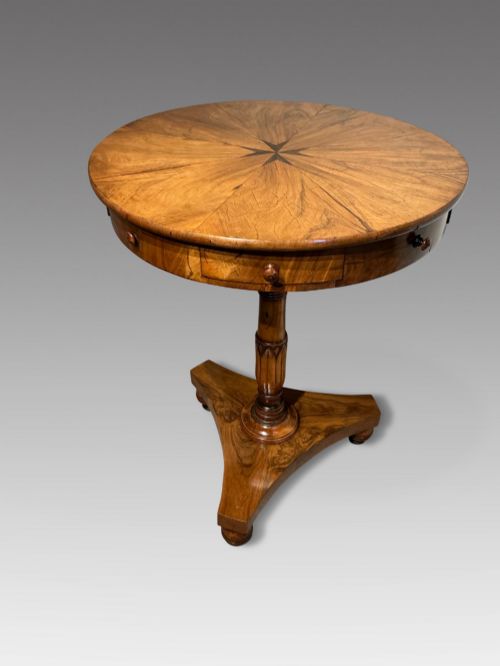
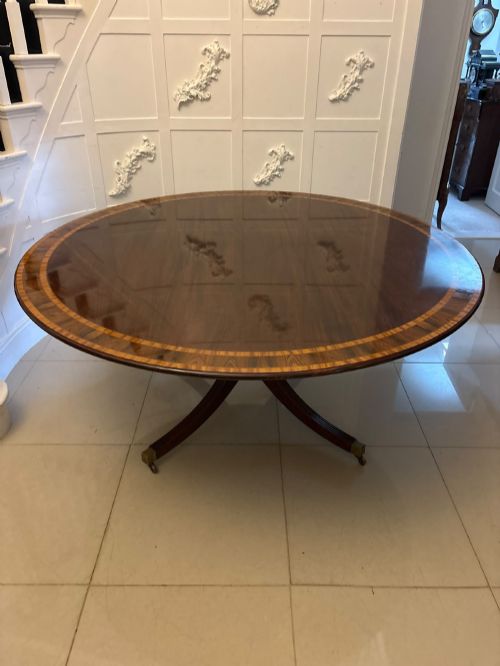
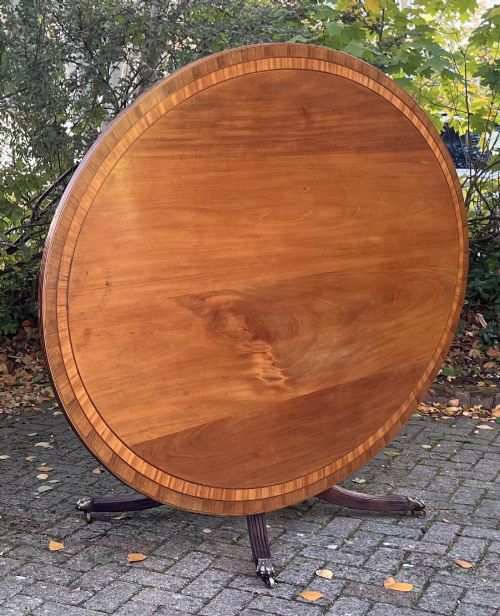
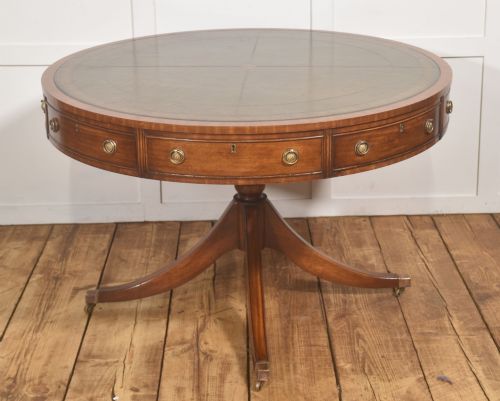
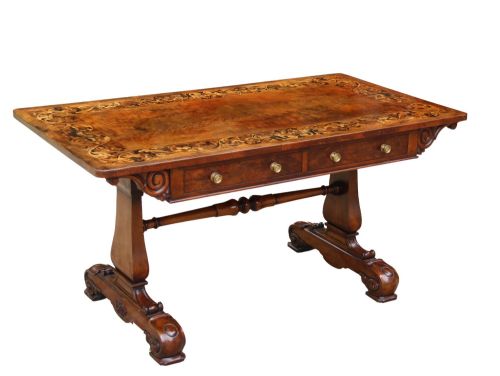
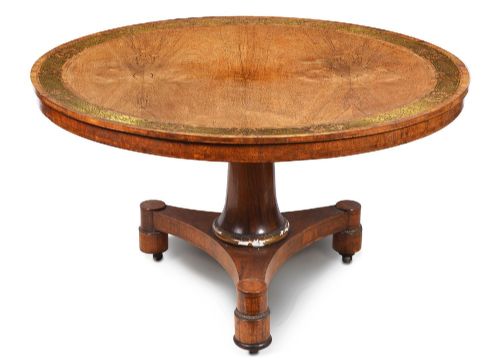
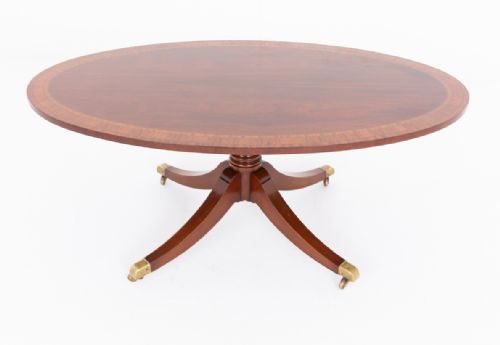
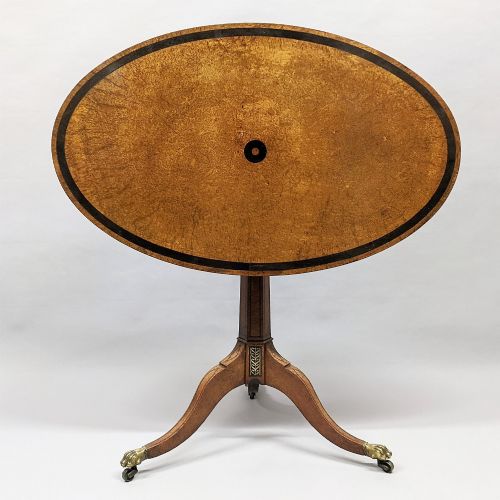
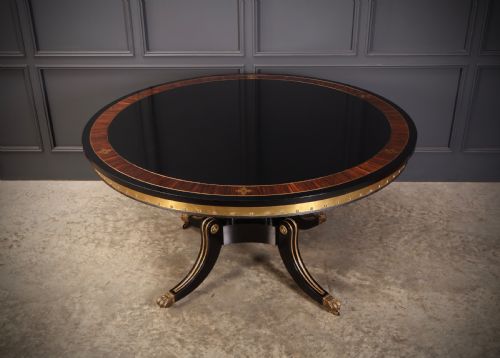


Regency Inlaid Centre Table
A regency inlaid centre table commands the middle of a room, bringing figured timbers and precise brass work together for daily use.
Regency Inlaid Centre Table
A regency inlaid centre table sits freestanding in a room, designed to be viewed from all sides rather than pushed against a wall. The pieces appearing most often on this page date from the Regency period through to the nineteenth century, alongside later revivals.
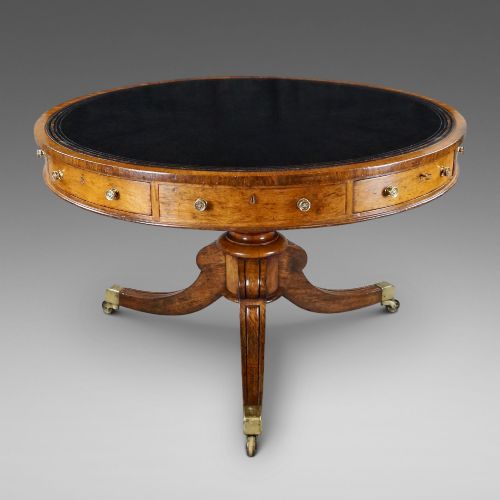
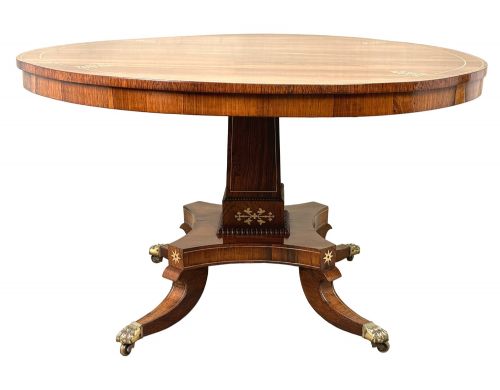
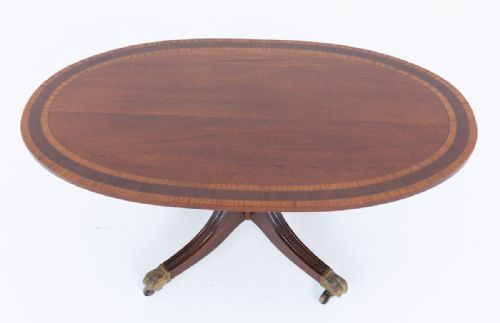
Makers shaped these surfaces in circular, oval, and drum forms, often supported on central pedestals or pillar bases. Timber choices span mahogany, rosewood, and oak, frequently enhanced with contrasting veneers and brass stringing.
Functionally, these tables served as library desks, breakfast surfaces, or prominent display pieces in the principal rooms of large houses. Buyers select them to anchor an interior scheme with period proportion and decorative timberwork.
Materials and construction
Cabinetmakers built these tables on solid subframes of mahogany or oak, applying fine veneers of rosewood, flame mahogany, or satinwood to the visible surfaces. Timber selection relied on figuring and grain movement to catch the light.
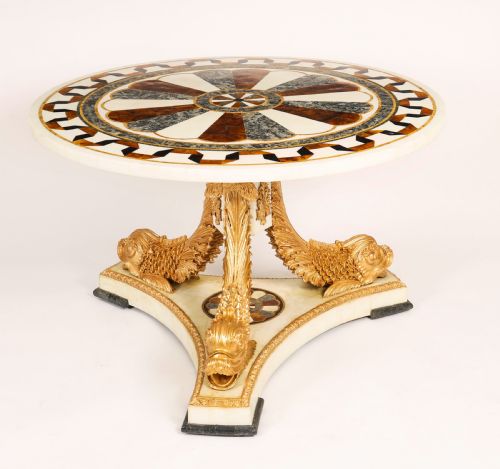
Inlay work combined brass stringing, ebony, and marquetry motifs set flush into the wooden top. Stone elements such as specimen marble and pietra dura appeared on grander examples, fitted directly into wooden mounts.
Regency Inlaid Centre Table Retail Price Guide 2026
Typical asking prices for regency inlaid centre table among the pieces listed under this phrase on Sellingantiques today, from the lower quarter to the upper quarter. They describe what is for sale here now, not the wider market.
Some tilt-top tables were hinged so servants could tuck them against the wall and win back the dance floor.
Assessing craftsmanship
Quality rests in the precision of the brass inlay and the selection of the timber veneers. Finer examples display tight, unbroken metal lines and harmonious grain matching across the entire top.
Structural integrity of the pedestal and pillar joints dictates daily durability. Tables with substantial weight distribution and crisp carving on the base represent the upper tier of period production.
Gillows of Lancaster·George Bullock
The Regency Inlaid Centre Table Glossary
- Centre table
- A freestanding table finished on all sides for placement in the middle of a room. These forms emerged strongly during the Regency period.
- Brass inlay
- Metal stripwork sunk into channels cut into the timber surface. It creates geometric or floral patterns that catch the ambient light.
- Pietra dura
- Inlay technique utilising cut and fitted polished coloured stones to form pictorial designs. It appears frequently on grander nineteenth-century tables.
- Tilt top
- A mechanism allowing the table top to pivot to a vertical position when not in use. This saved space in period interiors.
- Drum table
- A circular library table with a deep skirt containing drawers, resting on a central pillar. They provide substantial storage alongside a wide top.
Regency Inlaid Centre Table: Frequently Asked Questions
Where do I put a centre table?
These pieces stand in the middle of a room rather than against a wall. They function well in entrance halls or large reception spaces where people walk all around them.
Ensure there is enough clearance around the perimeter to pull up chairs or walk comfortably. The freestanding design requires open floor space to display the patterned top properly.
How do I clean brass inlay?
Dust the surface regularly with a soft, dry cloth to prevent grit from scratching the timber or the metal. Avoid abrasive polishes that might stain the surrounding wood veneer.
If the brass requires attention, apply a specialist metal cleaner carefully with a cotton bud to keep the compound off the wood. Buff gently once the metal brightens.
Can I use it as a dining table?
Many larger examples served as breakfast or dining surfaces in period homes. Circular formats encourage conversation when used for meals.
Check the height of the apron underneath to ensure comfortable knee clearance for seating. Protect the polished timber top with appropriate pads or linens during meals.
How do I date these tables?
Examine the timber species, construction joints, and secondary woods beneath the top. Rosewood and specific brass inlay motifs point strongly towards the Regency era.
Revival pieces from later periods often show machine-cut components or different secondary woods like pine. Compare the overall proportions and foot designs against known period pattern books.