
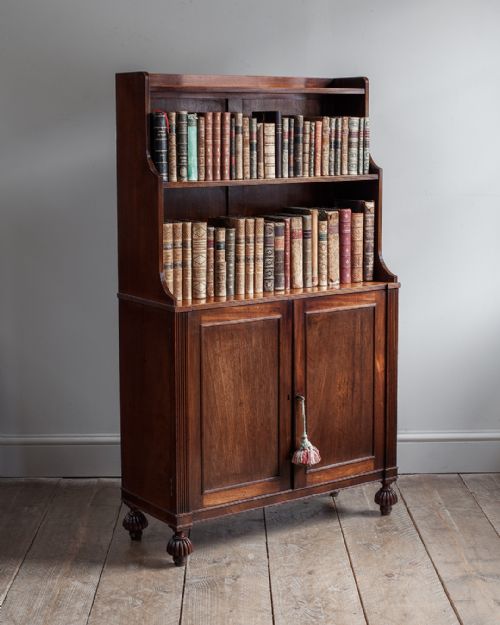
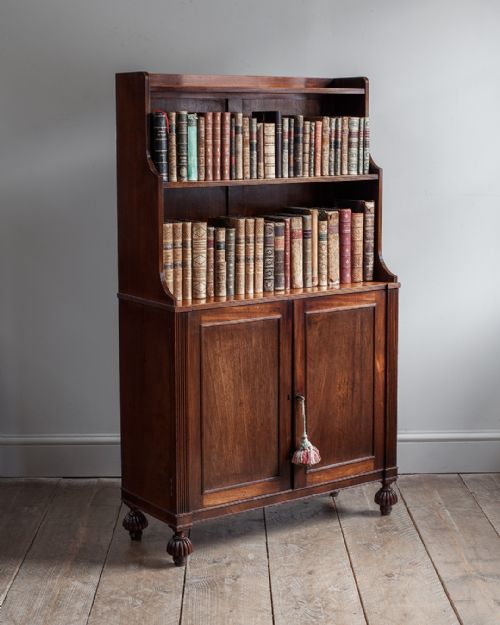
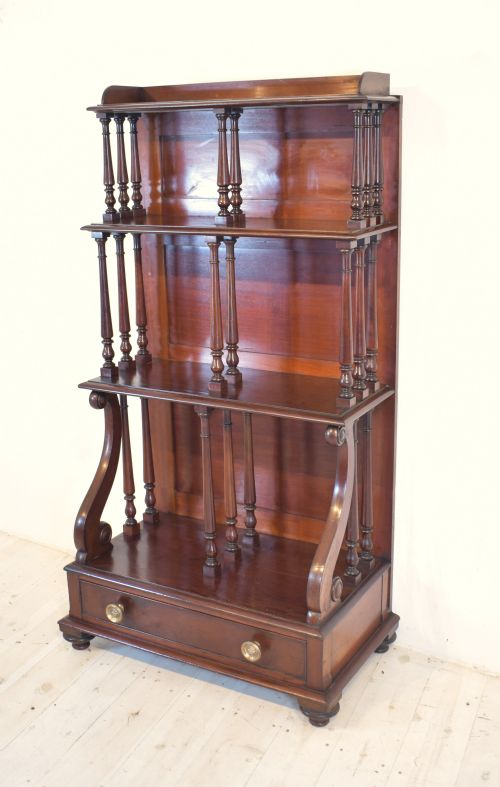


Regency Graduated Book Stand
A regency graduated book stand organises volumes across descending tiers with architectural grace.
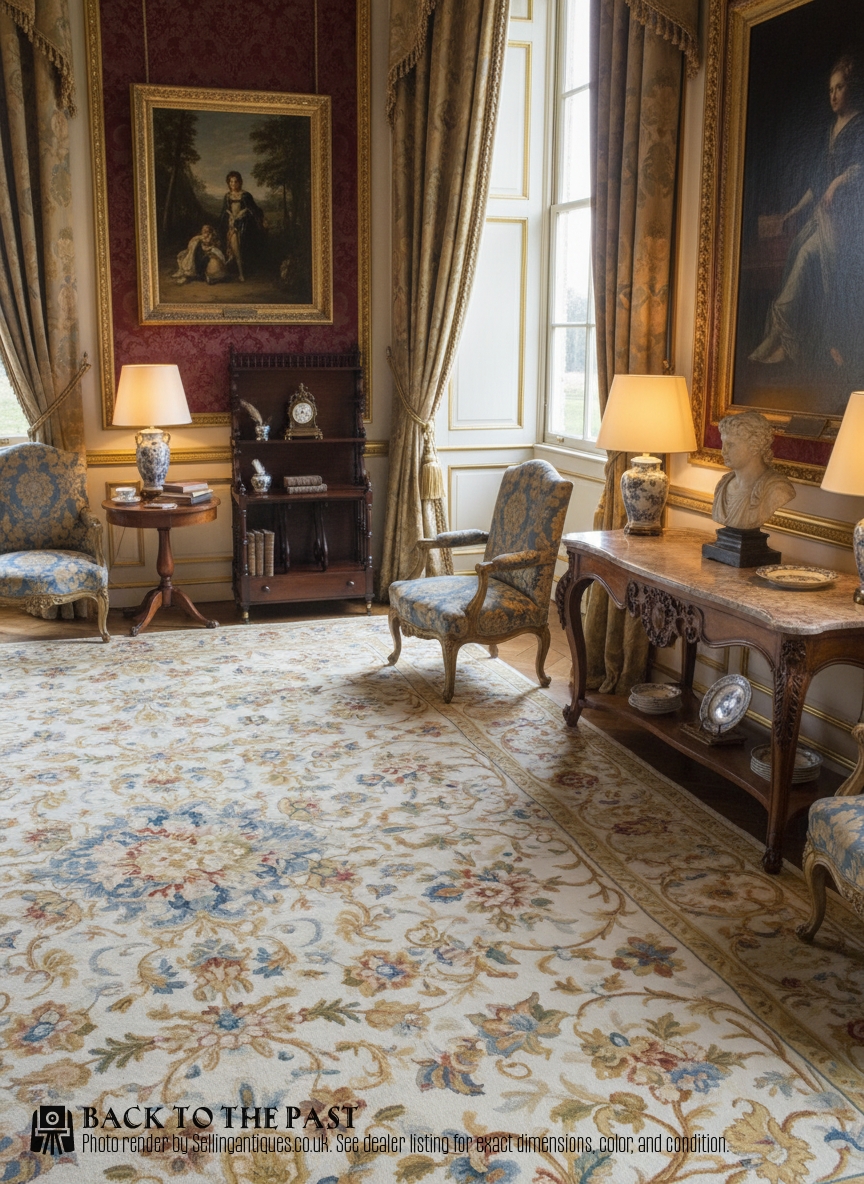
Regency Graduated Book Stand
A regency graduated book stand offers open shelving arranged in tiers that step back toward the top. This page brings together waterfall bookcases, revolving bookcases, and dwarf bookcases with graduated shelves spanning several periods.
The pieces on this page span the Regency era, Georgian period, nineteenth century, and later dates up to nineteen thirty. Mahogany examples dominate the selection, alongside painted finishes, teak, pine, and oak.
Forms range from compact open dwarf bookcases with integrated lower sections to revolving designs and pairs of Anglo-Indian pieces. Buyers encounter both authentic Regency construction and later revivals sharing the characteristic stepped profile.
Materials and construction
Cabinetmakers select dense tropical hardwoods like mahogany and teak for their stability and rich grain. Selected pieces incorporate brass fittings, wire components, and painted wooden surfaces.
Graduated tiers require precise joinery to support varying book weights across descending shelf depths. Side panels often feature shaped or fret-cut outlines that echo the waterfall curve of the descending shelves.
The listings span five distinct periods, reaching from Georgian and Regency eras through to nineteenth century and nineteen thirty pieces.
Judging quality
Quality rests in the harmony of proportions and the selection of timber figures across the graduated tiers. Superior examples display thoughtful grain matching and crisp execution of structural details like side scrolls or gallery rails.
Construction methods distinguish primary period pieces from later revival interpretations. Better examples utilise robust timber thicknesses for the uprights and shelves, ensuring stability despite the tapering silhouette.
The Regency Graduated Book Stand Glossary
- Waterfall bookcase
- A tiered open bookcase where each successive shelf steps back from the one below it. This creates a cascading profile reminiscent of a waterfall.
- Dwarf bookcase
- A low freestanding bookcase designed to sit beneath window height or within reach. These units keep volumes accessible while leaving wall space free above.
- Canterbury
- A low stand featuring partitioned sections for holding books, music scores, or folios. Often incorporated into the base of multi-functional reading furniture.
- Revolving bookcase
- A freestanding book stand mounted on a concealed pivot mechanism allowing rotation. This permits access to multiple sides of shelving from a single stationary position.
Regency Graduated Book Stand: Frequently Asked Questions
What is a waterfall bookcase?
A waterfall bookcase is a piece of furniture featuring open shelves that step back progressively from bottom to top. This design allows smaller books to sit on upper tiers while larger volumes occupy the deeper lower shelves.
The stepped profile creates a distinctive cascading silhouette that became popular during the Regency period. Makers constructed these stands to display and organise libraries in domestic settings.
How do I use a graduated book stand?
These stands suit living rooms, studies, and hallways for displaying books and decorative objects. The open structure keeps volumes visible and within arm's reach for daily reading.
Place heavier folios on the deeper lower shelves for stability. The upper graduated tiers accommodate smaller octavos and smaller reference volumes.
Are all these stands from the Regency period?
The selection includes authentic pieces from the Regency and Georgian eras alongside nineteenth-century examples and later interpretations. Makers reproduced these stepped forms well into the twentieth century using traditional woods.
Examining construction details and timber characteristics helps distinguish early period pieces from later revivals. Both original and revival pieces offer functional tiered shelving.
What woods are used for these bookcases?
Mahogany is the predominant timber found across these listings, valued for its strength and dark reddish-brown hue. Selected examples utilise teak, oak, pine, or painted finishes.
Cabinetmakers chose these materials to provide structural support for heavy book collections. Timber selection often reflects the period and region of manufacture.