
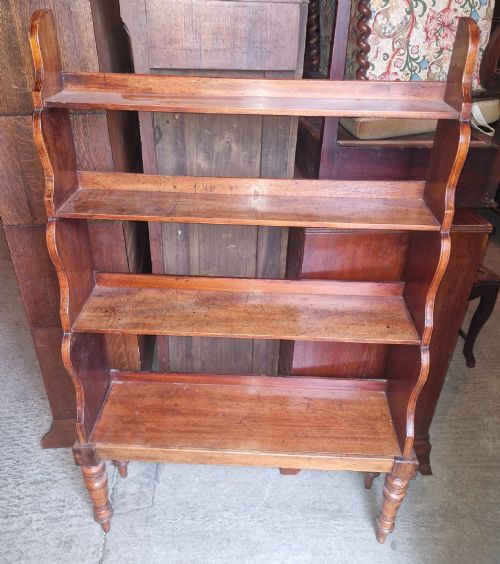
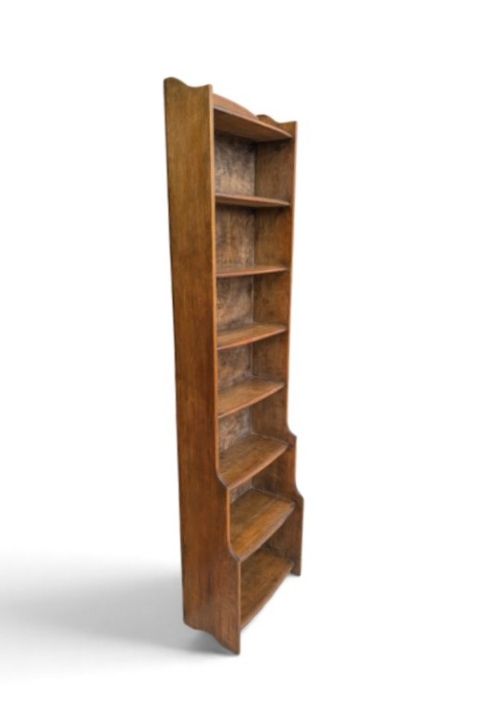
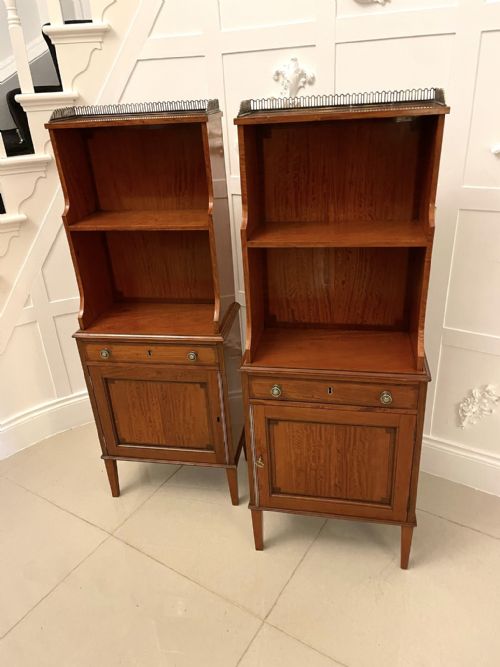
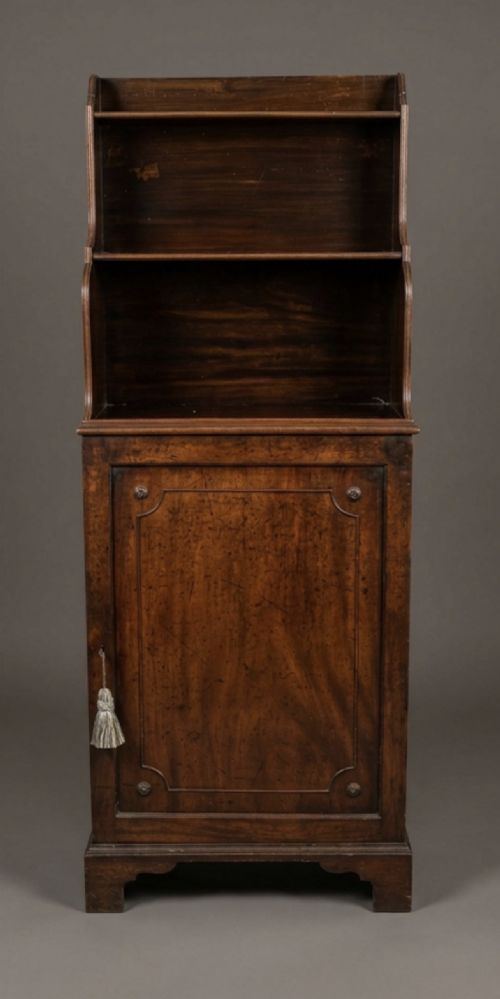

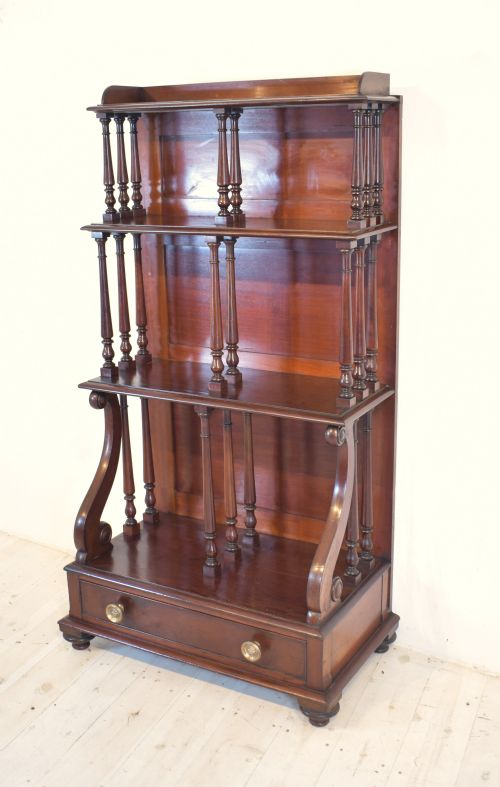


Graduated Open Bookcase
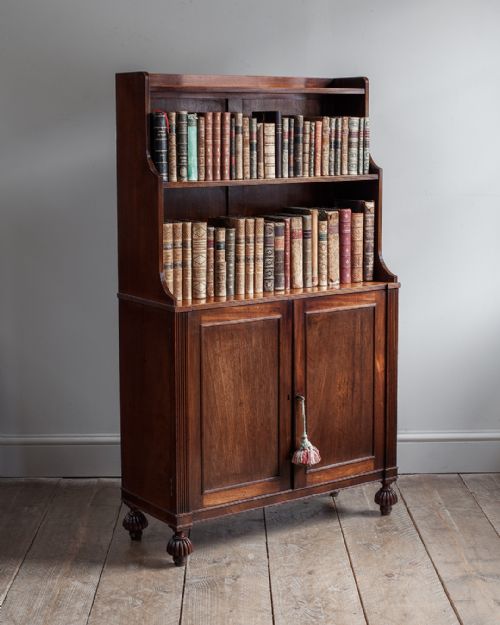
A graduated open bookcase brings tiered shelving to a room, offering ascending tiers designed to display books and objects with architectural clarity.
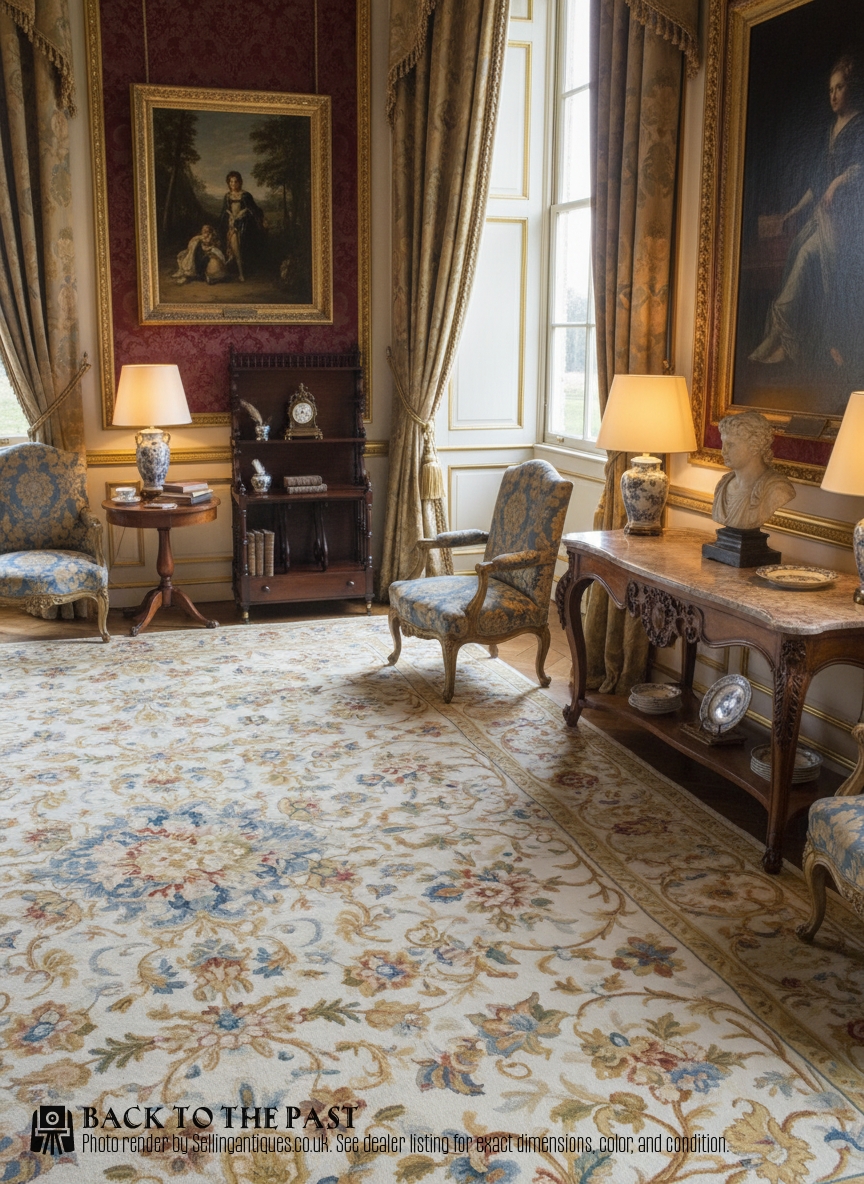
Graduated Open Bookcase
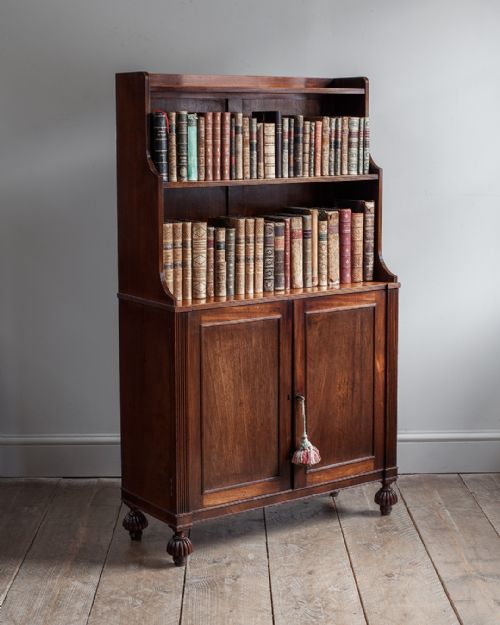
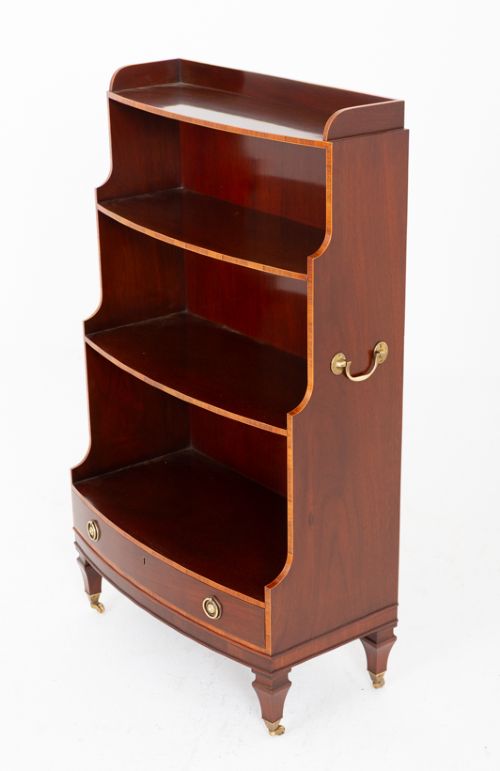
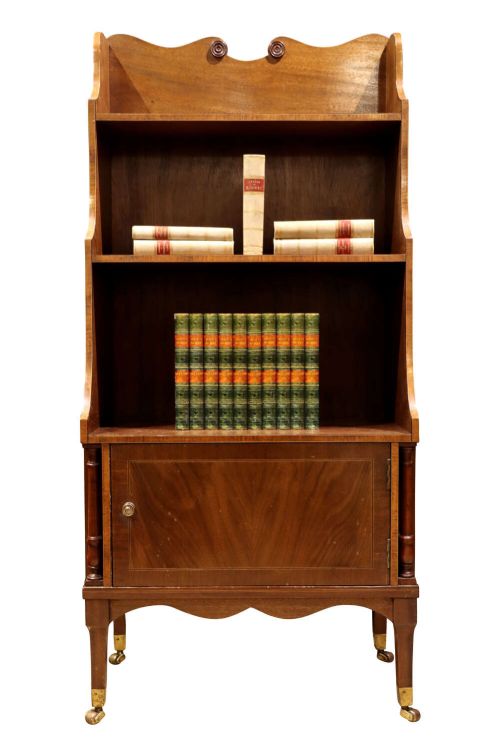
A graduated open bookcase presents a stepped or waterfall profile where each tier recedes from the one below it. These pieces appear across Georgian, Regency, Victorian and Edwardian periods in freestanding formats.
Most examples rely on mahogany, rosewood or oak timbers, sometimes incorporating cupboards or lower cabinets beneath the graduated shelving tiers. The open design suits rooms where books require accessible storage alongside display space.
What varies in quality
The refinement of the timber selection dictates much of the distinction, separating plain utility pieces from examples utilising figured mahogany, burr walnut or satinwood. Finer tiers demonstrate precise graduated proportions and subtle inlay work.
Structural integrity rests on the stability of the stepped uprights and the crispness of any applied mouldings or brass fittings. Pieces retaining original surfaces and castors hold greater distinction than heavily restored items.
Materials recorded across the archive include mahogany, rosewood, oak, satinwood, walnut, burr walnut, teak and yew wood.
Gillows
The Graduated Open Bookcase Glossary
- Waterfall bookcase
- A tiered shelving unit where each level steps back from the one beneath it, creating a cascading profile. This form gained popularity during the Regency and Victorian periods.
- Cross-banding
- A decorative border of veneer laid perpendicular to the grain of the main surface. It frames panels and shelves on better quality furniture.
- Boxwood stringing
- Thin inlay lines of pale boxwood set flush into darker timber. It provides linear contrast along shelves and uprights.
- Whatnot stand
- A multi-tiered open piece of furniture designed for displaying ornaments or books. These structures share similar stepped staging with open bookcases.
- Canterbury
- A low stand featuring partitioned sections for holding books or music sheets. Some graduated bookcases incorporate this lower compartment design.
Graduated Open Bookcase: Frequently Asked Questions
What is a waterfall bookcase?
A waterfall bookcase is a stepped shelving unit where each tier is narrower and set further back than the one below it. This creates a cascading vertical profile designed for books and display items.
Most examples date from the Regency and Victorian eras, utilising timbers such as mahogany and rosewood. The open sides distinguish them from enclosed cabinets.
How do I date an antique bookcase?
Dating relies on timber choices, construction techniques and stylistic details seen across different periods. Georgian and Regency pieces often feature solid mahogany with delicate stringing, while later Victorian examples introduce richer veneers and turned supports.
Hardware such as brass castors and the method of shelf graduation also offer clues to the manufacturing decade.
Where should I place an open bookcase?
An open graduated bookcase suits studies, libraries or living rooms where books need to remain within easy reach. Because the shelves step back, they fit well against walls without dominating floor space.
Freestanding models also allow placement in room corners or between windows where natural light highlights the wood grain.
What is the difference between a whatnot and a bookcase?
A whatnot is primarily designed as an open display stand for ornaments, decorative objects and small volumes across multiple tiers. A graduated bookcase focuses more specifically on holding books with structural stepped shelving.
Many antique pieces blur this distinction by combining open display tiers with lower cupboards or storage compartments.