




Regency Glazed Display Case
A regency glazed display case brings refined cabinet-work into a room, offering clear timber surfaces and glass fronts designed to hold treasured objects.
Regency Glazed Display Case
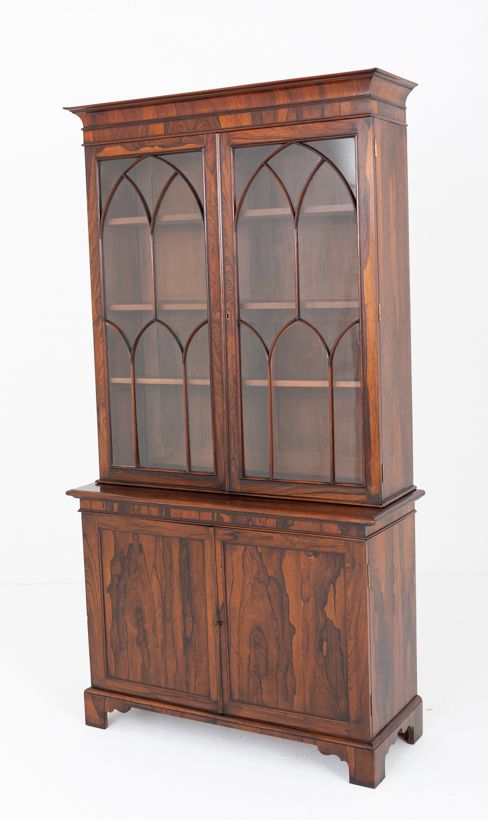
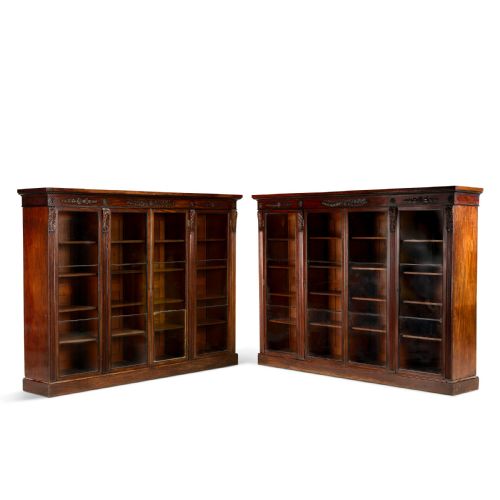
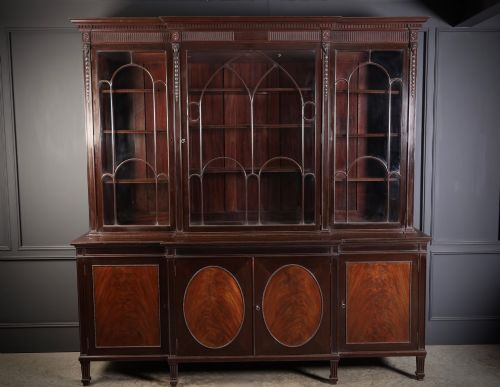
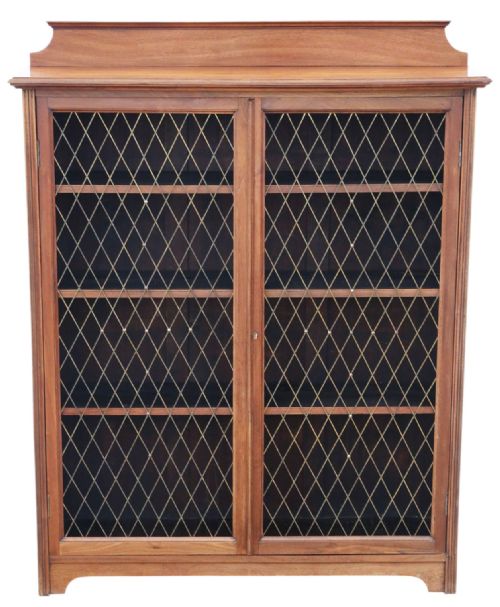
A regency glazed display case gathers pieces from the nineteenth century alongside later revivals, forming a group of cabinets built to showcase books and ornaments behind glass doors. These objects appear in forms ranging from tall breakfront bookcases and corner cupboards to low pier cabinets and side cabinets.
The most common versions met here are mahogany and walnut bookcases or display cabinets from the nineteenth century, often reflecting regency taste with astragal glazing bars and brass details. Buyers also encounter corner units and pier cabinets designed to fit specific wall spaces while displaying collections inside.
Materials and construction
Cabinet-makers built these pieces primarily using solid and veneered timbers such as mahogany, rosewood and walnut, selected for their rich grain patterns and durability. Brass hardware, including handles and escutcheons, provides functional contrast to the dark polished woods.
Glass panels are held within timber frames, sometimes shaped into gothic arches or intricate astragal patterns. Interiors occasionally feature fabric linings like velvet or simpler painted wood surfaces to frame the contents.
Styles span from regency and georgian to gothic revival, chinoiserie and william iv.
Judging quality in these cabinets
Quality rests in the precision of the timber selection and the crispness of the joinery, distinguishing finely figured veneer work from plainer constructions. The delicacy of the glazing bars and the integration of brass fittings indicate the level of care taken by the maker.
Proportion and decorative restraint set the better examples apart, where classical architectural lines or subtle inlays enhance the form without excess ornament. The condition of the internal shelving and original glass panes further marks the distinction between standard items and superior pieces.
Gillows
The Regency Glazed Display Case Glossary
- Astragal
- Moulded bars that divide panes of glass within a sash or door. These fine wooden strips form geometric patterns across the front of the cabinet.
- Breakfront
- A piece of furniture where the central section projects forward from the flanking wings. This architectural layout adds depth and shadow to large bookcases.
- Pier cabinet
- A low cabinet designed specifically to stand against the narrow section of wall between windows. They often feature glazed doors and decorative wood veneers.
- Twin pedestal
- A form where the main body rests upon two distinct supporting columns or bases. This configuration appears on larger display cabinets and sideboards.
- Gothic Revival
- A style drawing on medieval architectural motifs such as pointed arches and quatrefoils. It influences the shaping of cabinet doors and glazing bars.
Regency Glazed Display Case: Frequently Asked Questions
What is a regency glazed display case used for?
These cabinets serve to store and exhibit collections of books, ceramics and decorative objects behind protective glass doors. They keep dust away from delicate items while allowing them to remain visible within a principal room.
Historically, drawing rooms and libraries utilised such furniture to display the owner's refined tastes and literary or artistic acquisitions.
How do I fit a tall bookcase into a modern room?
Tall bookcases and display cabinets require careful wall placement, often anchoring to structural points for stability. Measuring ceiling height and clearance for opening glass doors ensures the piece sits comfortably without overwhelming the space.
Pairing the rich timber tones of mahogany or walnut with neutral wall colours helps integrate nineteenth-century furniture into contemporary interiors.
How do I tell a regency piece from a later revival?
Regency pieces date from the early nineteenth century and typically display hand-cut timber joints, aged mahogany or rosewood veneers, and period brass hardware. Later Edwardian or twentieth-century revivals often show different internal construction methods and machine-finished details.
Examining the backboards, drawer linings and the type of glass helps determine whether a cabinet originates from the regency era or a subsequent stylistic revival.
Are the shelves in these cabinets adjustable?
Many display cabinets and bookcases feature adjustable wooden shelves supported by timber ratchets or metal pins. This adaptability allows the owner to alter shelf heights for varying book sizes or display pieces.
When evaluating a cabinet, checking the mechanism inside the glazed interior reveals whether the shelving layout can be modified.