

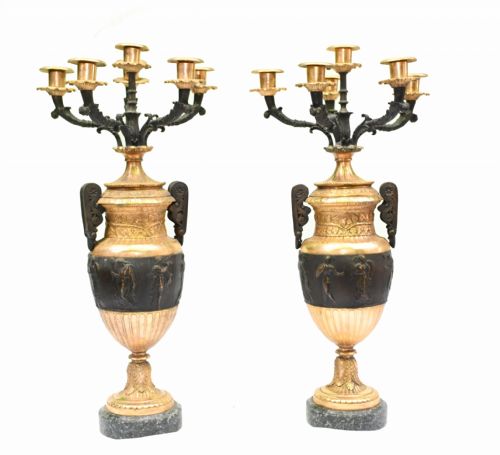


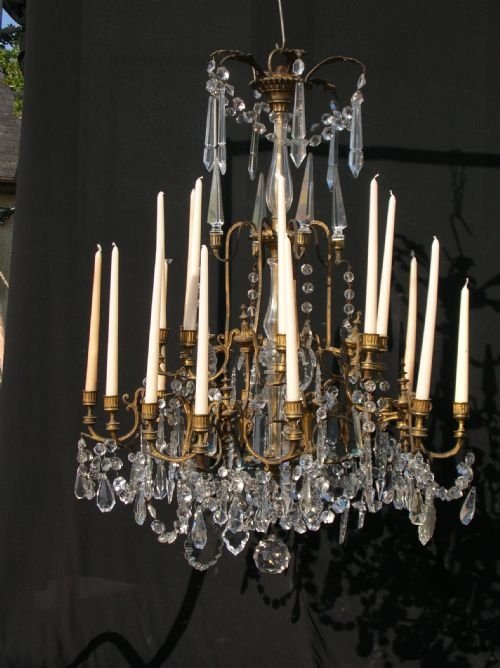
Regency Gilt Bronze Candelabra
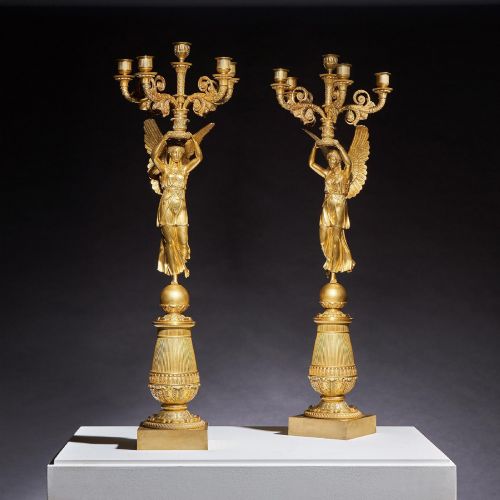
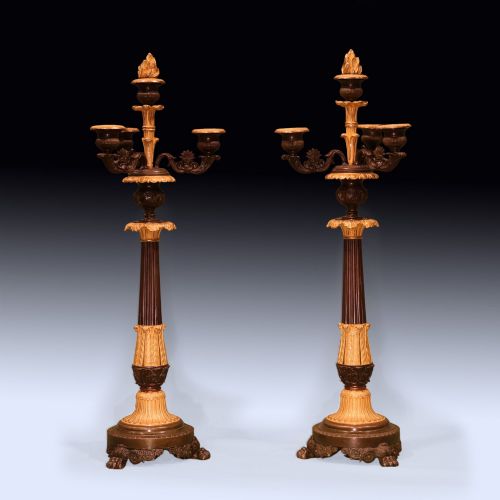
Regency gilt bronze candelabra combine heavy metalwork and bright gilding to light a room with undeniable neoclassical presence.
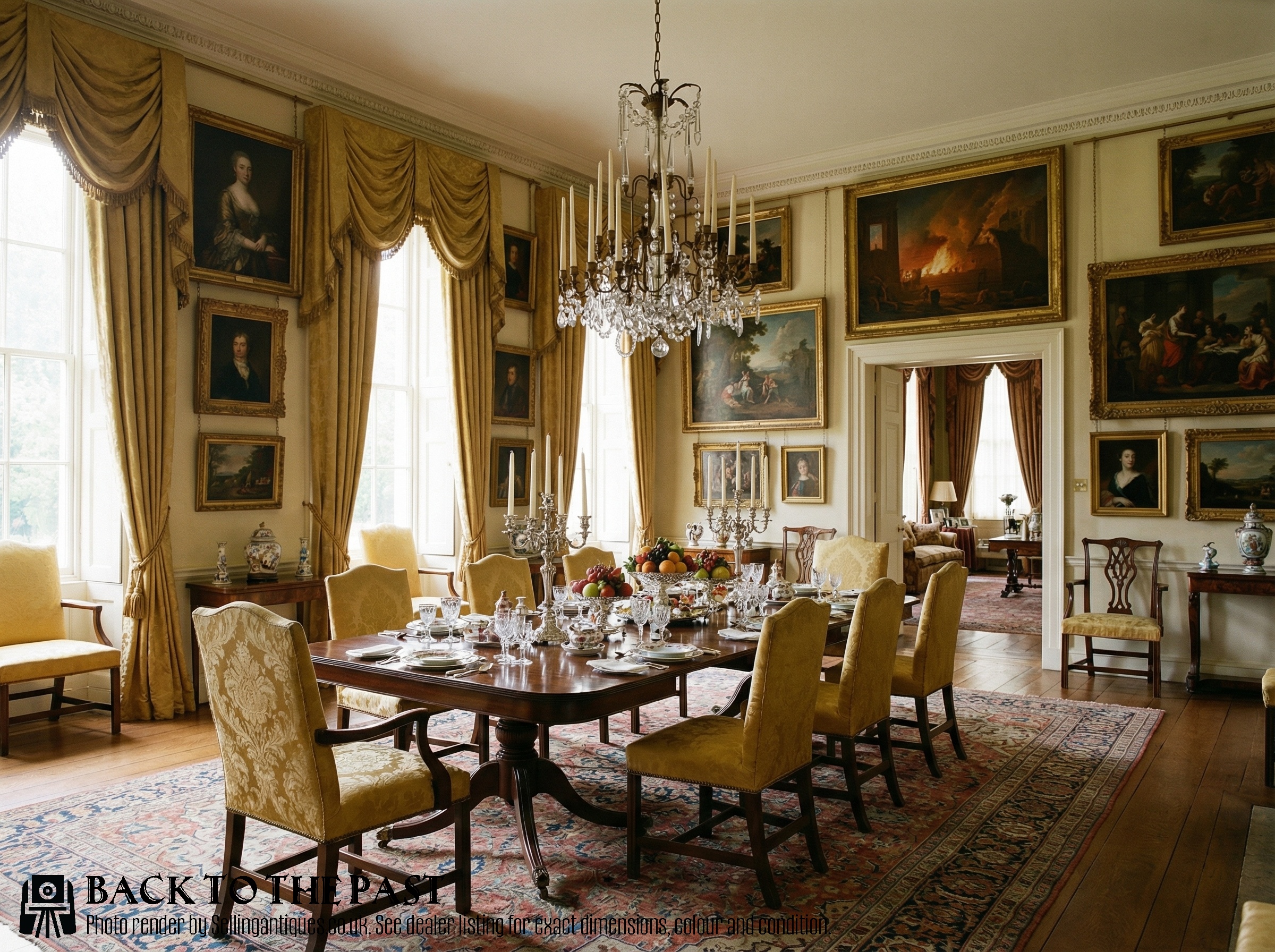
Regency Gilt Bronze Candelabra
Regency gilt bronze candelabra are lighting pieces shaped by the 19th century taste for classical antiquity, French Empire design and grand neoclassical forms. You will frequently encounter pairs fashioned from bronze and ormolu, featuring multiple arms for candles alongside variations such as candlesticks, standard lamps and chandeliers.
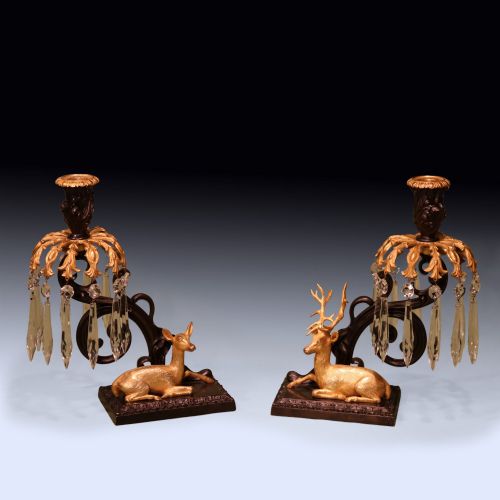
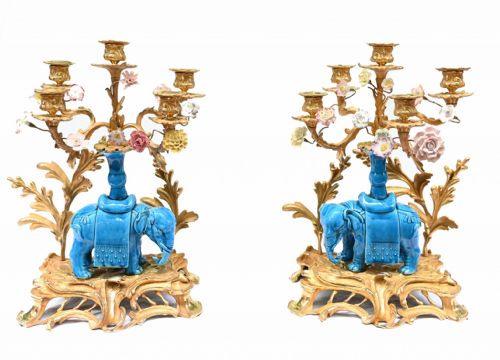
The selection ranges from early 19th century English and Swedish Empire pieces to later revivals from 1880, incorporating figural elements like stags, elephants and Egyptian figures. Many examples incorporate cut glass or crystal elements, adding extra scintillation to the polished metal surfaces.
Makers and designers of the period drew inspiration from archaeological discoveries, producing works that vary from strict architectural symmetry to elaborate figural compositions. Whether configured for two, three or four lights, these items serve as decorative centrepieces as much as functional lighting.
Materials and Techniques
Foundry workers utilised a combination of cast bronze and patinated metal, contrasting dark brown or black surfaces with bright mercury gilding known as ormolu. This dual treatment highlights the chased details of foliage, classical figures and animal mounts.
Glass components, including cut glass and crystal drops or lustres, were hand-cut and suspended from the metal arms to refract candle flame. Marble bases frequently provided a heavy, stable foundation for the towering bronze structures.
Stag, doe and elephant figures occasionally hold the candle arms, proving that Regency decorators loved a touch of wildlife.
Judging Quality
The crispness of the chasing on the ormolu and bronze surfaces dictates the visual success of the piece, separating sharp, hand-finished casting from softer, repetitive production. Superior examples display deep, deliberate tooling that catches the light across every leaf and classical motif.
The integration of secondary materials, such as well-matched marble plinths, high-grade cut crystal and stable adjustable arm mechanisms, defines the upper tier of surviving examples. Attribution to known workshops or close alignment with master designers like Pierre-Philippe Thomire and Thomas Hope also elevates the standing of an item.
Pierre Philippe Thomire·Thomas Hope
The Regency Gilt Bronze Candelabra Glossary
- Ormolu
- Gilt bronze produced by applying a finely ground high-carat gold mercury amalgam to a bronze base before heating. This historic technique creates a rich, matte-gold surface finish that resists tarnishing.
- Patinated Bronze
- Bronze treated with chemical solutions to darken the surface to a deep brown, green or black tone. The dark patination provides a strong visual contrast against bright ormolu mountings.
- Lustre
- A hanging glass pendant or drop suspended from the sconce or drip pan of a candlestick. These cut crystal elements refract the light of the candles.
- Grand Tour
- The 19th-century custom of affluent young Europeans travelling the continent to collect classical antiquities and souvenirs. Pieces associated with this movement often feature Egyptian or Roman revival motifs.
- Empire Style
- The design movement spanning the early 19th century characterised by heavy classical Roman, Greek and Egyptian ornamentation. It heavily influenced Regency metalwork and furniture.
Regency Gilt Bronze Candelabra: Frequently Asked Questions
What is the difference between ormolu and gilt bronze?
Ormolu specifically refers to the historic French technique of applying gold amalgam to bronze, whereas gilt bronze is a broader term for any bronze object coated in gold.
In Regency pieces, both terms describe the bright gold-coloured highlights used to contrast against dark patinated bronze.
How do I clean antique gilt bronze?
Antique gilt bronze requires gentle dusting with a soft, dry brush to prevent the accumulation of dirt in the chased recesses. Avoid harsh chemical cleaners or metal polishes that can permanently strip the delicate gold layer.
Professional conservation is recommended for pieces showing significant oxidation or grime.
Were these candelabra wired for electricity?
Period candelabra were originally designed exclusively for wax candles, though many were adapted for electricity during the 20th century. Such conversions often utilise the existing central shaft or candle nozzles to house modern wiring.
Collectors frequently weigh the purity of an unmolested candle socket against the practical convenience of wired lighting.
How do I identify Regency style?
Regency style is marked by a strong neoclassical influence, incorporating Greco-Roman motifs, animal forms, sphinxes and strict architectural symmetry. The period spans the early 19th century and embraces both English interpretations and French Empire influences.
Subsequent 1880 revivals often mirror these exact proportions but can be distinguished by secondary material analysis and manufacturing methods.