
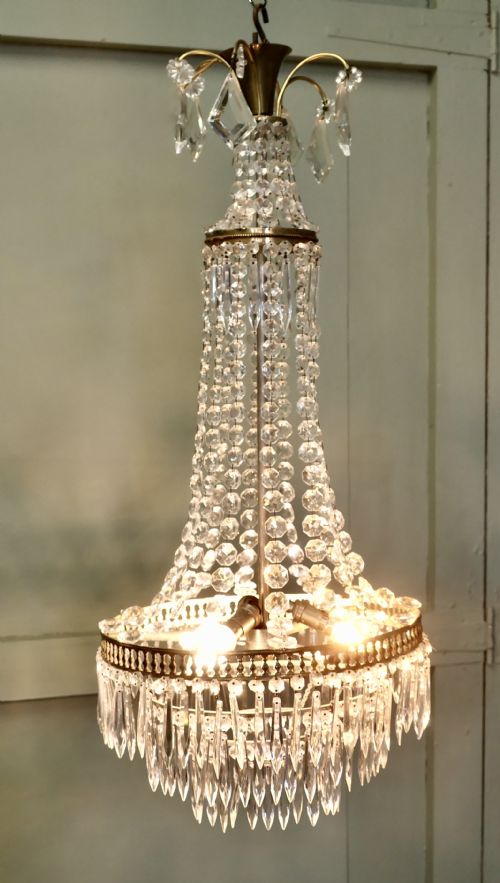
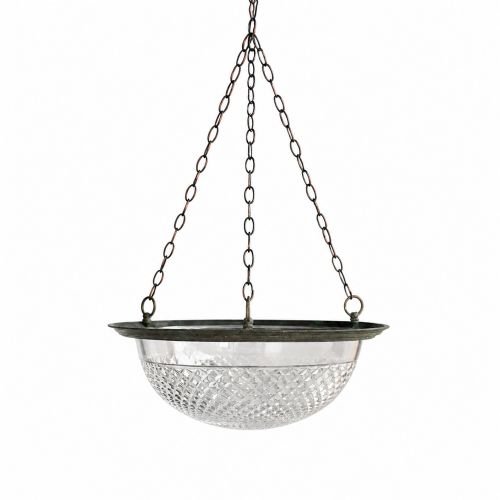


Large Brass Crystal Chandelier
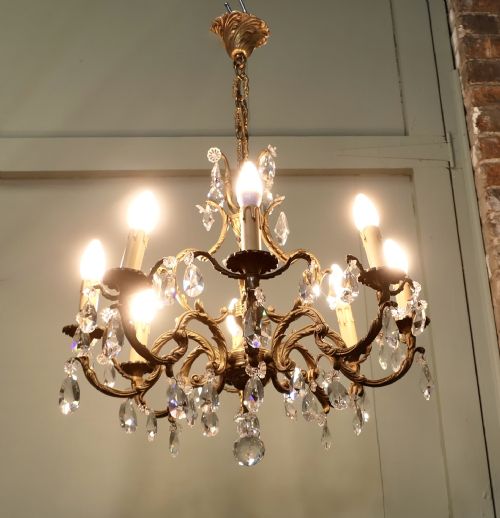
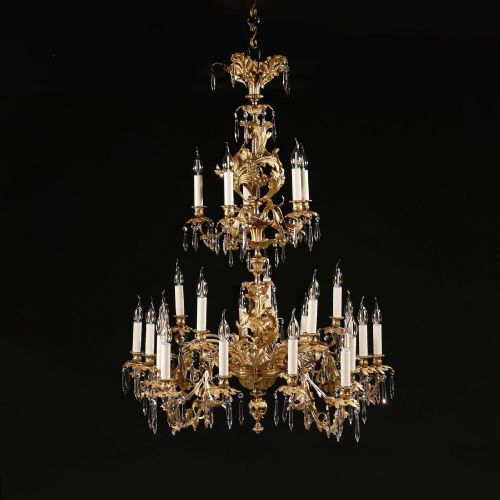
A large brass crystal chandelier commands a room with tiered drops and gilded metal, offering brilliant illumination suited to high ceilings.
How they were made
Master craftsmen built the structural frames using cast brass, gilt bronze, and gilt metal, forming robust branches and central cages designed to support considerable weight. Metal arms were often chased or gilded to enhance the visual impact of the fixture.
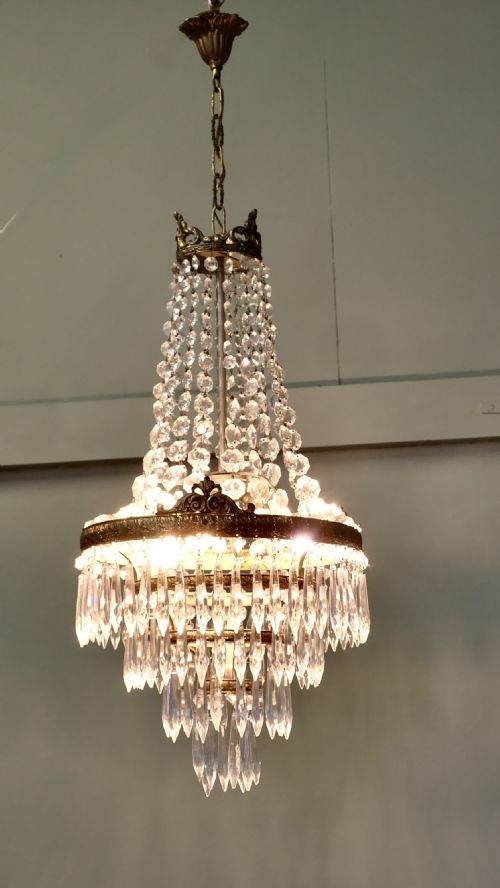
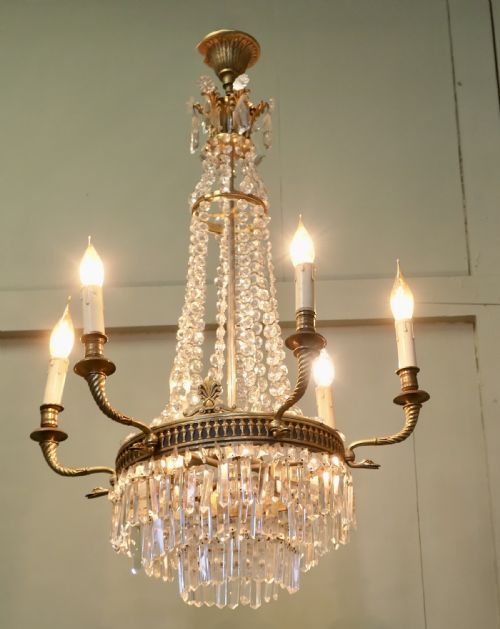
Pendants, drops, and lustres of cut crystal, cut glass, and lead crystal were hand-wired using tiny metal pins to secure them to the brass armature. These hanging elements created the characteristic tent, waterfall, and bag profiles seen across French and Italian lighting.
What varies in quality
Quality separates fixtures by the crispness of the brass casting and the depth of the gilding on the bronze or metal frame. Heavier, finely chased mounts and robust internal wiring frames indicate superior production.
The standard of the glass also divides the range, with hand-cut crystal and lead crystal drops producing sharper light refraction than standard pressed glass. Complete sets of matching lustres and beads preserve the integrity of the design.
Ballroom chandeliers recorded here boast up to forty-one lights, ensuring nobody ever loses a contact lens in the dark.
Baccarat
The Large Brass Crystal Chandelier Glossary
- Tent and waterfall
- A lighting profile where upper strings of beads form a tent shape above a tiered cascade of crystal drops. This classic configuration maximises the refractive surface area.
- Bag chandelier
- A style featuring a rounded bag or basket shape constructed from vertical strings of beads enclosing internal burner or bulb tiers. These compact profiles suit lower ceilings while maintaining high light output.
- Lustre
- A cut glass or crystal pendant hung from the arms or frame of a light fitting. Lustres catch and disperse the illumination across the room.
- Gasolier
- An antique ceiling light originally designed to burn gas before being converted for electricity. These pieces often retain substantial brass or bronze branch formations.
- Plafonnier
- A ceiling-mounted lighting fixture sitting close to the plasterwork rather than suspended on a chain. They provide direct downward illumination using crystal and brass components.
Large Brass Crystal Chandelier: Frequently Asked Questions
How do I clean a large crystal chandelier?
Cleaning requires a specialist glass cleaner applied by hand to each individual drop and crystal element while the fixture remains supported. Technicians often work in place to avoid damaging the delicate brass arms and wire fixings.
Harsh chemical immersion can strip the gilding from the brass or bronze framework. Regular dusting preserves the brilliance of the lead crystal without risking the security of the hanging pins.
Are these chandeliers suitable for standard ceilings?
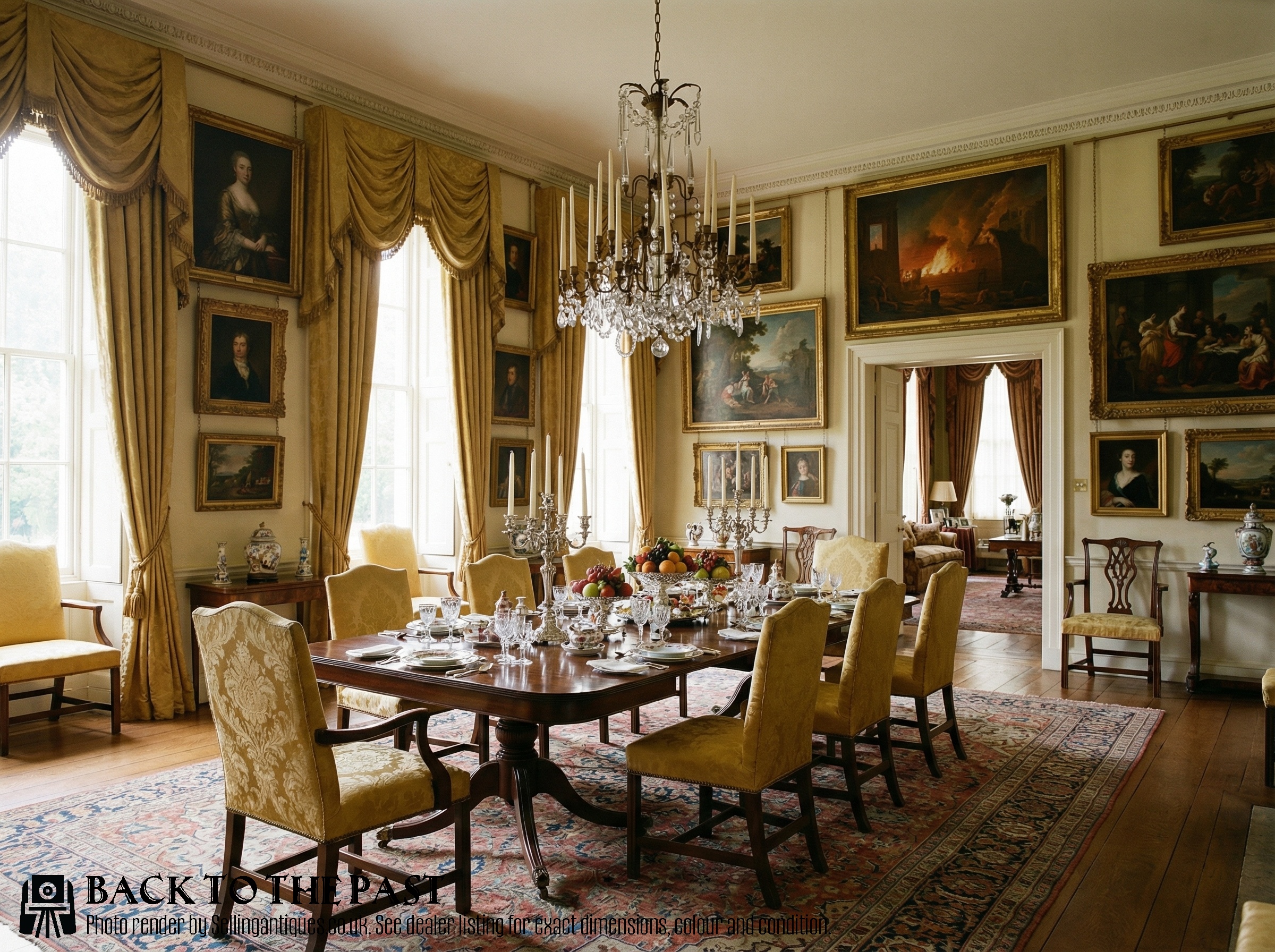
These fixtures are engineered for rooms with elevated proportions, requiring substantial vertical clearance to accommodate multi-tiered frames and long drop arrays. Placing a monumental piece in a low-room setting overwhelms the space.
Ceiling reinforcement is frequently necessary to support the combined weight of the cast brass, bronze, and extensive crystal formations.
How do I date a brass and crystal chandelier?
Dating relies on stylistic markers such as nineteenth-century Regency and French Empire motifs compared to later 1930s Art Deco geometric frames. Examining the casting techniques and the cut of the glass provides further chronological context.
Original wiring methods, from early gasolier conversions to vintage cloth-covered electrical cords, offer additional clues regarding the manufacturing era.
Can antique chandeliers be rewired for modern use?
Rewiring is standard practice for vintage and antique lighting to ensure compliance with current electrical safety standards. Professional restorers replace perished internal wiring while preserving the external brass and bronze components.
Adaptations allow these fixtures to operate safely with modern voltage requirements without altering their historic appearance.