


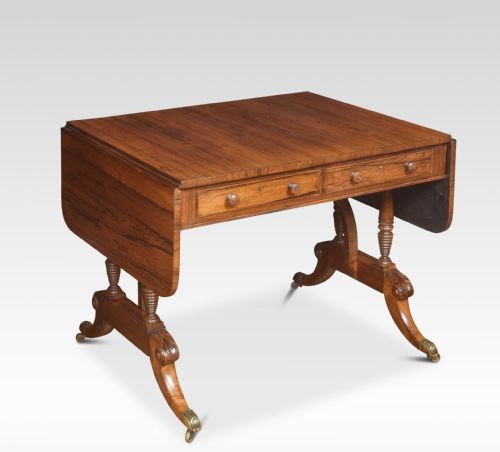

Regency Frieze Drawer Desk
A regency frieze drawer desk brings architectural clarity and rich timbers into a working room.
Regency Frieze Drawer Desk
A regency frieze drawer desk combines clean classical proportions with practical workspace, drawing from early nineteenth-century design traditions. When searching for a regency frieze drawer desk, buyers encounter elegant writing tables, library tables, and sofa tables fitted with discreet storage beneath the top.
Most examples originate from the nineteenth century, including the Regency and William IV periods, alongside transitional Georgian pieces. These forms serve as functional writing surfaces or centre tables while displaying the characteristic restraint and symmetry of the era.
How they were made
Cabinet makers utilised dense timbers like mahogany and figured rosewood, often selected for strong grain patterns on the primary surfaces. Solid construction methods ensure stability across large library tables and smaller writing desks alike.
Fine details include inset leather writing surfaces and cast brass hardware, which complement the darker tones of the wood. Painted wood variants demonstrate alternative decorative surface treatments applied to the timber structure.
Regency Frieze Drawer Desk Retail Price Guide 2026
Typical asking prices for regency frieze drawer desk among the pieces listed under this phrase on Sellingantiques today, from the lower quarter to the upper quarter. They describe what is for sale here now, not the wider market.
Form variations span library tables, sofa tables, drum tables, and dedicated writing desks.
What varies in quality
The distinction between standard utility pieces and exceptional examples rests upon the choice of timber veneer and figure. Highly figured rosewood and well-matched mahogany elevate the visual weight of a writing table.
Proportion and cabinet-making execution separate ordinary tables from distinguished pieces attributed to prominent workshops. The integration of frieze drawers with clean joints demonstrates superior construction skill.
Gillows of Lancaster·William Trotter
The Regency Frieze Drawer Desk Glossary
- Frieze
- The horizontal band situated directly beneath the top surface of a table, typically housing one or more shallow drawers. This architectural element provides structural rigidity while concealing storage.
- Library table
- A large freestanding table designed for the centre of a room rather than against a wall. These pieces finished on all sides accommodate reading and writing from multiple angles.
- Sofa table
- A rectangular writing or side table traditionally placed in front of a sofa. They frequently feature drop leaves and opposing frieze drawers.
- Drum table
- A circular library table containing multiple drawers around the circumference, often rotating upon a central pillar and sabre legs.
- Rosewood
- A dense, heavily figured dark timber favoured during the nineteenth century for high-status cabinet work. Its rich grain contrasts sharply with lighter brass fittings.
Regency Frieze Drawer Desk: Frequently Asked Questions
Where do I put a centre table?
A centre table stands in the middle of a room because the back is finished with the same care as the front. This allows access from all sides without needing a wall for support.
Positioning the piece centrally creates a focal point in a library or study while offering practical workspace.
How do I tell Regency from William IV?
Regency furniture tends to display slender proportions and refined classical restraint inspired by ancient Greek and Roman forms. The subsequent William IV period generally introduces heavier dimensions and bolder carved details.
Both styles utilise dark timbers like mahogany and rosewood, but the overall mass and decorative motifs distinguish the earlier pieces from later nineteenth-century variations.
Were these always used for writing?
Many tables served multiple domestic purposes depending on the room and the hour of the day. Library tables held books and papers, while sofa tables functioned for correspondence or needlework.
Their adaptable heights and stable surfaces made them suitable for general study tasks rather than formal bureau work alone.
How do I care for rosewood?
Rosewood requires stable indoor humidity and protection from direct sunlight to prevent the timber from drying and fading. Regular dusting with a soft, dry cloth preserves the polished surface.
Avoid placing damp items directly onto the wood or leather inserts to maintain the integrity of the antique finish.